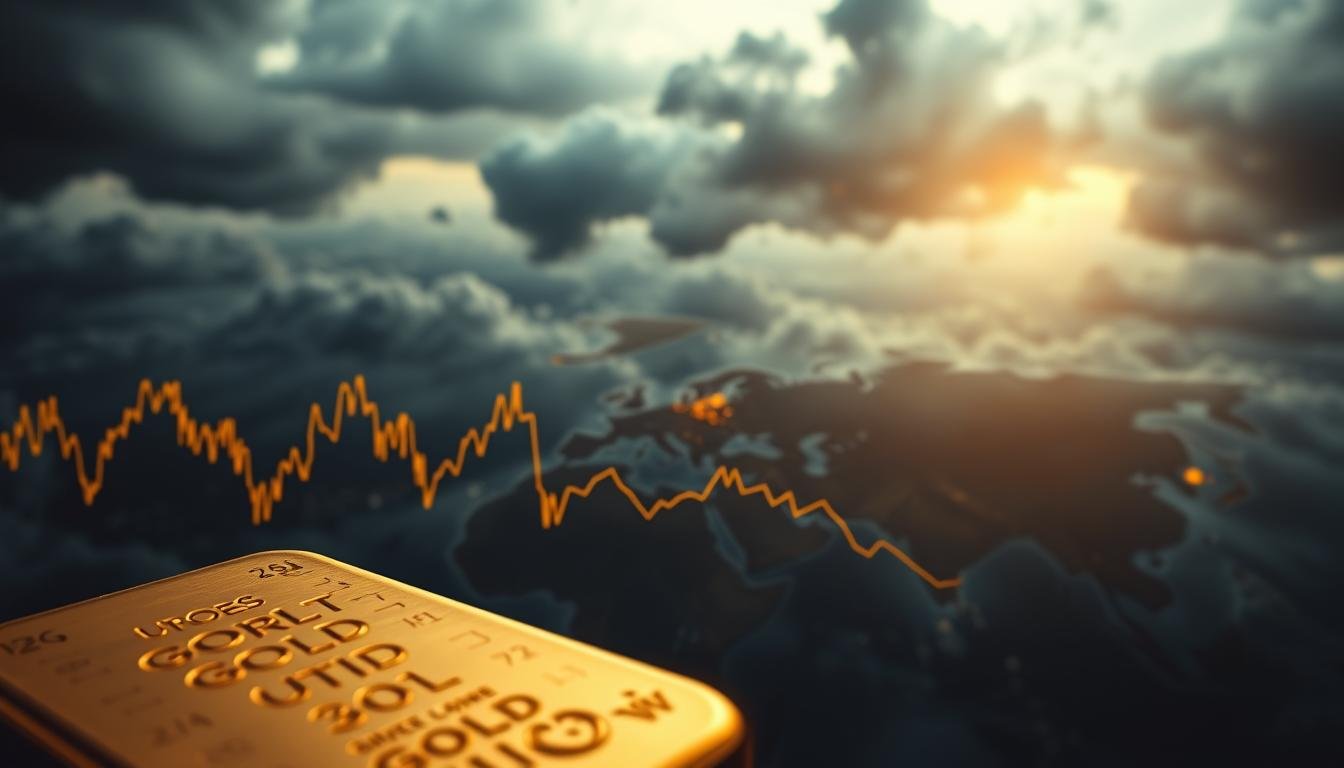
In times of global turmoil, investors flock to gold, causing its price to rise. Governments also stockpile gold for strategic reserves. This makes the impact of geopolitical flashpoints on gold more significant.
Knowing this is key to your financial power. As global tensions grow, understanding how geopolitical events affect gold prices is vital. It helps you make better investment choices.
Key Takeaways
- Geopolitical tensions can significantly impact gold prices.
- Governments stockpiling gold can drive up demand.
- Understanding these dynamics is key to financial empowerment.
- Investors often turn to gold in times of global uncertainty.
- Staying informed about geopolitical events can guide your investment choices.
The Fundamental Relationship Between Geopolitics and Gold Markets
The link between geopolitical events and gold markets is intricate. When geopolitical tensions increase, investors look for safe places. Gold is often their choice. You might ask why gold reacts so much to world events. It’s because of its special qualities and its role in uncertain times.
Why Investors Flock to Gold During Global Uncertainty
Investors turn to gold in uncertain times for good reasons. First, gold is a safe-haven asset, keeping its value when others drop. Second, central banks buy gold to lessen their reliance on the dollar and avoid Western sanctions. This makes gold more attractive as a reliable value keeper.
- Gold’s historical performance during crises
- Central banks’ gold accumulation trends
- Investor behavior during geopolitical tensions
The Historical Pattern of Crisis-Driven Gold Rallies
Gold prices have risen during global crises. For example, in the 1970s oil crisis, gold prices soared as investors sought safety from inflation and economic troubles. Recently, the Russia-Ukraine conflict pushed gold prices up as investors worried about sanctions and market instability.
Knowing these patterns can guide your gold investment choices. By spotting signs of global instability and its effect on gold, you can handle the complexities of global finance better.
How Geopolitical Tensions Trigger Gold Price Movements
The link between geopolitical tensions and gold prices is intricate. Many elements affect gold’s value during crises. As an investor, grasping these dynamics is crucial for smart choices.
The Psychology of Fear in Precious Metals Markets
When geopolitical crises hit, fear drives investor actions. As tensions grow, investors flock to gold, pushing its price up. This flight to safety stems from gold’s perceived value, even when other assets fall.
Supply Chain Vulnerabilities and Physical Gold Premiums
Geopolitical tensions can disrupt gold supply chains, raising physical gold premiums. Escalating tensions boost the cost of moving and storing gold. This knowledge helps refine your investment approach.
| Geopolitical Event | Impact on Gold Price | Supply Chain Effect |
|---|---|---|
| Escalating conflicts | Price increase due to safe-haven demand | Higher transportation costs |
| Sanctions and trade wars | Price volatility | Disruptions in gold supply |
| Global economic uncertainty | Long-term price appreciation | Increased storage costs |
Measuring Gold’s Response to Political Flashpoints
Gold prices often change when political events happen. Investors need to know how these events affect gold. This helps them make smart choices in uncertain markets.
Quantifying Short-term Price Spikes vs. Sustained Rallies
Gold prices can jump up and down when politics gets tense. It’s key to tell apart quick price jumps from longer rises. Short-term spikes happen fast, in response to news. Sustained rallies last longer, showing deeper effects on gold prices.
A quick conflict might push prices up briefly. But a long crisis could keep prices higher for a while.
Statistical Correlation Between Conflict Intensity and Gold Performance
Looking at how conflict intensity affects gold prices is helpful. Studies show a link between big political issues and gold prices going up. This lets investors guess how gold might act under different tensions.
For example, a study might show gold prices increase by a certain amount for certain events. Knowing this helps investors use gold’s safe status during political ups and downs.
Historical Case Studies: Major Geopolitical Events and Their Impact on Gold
Gold’s reaction to world events is best seen through history. Looking at past crises helps us understand gold’s behavior in uncertain times.
The 1970s Oil Crisis: Gold’s Historic Bull Run
The 1970s oil crisis was a key moment for gold. When OPEC cut off oil, prices rose, and trust in paper money fell. Gold prices jumped from $35 in 1970 to $850 in 1980. This was one of gold’s biggest gains.
This time showed gold’s power against inflation and falling currencies.
Post-9/11 Market Reactions and Gold’s Safe Haven Status
After 9/11, markets were shaken. People turned to safe assets, pushing gold prices up by over 25% in a year. This event solidified gold’s role as a safe place during crises.
The post-9/11 era showed gold’s value in a mixed investment portfolio during uncertainty.
The 2008 Financial Crisis as a Geopolitical Catalyst for Gold
The 2008 financial crisis was caused by many factors. As it grew, gold prices soared, hitting new highs. This crisis proved gold’s worth as a financial safe haven.
By 2011, gold prices had doubled from 2008. This showed gold’s strength during economic troubles.
These examples show how big events affect gold prices. Knowing these patterns helps you make better gold investment choices.
Middle Eastern Conflicts: A Consistent Driver of Gold Price Volatility
Geopolitical flashpoints in the Middle East have always affected gold prices. This region is key to watch because of its complex politics and economy. These factors often lead to uncertainty, making investors turn to gold as a safe haven.
The Middle East’s conflicts have had a big impact on gold prices. The Gulf Wars and the Arab Spring uprisings are two examples. Both events had a big effect on gold markets.
Gulf Wars and Their Immediate Effect on Gold Markets
The Gulf Wars, like the 1990 invasion of Kuwait and the 2003 US-led invasion of Iraq, caused gold prices to jump. These conflicts made global markets uncertain and scared. Investors then turned to gold as a safe place.
- The 1990 Gulf War saw gold prices rise as investors sought refuge from the geopolitical uncertainty.
- The 2003 invasion further demonstrated gold’s role as a safe-haven asset during periods of heightened geopolitical tension.
Arab Spring Uprisings and the Resulting Precious Metals Rally
The Arab Spring, starting in late 2010, brought political instability to the Middle East. This instability led to a rise in precious metals, including gold. Investors were reacting to the uncertainty and fear of wider conflict.
Key factors contributing to the rally included:
- Political instability in key oil-producing countries.
- Fear of broader regional instability.
- Increased demand for safe-haven assets.
In conclusion, Middle Eastern conflicts have always made gold prices volatile. Knowing this can help investors make better choices during tense times.
The Russia-Ukraine War: Analyzing Gold’s Performance During Modern Conflict
Geopolitical tensions, like the Russia-Ukraine conflict, have always affected gold prices. This time was no different. As the conflict grew, gold became a key asset for investors looking for safety.

Initial Invasion Shock and Gold Market Response
The Russian invasion in February 2022 shocked the world. Gold prices jumped as investors sought safe assets. This was due to fear and uncertainty.
Key statistics from this period include:
- A 5% increase in gold prices within the first week of the invasion.
- A significant spike in gold ETF holdings, indicating increased investor demand.
Sanctions, Energy Crisis, and Secondary Effects on Gold
The conflict’s length led to more issues, like economic sanctions on Russia and an energy crisis in Europe. These problems made the economy more unstable. This instability made gold more attractive as a safe investment.
Long-term Investment Implications for Gold Holders
The Russia-Ukraine war showed gold’s value in a diversified portfolio. With ongoing geopolitical tensions, gold’s importance as a safe asset is clear. Investors should think about adding gold and other precious metals to their portfolios.
In summary, the Russia-Ukraine war proved gold’s strength and its vital role in investment portfolios. As the world’s economy changes, knowing how gold performs in conflicts is key for smart investment choices.
US-China Trade Tensions: Strategic Rivalry and Gold Positioning
Trade tensions between the US and China are big news in the gold market. As these tensions grow, more investors see gold as a safe place to put their money. This makes gold’s price go up.
Tariff Announcements and Gold Price Correlations
Tariff talks between the US and China affect gold prices a lot. When tariffs go up, people often choose gold as a safe option. This pattern shows up in past data, where tariff talks have matched gold price hikes.
| Tariff Announcement Date | Gold Price Change |
|---|---|
| 2018-07-06 | +1.2% |
| 2019-05-10 | +0.8% |
| 2020-01-15 | +1.5% |
Currency Competition and Gold’s Role as a Neutral Reserve Asset
With US-China trade tensions, the battle for currency dominance is fierce. Gold stands out as a neutral asset. Central banks are adding gold to their reserves, which helps keep its price steady.
Think about how US-China trade tensions impact your gold investments. Gold prices are closely tied to trade relations. Knowing this can help you make better investment choices.
Gold as the Ultimate Strategic Reserve During the International Crises
Global tensions are rising, making gold a key asset for financial safety. As an investor or analyst, you know the value of spreading out your investments when things get uncertain.
Central banks worldwide are boosting their gold reserves. They aim to lessen their reliance on the US dollar and prepare for economic downturns.
Central Bank Gold Acquisition Trends During Geopolitical Shifts
In recent years, central banks have bought more gold. This move is mainly due to rising global tensions and a push to reduce dollar dependence. Some notable facts include:
- Central banks have bought over 400 tonnes of gold in recent years.
- Emerging markets like China and Russia are leading gold purchases.
- Gold’s share in central banks’ reserves is growing, showing a move towards more varied reserves.
National Security Considerations in Gold Reserve Management
Nations are seeing gold as a vital part of their national security plans. The reasons are varied:
- Gold offers financial security not tied to any economy or currency.
- Physical gold can be used in international negotiations.
- Gold reserves can soften the blow of economic sanctions in conflicts.
In summary, gold’s strategic importance is growing due to current global trends. As you navigate these complex financial times, it’s key to grasp the role of gold reserves in national security.
Regional Flashpoint Analysis: How Different Conflicts Impact Gold Differently
Different regional flashpoints have unique effects on gold. This is due to market sentiment and production disruptions. Knowing these details is key for smart gold investing.
Asian Maritime Disputes and Their Market Implications
Tensions in the South China Sea and other Asian maritime disputes can greatly affect gold prices. These conflicts often cause market volatility. This makes investors turn to gold as a safe haven.
- Escalation of territorial disputes can lead to short-term gold price spikes.
- Regional instability may prompt central banks to increase their gold reserves.
European Political Fragmentation Risks
Political fragmentation in Europe, like Brexit and rising nationalism, also affects gold markets. These events create uncertainty. This drives investors towards gold as a hedge against economic downturns.
- Political instability can weaken the euro, making gold more attractive.
- Investor sentiment shifts towards safe-haven assets during times of political uncertainty.
African Resource Conflicts and Gold Production Disruptions
Conflicts in major gold-producing countries like South Africa and the Democratic Republic of Congo can directly impact gold production. Disruptions in these regions can lead to supply shortages. This affects global gold prices.
- Violence or political unrest in mining areas can halt production.
- Supply chain disruptions can lead to increased gold premiums.
Understanding how different regional conflicts impact gold helps you navigate the gold market. It leads to more informed investment decisions.
Currency Devaluation During Political Crises: The Gold Connection
Political instability often leads to currency devaluation. It’s crucial for investors to understand the link between gold and these events. When political tensions rise, currency values can swing wildly. This makes gold, a safe-haven asset, more appealing.
You need to understand these dynamics to make smart investment choices.
Historical Examples of Currency Collapse and Gold’s Response
Gold has shone during currency collapses. For example, during the Weimar Republic’s hyperinflation in the 1920s, gold kept its value. Even as the currency lost value fast.
Recently, in Venezuela’s economic crisis, investors turned to gold. This was as the bolivar’s value plummeted.
The Dollar-Gold Dynamic During International Tensions
The US dollar and gold have a special relationship during international tensions. As crises grow, the dollar often gets stronger. This is because it’s seen as a safe haven. Gold prices also tend to rise as more people seek it as a value store.
But, this can change based on the crisis and the global economy.
Let’s look at a table showing gold’s performance during currency devaluation events:
| Event | Currency Impact | Gold Performance |
|---|---|---|
| Weimar Republic Hyperinflation (1920s) | Mark lost value | Gold maintained purchasing power |
| Venezuelan Economic Crisis (2010s) | Bolivar plummeted | Gold used as a store of value |
| Asian Financial Crisis (1997) | Various Asian currencies devalued | Gold prices rose |
Knowing the history and dynamics between currency devaluation and gold prices helps. It lets you navigate complex geopolitical landscapes better. By spotting patterns and preparing for currency shifts, you can make better gold investment decisions.
Modern Flashpoints: Cyber Warfare and Technology Conflicts
Cyber warfare and technology conflicts are now major concerns in global markets. They affect how investors feel and act. As the world connects more, these risks grow. It’s key for investors to grasp their impact.
Traditional risks have always influenced gold prices. But cyber threats and tech conflicts are now big factors. They shape how investors behave and the market moves.
Major Cybersecurity Breaches as Triggers for Gold Investment
Big cyber attacks often push investors towards gold. They seek gold’s safety. Here are some examples:
- The 2014 Sony Pictures hack showed big companies’ cyber risks.
- The 2017 NotPetya attack caused big disruptions and losses.
- The 2020 SolarWinds breach showed government and corporate networks’ weaknesses.
These events show how cyber threats can shake investor trust. They make gold a safer choice.
Digital Currency Competition and Traditional Gold Demand
Digital currencies are changing the gold market. Some see them as rivals, while others see them as additions to a portfolio. Key points include:
- Digital currencies could shake up traditional finance.
- Central banks’ roles in digital currencies are important.
- Investors’ choices between tangible and digital assets matter.
Grasping these points helps you make smart gold investment choices in today’s fast-changing finance world.
Investment Strategies: Optimizing Gold Exposure Before and During Geopolitical Events
When geopolitical tensions go up, gold becomes a popular safe haven. But to get the most out of gold, you need a smart plan. You must think about several things to make sure you’re making money and not losing it.
Portfolio Allocation Models for Different Risk Scenarios
There are ways to make your gold investment work better, based on how much risk you’re okay with. If you’re cautious, putting 5-10% of your money into gold can protect you from big risks. If you’re more daring, you might put up to 20% in gold when things get really tense.
Timing Entry and Exit Points Around Political Developments
When it comes to gold and world events, timing is everything. Keep an eye on the news and be ready to change your investment plan. Using dollar-cost averaging can help you deal with the ups and downs of the market.
Physical Gold vs. ETFs vs. Mining Stocks During Crises
There are a few ways to invest in gold, each with its own good and bad sides. Physical gold is real and safe but can be hard to store. Gold ETFs are easy to trade and liquid but carry some risk. Mining stocks can make you money faster but come with their own set of challenges.
| Investment Option | Advantages | Disadvantages |
|---|---|---|
| Physical Gold | Tangible asset, no counterparty risk | Storage concerns, less liquid |
| Gold ETFs | Liquidity, ease of trading | Counterparty risk, market volatility |
| Mining Stocks | Leveraged exposure to gold prices | Company-specific risks, operational risks |
Gold Versus Alternative Safe Havens During International Tensions
When global tensions rise, investors seek safe assets. Gold is often chosen, but US Treasuries and cryptocurrencies are also considered.
Comparative Performance: Gold vs. US Treasuries in Crisis Periods
Gold and US Treasuries are both safe havens. But how do they react to global crises?
| Asset | Average Return During Crisis | Volatility |
|---|---|---|
| Gold | 5% | High |
| US Treasuries | 3% | Low |
Gold offers higher returns in crises but is more volatile. US Treasuries are stable but return less.
Cryptocurrencies and Gold: Complementary or Competing Safe Havens?
Cryptocurrencies have raised questions about their role as safe havens. They differ from gold in many ways.
Key differences:
- Gold: A traditional value store, less volatile over time.
- Cryptocurrencies: A new asset, very volatile, and sensitive to market mood.
In summary, gold is still a top choice for safe havens. But US Treasuries and cryptocurrencies offer alternatives. Knowing each asset’s unique traits helps investors make better choices.
Media Coverage of Flashpoints: Impact on Gold Sentiment and Price Action
Media coverage of geopolitical flashpoints can greatly affect gold sentiment and its price. Gold is seen as a safe-haven asset. This makes it very sensitive to world events. The media plays a big role in how people see these events.
News Cycle Amplification of Geopolitical Risks
Media can make geopolitical risks seem bigger than they are. This can lead to more people wanting gold as a safe-haven. For example, during a crisis, 24-hour news can make investors rush to gold.
Distinguishing Between Temporary Noise and Fundamental Shifts
Not all media coverage affects gold the same way. It’s key to tell apart temporary noise from real changes in the world. Investors need to carefully choose their sources and think about the long-term effects of events on gold prices.
Understanding how media impacts gold can help you make better investment choices. As you explore gold investing, remember to stay up-to-date with media coverage and its effects.
Emerging Geopolitical Hotspots: Future Catalysts for Gold Price Movement
Investing in gold requires knowing about new geopolitical hotspots. These areas can change gold prices. It’s important to stay informed to make smart investment choices.
The world of global politics is always changing. New challenges pop up, affecting gold markets. Climate change is a big factor, making politics more unstable.
Climate Change as a Multiplier of Political Instability
Climate change is more than an environmental problem. It’s a global issue that makes politics even more unstable. Extreme weather can hurt economies and cause social problems. This might push investors towards gold as a safe choice.
Resource Competition and Potential Conflict Zones
Resource competition is another big issue. It’s about fighting for important minerals and energy. This can lead to conflicts, affecting gold prices. Knowing about these areas can help you protect your investments.
Understanding these hotspots helps you make better gold investment choices. It’s key to growing and protecting your assets.
Conclusion: Successfully Navigating Gold Investments in a World of Uncertainty
You now know that to succeed in gold investments, you must understand global events and their effect on gold prices. Geopolitical tensions can greatly impact gold markets. It’s important to keep up with world news.
To make smart choices about gold, look at past crises and how they affected gold prices. Also, consider how fear works in gold markets and the role of central banks. This knowledge helps you deal with the uncertainty of gold investments.
Remember, a diverse portfolio and knowing the market are crucial for good gold investments. Stay updated and adjust to market changes. This way, you can handle the challenges of gold investments in an uncertain world.