You might be surprised to know that futures trading is now open to individual investors. Online trading platforms have made it easy to join the futures market from home.
So, what are gold futures? They let you trade on price changes without owning gold. This is great for those wanting to spread out their investments.
Thinking about futures investing? It’s key to know the good and bad sides. In this article, we’ll look at if gold futures are right for you.
Key Takeaways
- You can trade gold futures without owning physical gold.
- Futures trading has become more accessible to individual investors.
- Understanding the benefits and risks is crucial for successful futures investing.
- Gold futures can be a valuable addition to a diversified investment portfolio.
- It’s essential to educate yourself before entering the futures market.
The Fundamentals of Gold Futures Trading
Investing in gold futures trading can seem tough at first. But, it’s worth learning about. Gold futures contracts let you guess the future price of gold. Knowing how they work is key to smart investing.
What Are Gold Futures Contracts?
Gold futures contracts are deals to buy or sell gold at a set price later. They are traded on places like the COMEX division of the New York Mercantile Exchange (NYMEX).
Contract Specifications and Terminology
Gold futures contracts have clear rules, like the amount of gold, price changes, and how they settle. For example, a basic contract is for 100 troy ounces of gold. Knowing these details is important for trading gold futures well.
Settlement and Delivery Options
Most gold futures contracts are settled with cash. This means the buyer and seller swap the price difference on the settlement date. But, some contracts let you get physical gold instead.
How Futures Differ from Spot Gold Investments
Spot gold investments mean buying gold right away. But, gold futures contracts are about agreeing to buy or sell gold later. This lets you guess price changes without owning physical gold.

The Structure of the Gold Futures Market
To understand the gold futures market, you must grasp its structure. It’s a complex financial system. It allows investors to trade gold futures contracts.
Major Exchanges and Trading Venues
Gold futures are traded on several major exchanges worldwide. The New York Mercantile Exchange (NYMEX), part of the CME Group, is the most well-known. NYMEX offers highly liquid gold futures contracts, attracting many traders and investors.
Other key exchanges include the Tokyo Commodity Exchange (TOCOM) and the London Bullion Market Association (LBMA). These places are crucial for trading gold futures and setting prices.
Market Participants and Their Roles
The gold futures market has different types of participants, each with their own role.
Commercial Hedgers
Commercial hedgers use gold futures to manage price risks. They are usually gold producers or consumers, like mining companies or jewelry makers. Hedging helps them secure prices and avoid losses.
Speculators and Individual Traders
Speculators and individual traders aim to profit from gold price changes. They don’t have a commercial interest in gold but seek to make money from market volatility.
| Market Participant | Role |
|---|---|
| Commercial Hedgers | Manage price risk |
| Speculators and Individual Traders | Profit from price movements |
Gold as a Strategic Investment Asset
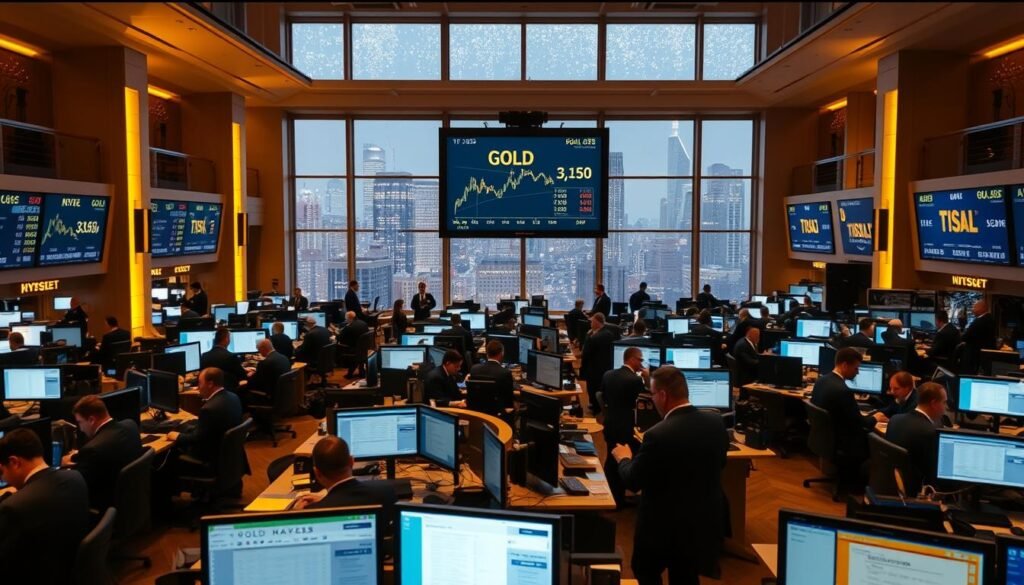
Gold is a key part of many investment portfolios. It helps protect against economic risks. Knowing about gold futures is important for smart investment choices.
Historical Performance and Price Trends
Gold has always been a safe investment, with its price changing due to inflation, currency values, and world events. Looking at gold’s past can help us see its future value.
For example, when inflation is high, gold’s value goes up. This makes it a great asset during tough economic times. Here’s a table showing how gold has done in different economic situations.
| Economic Condition | Gold Price Trend |
|---|---|
| High Inflation | Appreciation |
| Economic Downturn | Stable/ Appreciation |
| Low Inflation | Variable |
Portfolio Diversification Benefits
Adding gold futures to your portfolio can make it more diverse. Gold doesn’t move with stocks or bonds, helping manage risks.
Correlation with Other Asset Classes
Gold usually moves in the opposite direction of stocks. This makes gold futures a smart choice for diversifying your investments.
Inflation Hedging Properties
Gold is great at fighting inflation. When inflation goes up, gold’s value often increases. This helps keep your money’s value. Investing in gold futures can protect your portfolio from inflation.
Understanding gold’s past and its role in diversifying portfolios helps make better investment choices. This includes using gold futures in your strategy.
Advantages of Gold Futures for Individual Investors
Gold futures are a great way for individual investors to grow their money. They offer benefits that can make your investment strategy better. This includes a smart way to mix different types of investments in your portfolio.
Leverage and Capital Efficiency
Gold futures let you use leverage to control big positions with a small amount of money. This can lead to bigger gains, but remember, it also means bigger risks.
For example, with a small initial investment, you can manage a much bigger contract. This is good for investors who want to make the most of their money without using too much of it.
Liquidity and Market Access
The gold futures market is very liquid. This means you can easily buy and sell without affecting the price much. Many people, like big investors and traders, are part of this market.
This market’s liquidity lets you quickly respond to price changes. Whether you’re looking to make quick profits or adjust your long-term plans, you can do it easily.
Price Discovery and Transparency
The price discovery in gold futures is strong. Prices are set by the actions of many in the market. This makes prices fair and reliable for investors.
Also, the clear rules in gold futures trading help keep the market fair. This clarity is key for investors. It lets you make smart choices based on up-to-date and accurate market info.
| Advantages | Description | Benefit to Investors |
|---|---|---|
| Leverage | Ability to control large positions with less capital | Amplified potential gains |
| Liquidity | Easy entry and exit from market positions | Flexibility in investment strategies |
| Price Discovery | Transparent and fair market pricing | Informed investment decisions |
In summary, gold futures are a strong tool for diversifying and improving your investment strategy. By understanding the benefits of leverage, liquidity, and price discovery, you can make better choices. This can help you achieve better results in your investments.
Risks and Challenges in Gold Futures Trading
Knowing the risks of gold futures trading is key to smart trading. As you trade gold futures, you’ll face several challenges that can affect your investments.
Margin Calls and Leverage Risks
Margin calls are a big risk in gold futures trading. Trading on margin means you borrow money to increase your investment. If the market goes against you, you might get a margin call, needing to add more money or close your position.
- Set stop-loss orders to limit potential losses
- Maintain a conservative leverage ratio
- Regularly review and adjust your margin requirements
Market Volatility Concerns
The gold futures market can be very volatile. Prices change quickly because of economic news, world events, and market mood. To deal with this, stay updated on market trends and be ready to change your trading plan.
- Monitoring economic indicators and news events
- Using technical analysis to identify trends
- Adjusting your position size based on market conditions
Contract Expiration and Rolling Strategies
Gold futures contracts expire, so you must close or roll over your positions before they do. Rolling means closing your current position and starting a new one in a later contract month.
- Keep track of contract expiration dates
- Develop a rolling strategy to maintain your positions
- Consider the costs associated with rolling over contracts
By understanding these risks and challenges, you can better navigate the gold futures market and make more informed trading decisions.
Financial Requirements for Trading Gold Futures
Understanding the financial needs for gold futures trading is key for investors. You must know the financial basics to succeed in this market.
Initial Margin Requirements
Trading gold futures starts with the initial margin. This is the money you put into your account to start trading. It’s like a promise to cover any losses. The amount needed can change based on the exchange and the contract.
For example, the initial margin for gold futures on the COMEX division of the New York Mercantile Exchange (NYMEX) can vary. This change is due to market volatility.
Maintenance Margin and Daily Settlement
Once you start trading, you must keep a certain amount of money in your account. This is called the maintenance margin. It’s usually less than the initial margin but still important.
Daily settlement adjusts your account balance based on the value of your gold futures contracts. If your balance drops below the maintenance margin, you’ll get a margin call.
Variation Margin Calculations
Variation margin is extra money you might need to add to cover losses. It’s based on the daily settlement price of your contract. If your contract loses value, you’ll need to add funds to meet the maintenance margin.
Margin Call Procedures
A margin call happens when your balance is too low. To avoid this, you’ll need to add more money to your account. If you can’t, your broker might close your position to prevent bigger losses.
| Margin Type | Description | Example Amount |
|---|---|---|
| Initial Margin | Deposit required to open a position | $5,000 |
| Maintenance Margin | Minimum equity required to keep a position open | $4,000 |
Knowing these financial rules is essential for managing risk and making smart trading decisions. By understanding initial margin, maintenance margin, and daily settlement, you can handle the challenges of futures trading better.
Technical Analysis Approaches for Gold Futures
To navigate the gold futures market, traders use technical analysis. This method looks at past price data to guess future prices. It’s a key tool for traders.
Chart Patterns and Key Indicators
Chart patterns and indicators are key in technical analysis. They help traders spot market trends.
Support and Resistance Levels
Support and resistance levels are important in chart patterns. Support levels show where prices might stop falling. Resistance levels show where prices might stop rising.
Momentum Indicators
Momentum indicators, like the Relative Strength Index (RSI), show trend strength. They help predict if a trend will keep going or change.
Seasonal Trends and Cyclical Patterns
Seasonal trends and patterns are also crucial in gold futures analysis. Gold prices can change with the seasons, like higher demand in some months.
| Seasonal Period | Typical Gold Price Movement |
|---|---|
| Q1 (January to March) | Often sees an increase due to post-holiday demand and economic uncertainty |
| Q3 (July to September) | Can experience a dip due to reduced demand and summer lull |
Knowing these trends helps traders make better choices.
Fundamental Factors Driving Gold Futures Prices
Knowing what drives gold futures prices is key for smart investing. As you explore gold futures trading, it’s vital to understand the main factors that affect prices.
Several key factors influence gold futures prices. These include economic indicators, central bank actions, currency values, and global events. Let’s dive into these factors.
Economic Indicators and Central Bank Policies
Economic signs like GDP, inflation, and job numbers affect gold prices. Central banks’ decisions on interest rates and money printing also matter a lot. For example:
- Inflation data: When inflation goes up, gold prices might rise as people look for safe places to put their money.
- Interest rates: If interest rates go up, the dollar gets stronger, which can lower gold prices.
- Central bank reserves: When central banks buy more gold, demand and prices can go up.
Currency Relationships and Dollar Strength
The dollar’s value against other currencies is very important for gold prices. A strong dollar makes gold more expensive for people outside the US, which can lower demand and prices. But a weak dollar makes gold cheaper, attracting more buyers and raising prices.
Traders keep a close eye on the dollar’s strength and currency relationships. Important points include:
- Dollar index: When the dollar index goes up, gold prices might fall.
- Currency fluctuations: Changes in exchange rates can change gold demand and prices.
Geopolitical Events and Market Sentiment
Global tensions and market mood also affect gold prices. When things are uncertain, investors often turn to gold, which can push prices up. Important global events include:
- Conflicts and tensions: Growing global conflicts can increase gold prices.
- Economic sanctions: Sanctions on big economies can affect gold demand.
- Market volatility: More market uncertainty can lead investors to gold.
By understanding these factors, you can make better choices in the gold futures market.
Effective Trading Strategies for Gold Futures
Trading gold futures without a solid strategy is like navigating uncharted waters without a map. To succeed, you need to adopt effective trading strategies that align with your goals and risk tolerance.
Day Trading Approaches
Day trading involves making multiple trades within a single day, taking advantage of the market’s volatility. This strategy requires quick decision-making and a deep understanding of market dynamics.
Scalping Techniques
Scalping is a day trading technique that involves making numerous small trades to capitalize on minor price movements. It demands a high level of focus and market analysis.
Breakout Trading
Breakout trading involves identifying key levels of support or resistance and trading on the breakouts. This strategy can be very effective in volatile markets.
Position Trading Methods
Position trading is a longer-term strategy that involves holding positions for extended periods. It requires a strong understanding of fundamental analysis and market trends.
As Warren Buffett once said,
“Price is what you pay. Value is what you get.”
Position trading is about understanding the value of gold futures over time.
Spread Trading Opportunities
Spread trading involves taking positions in multiple contracts to profit from price differences. This strategy can help mitigate risk and capitalize on market inefficiencies.
| Trading Strategy | Description | Risk Level |
|---|---|---|
| Day Trading | Making multiple trades within a day | High |
| Position Trading | Holding positions for extended periods | Medium |
| Spread Trading | Taking positions in multiple contracts | Low-Medium |
You can choose the trading strategy that best fits your investment goals and risk tolerance. Remember, each strategy has its unique benefits and challenges.
Gold Futures Versus Alternative Gold Investments
Gold investments come in many forms, like gold futures, ETFs, and physical gold. Each has its own benefits and drawbacks.
Gold ETFs and ETNs
Gold ETFs and ETNs let you invest in gold without owning it physically. They follow gold’s price and trade on stock exchanges. Gold ETFs are backed by physical gold, but ETNs are not.
Gold Mining Stocks and Funds
Investing in gold mining stocks or funds can be risky but might pay off more. Some funds spread investments across many mining companies, which can lower risk.
Physical Gold Ownership
Physical gold, like coins or bars, offers a real asset and security. But, it needs safe storage and can cost more. Physical gold doesn’t face counterparty risk, unlike some other investments.
Choosing between gold futures, ETFs, mining stocks, or physical gold depends on your goals and comfort with risk. Knowing what each option offers is key to a smart choice.
Tax Implications for Gold Futures Traders
The tax rules for gold futures can greatly affect your profits. It’s crucial to know these rules well. As a gold futures trader, you should understand Section 1256 contracts. They are key to figuring out your tax situation.
Section 1256 Contracts Treatment
Gold futures are treated as Section 1256 contracts by the IRS. This means your gains or losses are taxed at a special rate. You get a mix of long-term and short-term capital gains, no matter how long you held the contract. This can be a big tax benefit compared to other investments.
| Contract Type | Tax Treatment |
|---|---|
| Section 1256 Contracts | 60% long-term, 40% short-term capital gains |
| Other Investments | Standard long-term/short-term capital gains rules apply |
Record-Keeping and Reporting Requirements
You must keep good records of your gold futures trades. This includes dates, prices, and any gains or losses. You’ll report these on Form 6781, which goes with your tax return. Keeping accurate records is key to getting the right tax treatment for your trades.
Key Tax Considerations: Understanding Section 1256 contracts, maintaining accurate trade records, and reporting trades correctly on your tax return.
Selecting the Right Broker for Gold Futures
Choosing a futures broker for gold trading requires careful thought. As an investor, you must look at several factors. This ensures your broker fits your trading goals and strategies.
Evaluation Criteria for Futures Brokers
When looking at potential brokers, consider a few key points. These include commission structures, platform capabilities, and account types.
Commission Structures
Commission fees greatly affect your trading costs. Seek brokers with fair and clear pricing. Some charge a flat fee per contract, while others have tiered fees based on volume.
Platform Capabilities
The trading platform’s features are vital for smooth trading. Look for platforms with real-time data, advanced charts, and fast execution. Reliable customer support is also crucial for quick issue resolution.
Account Types and Requirements
Brokers offer different account types for various needs. When choosing, consider the minimum deposit, margin, and any other account conditions.
| Broker Feature | Description | Importance Level |
|---|---|---|
| Commission Structure | Fees charged per trade or contract | High |
| Platform Capabilities | Features and tools available on the trading platform | High |
| Account Requirements | Minimum deposit and margin requirements | Medium |
| Customer Support | Quality and availability of support services | High |
Common Pitfalls Individual Investors Face with Gold Futures
Investing in gold futures can be tricky for individual investors. Without the right knowledge and strategies, you might face big losses. It’s important to know the challenges ahead.
Overleveraging and Position Sizing Errors
One big risk is overleveraging. Too much leverage can lead to big losses, even with small market changes. It’s key to manage your positions carefully.
Using a position sizing strategy can help. It matches your risk level and investment goals. This keeps your portfolio balanced and protects against market ups and downs.
Inadequate Risk Management Protocols
Good risk management is vital in gold futures trading. Without it, you could lose a lot. Key parts are stop loss orders and risk-reward ratios.
Stop Loss Placement
Stop loss orders can limit losses if the market goes against you. Adjust your stop loss levels based on gold market volatility. A good stop loss can save your capital.
Risk-Reward Ratios
It’s crucial to weigh the risks and rewards of each trade. A good risk-reward ratio helps you make smart choices. Aim for a ratio that fits your goals and risk level.
Knowing these pitfalls and using smart risk management can boost your success in gold futures trading.
Investor Suitability Assessment for Gold Futures
Knowing your investor profile is key to deciding if gold futures are right for you. You need to look at several important factors. These factors help figure out if you’re ready for this investment.
Financial Capacity Considerations
When thinking about gold futures, your financial situation matters. You should check your income, savings, and overall financial health. This ensures you can handle the risks of trading gold futures.
It’s important to see if you have enough money for margin requirements and to cover potential losses.
Knowledge and Experience Requirements
How much you know and have experienced in trading futures is crucial. You should understand how futures markets work. This includes knowing about leverage, margin calls, and contract expiration.
If you’re new to futures trading, learning or practicing in a simulated environment is a good idea. This helps before you use real money.
Risk Tolerance Evaluation
Assessing your risk tolerance is essential when looking at gold futures. These investments can be very volatile. You need to be okay with big price swings.
Understanding your risk tolerance means knowing if you can handle losses and how you react to market changes.
By carefully looking at these factors, you can decide if gold futures fit your investment goals and risk level. It’s about matching your investment choices with your financial situation, knowledge, and comfort with risk.
Conclusion: Making an Informed Decision About Gold Futures
You now know a lot about gold futures trading. This includes its basics, benefits, and risks. Understanding the gold futures market and price factors helps you decide if it’s right for you.
Gold futures can add value to your investment portfolio. They offer leverage, liquidity, and diversification. But, they also have risks like margin calls and market volatility.
To do well in gold futures trading, know your financial situation, knowledge, and risk tolerance. With a good trading strategy, you can confidently move through the gold futures market.
Deciding on gold futures needs a deep understanding of the markets and your investment goals. Use what you’ve learned to see if gold futures fit your financial plans and risk level.