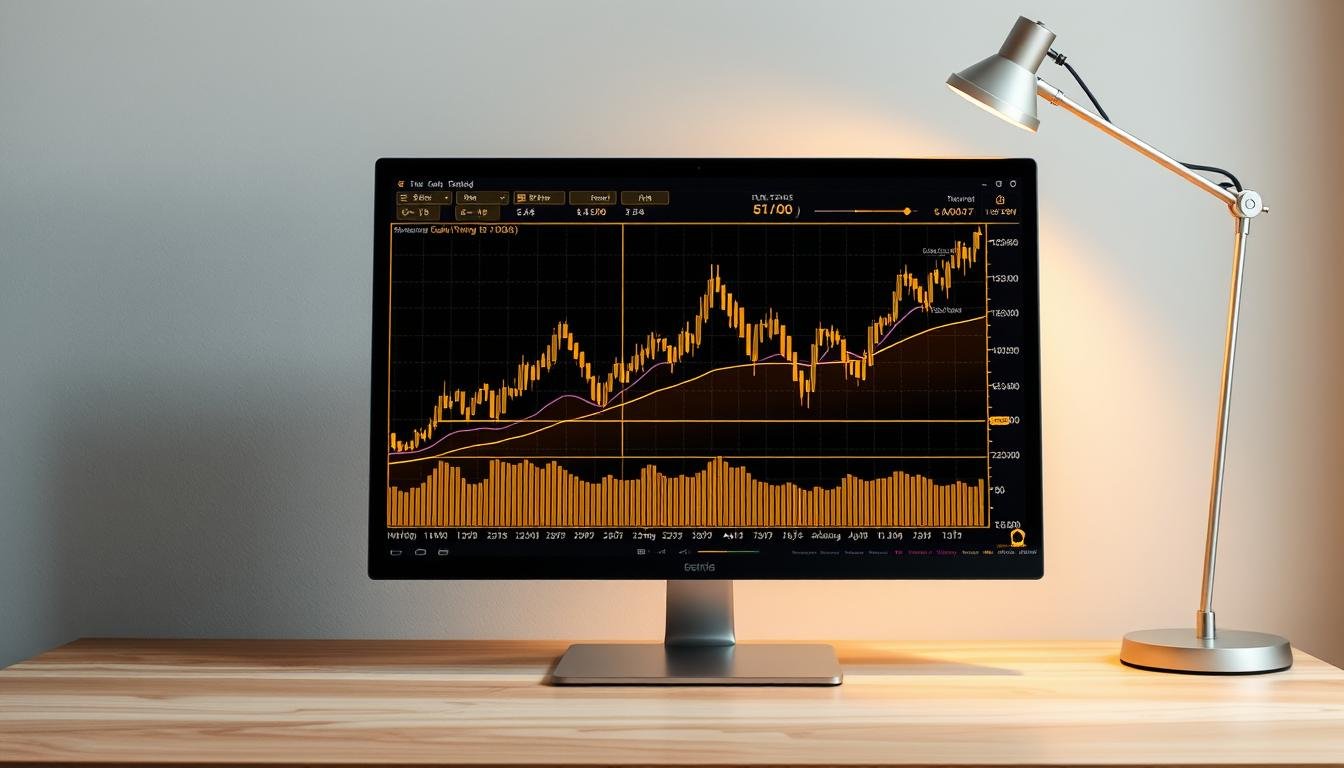
When markets get tough, gold shines as a safe place to put your money. Its price often goes up and down a lot. But, when the economy is shaky, gold prices can jump up, making it a favorite among investors looking for stability.
For beginners, learning to analyze price charts is key to smart investing. By getting good at reading these charts, you can understand the gold market better. This can help you spot trends and make the most of your investments.
Key Takeaways
- Understanding gold price charts is essential for beginners.
- Analyzing charts helps in making informed investment decisions.
- Gold is a significant safe-haven asset during economic uncertainty.
- Learning to read charts can help you navigate market fluctuations.
- Chart analysis is a valuable skill for potential investors.
The Fundamentals of Gold Price Charts
Understanding gold price charts is key for smart investing. Starting your gold investing journey can seem tough. But, learning to read these charts is worth it.
Why Gold Prices Fluctuate
Gold prices change for many reasons. Supply and demand are big factors. Also, inflation rates, currency values, and geopolitical events play a part. These elements mix in complex ways, affecting gold’s price.
The Relationship Between Gold Prices and Market Conditions
Gold prices are tied to market conditions. When the economy is shaky, gold’s price goes up. It’s seen as a safe-haven asset. But, when the economy is strong, gold’s price might drop. Investors look for better returns then.
Historical Gold Price Movements
Gold has given a 7-10% annual return since 1971. This makes gold a great choice for diversifying your investments.
Gold as a Safe-Haven Asset
Gold is known as a safe-haven asset. When markets are volatile, investors buy gold. This drives up its price. Gold is a key part of a well-rounded investment plan.
Essential Tools for Analyzing Gold Charts
To start analyzing gold charts, you need the right tools. As a beginner, the right charting platform is key. It can greatly improve your price chart analysis skills.
Popular Charting Platforms for Beginners
Many charting platforms are great for beginners. They have easy-to-use interfaces and tools for chart gold analysis. Here are some popular ones:
- TradingView: Known for its user-friendly interface and extensive library of indicators.
- MetaTrader: A favorite among traders for its advanced features and customization options.
- Yahoo Finance: Offers free charting tools with real-time data and basic analysis features.
Free vs. Paid Options
Choosing between free and paid platforms is important. Free platforms like Yahoo Finance are good for beginners. But, paid platforms offer more features and real-time data, which are vital for serious traders.
Setting Up Your First Gold Price Chart
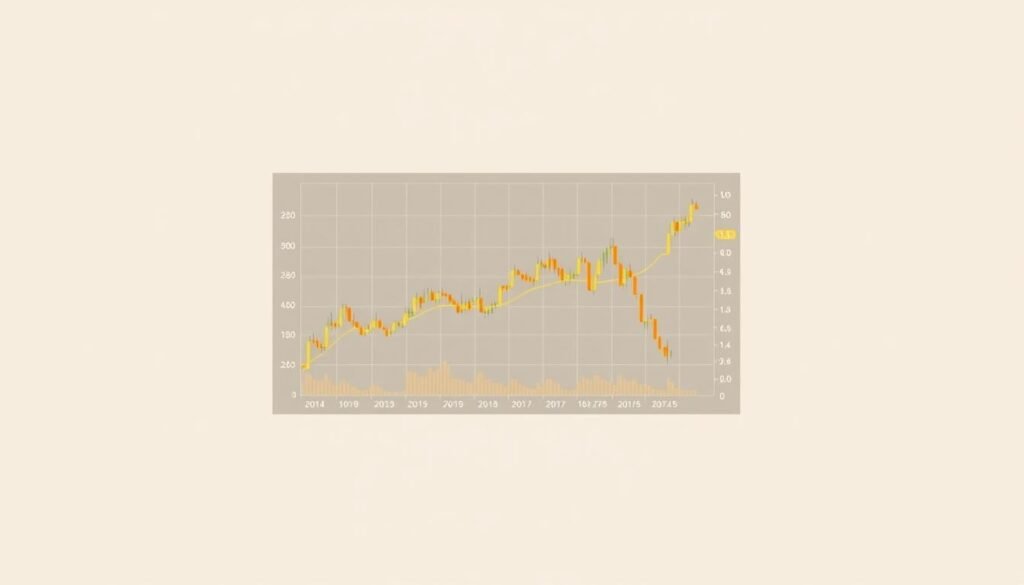
After picking your platform, setting up your first gold price chart is easy. Look for options to customize your chart type. This includes line, bar, or candlestick charts, which are great for chart beginners.
Essential Chart Settings and Configurations
To get the most from your platform, learn about key settings. These include timeframes, indicators, and drawing tools. They help you analyze gold price movements better.
Different Types of Gold Price Charts
Gold price charts come in many forms, each with its own purpose. As a beginner, it’s key to know these types for good chart analysis. You’ll learn how to pick the right chart and understand its data.
Line Charts: The Simplest Form
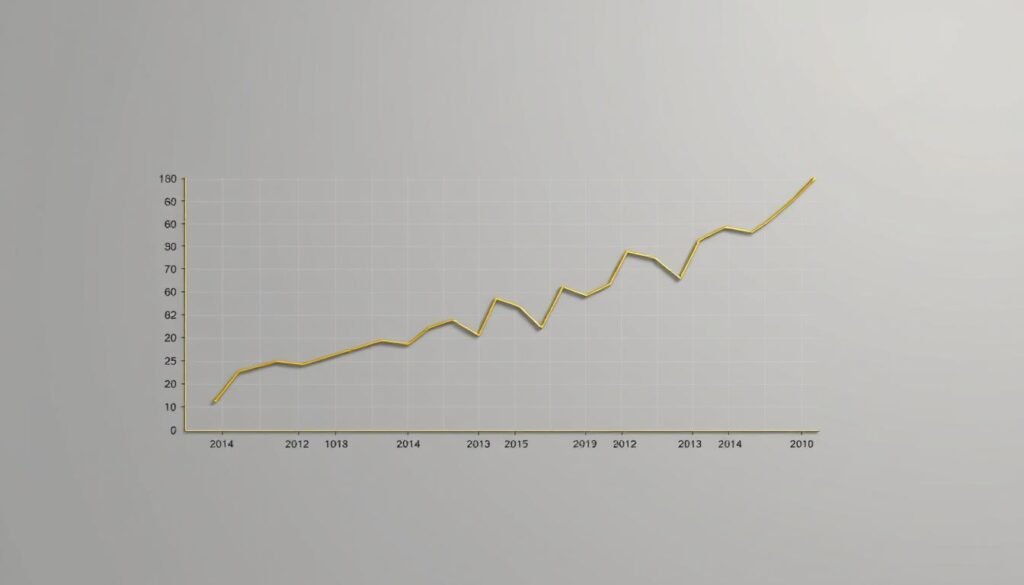
Line charts are the simplest, showing gold prices connected by lines. They offer a broad view of gold price changes over time.
When to Use Line Charts
Use line charts for a basic look at gold price trends. They’re great for:
- Spotting overall trends
- Comparing gold price data
- Showing data clearly and simply
Bar Charts: Adding More Information
Bar charts, or OHLC (Open, High, Low, Close) charts, offer more detail than line charts. Each bar shows the opening, highest, lowest, and closing prices for a period.
Reading OHLC Data
To understand OHLC data, know what each bar part means:
- The top of the bar shows the highest price
- The bottom shows the lowest price
- A tick on the left is the opening price
- A tick on the right is the closing price
By analyzing these, you can see price action in that period.
Candlestick Charts: The Trader’s Favorite
Candlestick charts are loved by traders for their clear, detailed info. They show the same OHLC data as bar charts but in a more intuitive way.
Interpreting Candlestick Patterns
Candlestick patterns hint at market moves. Common ones include:
- Hammer: Suggests a possible reversal
- Shooting Star: Warns of a possible downturn
- Bullish Engulfing: Points to an uptrend
Understanding Timeframes in Gold Chart Analysis
When you look at gold price charts, knowing the timeframe is key. Different timeframes give you different views of gold prices. This helps you spot trends and patterns for your trading plans.
Intraday, Daily, Weekly, and Monthly Charts
There are several timeframes for gold chart analysis. Each one shows price movements in a unique way. These include:
- Intraday charts, which show price movements within a single trading day
- Daily charts, which display price action over several days or weeks
- Weekly charts, offering a longer-term view of price trends
- Monthly charts, providing a broad perspective on long-term price movements
Pros and Cons of Each Timeframe
Each timeframe has its own benefits and drawbacks. For example:
- Intraday charts can help you make money from short-term price changes but may be noisy.
- Daily and weekly charts balance short-term and long-term views, useful for spotting trends.
- Monthly charts are great for seeing long-term trends but miss short-term chances.
Choosing the Right Timeframe for Your Investment Goals
Choosing the right timeframe depends on your investment goals and style. Short-term traders might prefer intraday or daily charts. Long-term investors might find weekly or monthly charts more useful.
Timeframe Selection Based on Trading Style
Your trading style also affects your timeframe choice. For instance:
- Scalpers and day traders often prefer intraday charts to capitalize on quick price movements.
- Swing traders may use daily or weekly charts to identify trends and ride the momentum.
- Long-term investors might focus on monthly charts to understand the broader market trends.
By knowing the different timeframes and their uses, you can improve your gold chart analysis. This helps you make better investment choices.
Identifying Support and Resistance Levels in Gold Charts
Understanding support and resistance levels is key for trading gold. These levels show where the market has shown strong buying or selling interest.
How to Spot Key Price Levels
To find support and resistance levels, look at historical price data. Search for areas where the price has bounced back or faced rejection. Support levels are where prices stop falling, and resistance levels are where they stop rising.
Looking at past price movements helps find these zones. By studying past data, you can spot areas that have been support or resistance. These are not exact prices but ranges with significant activity.
Using Support and Resistance for Trading Decisions
After finding these levels, they guide your trading choices. They help decide when to enter or exit trades.
Entry and Exit Strategies Based on Price Levels
For example, buying gold near a strong support level can lead to a bounce. Selling or short-selling near a resistance level might result in a drop. Here’s a simple table showing possible strategies:
| Price Level | Action | Expectation |
|---|---|---|
| Support Level | Buy | Price Bounce Back |
| Resistance Level | Sell/Short-Sell | Price Drop |
By using support and resistance levels, you can improve your gold trading strategy. This leads to more informed trading decisions.
Trend Analysis for Gold Prices
Trend analysis is key for gold investors. It helps them understand market changes. This knowledge aids in making smart buy or sell decisions.
Identifying Uptrends, Downtrends, and Sideways Markets
To analyze trends, you must spot uptrends, downtrends, or sideways markets. An uptrend has higher highs and lows, showing price increases. A downtrend has lower highs and lows, indicating price drops. Sideways markets show price stability within a narrow range.
Drawing Trendlines and Channels Correctly
Trendlines are vital in technical analysis. They show the trend’s direction and strength. To draw a trendline, connect price highs or lows over time. Uptrends use lows, downtrends use highs. Channels are parallel lines around the trendline, showing price movement.
Using Trendlines to Anticipate Price Movements
Trendlines help predict future price actions. When prices hit a trendline, they often bounce off or break through. This can signal trading opportunities.
| Trend Type | Characteristics | Trading Signal |
|---|---|---|
| Uptrend | Higher highs and higher lows | Buy or hold |
| Downtrend | Lower highs and lower lows | Sell or avoid |
| Sideways | Price within a narrow range | Wait for breakout or consolidation |
Essential Technical Indicators for Gold Chart Analysis
When you start analyzing gold charts, technical indicators are key. They help you see market trends and find good times to buy or sell. They also help you improve your trading plan.
Moving Averages: The Beginner’s First Indicator
Moving averages are a top choice for gold chart analysis. They smooth out price data, making trends easier to spot. They help you see the market’s direction and find key support and resistance levels.
Simple vs. Exponential Moving Averages
There are two main types of moving averages: Simple (SMA) and Exponential (EMA). SMAs treat all data equally, while EMAs focus more on recent prices. For gold, EMAs are better because they react faster to price changes.
Relative Strength Index (RSI): Measuring Momentum
The Relative Strength Index (RSI) is great for gold price charts. It shows how fast prices are changing to spot overbought or oversold spots. It’s good for finding when the market might turn around.
Identifying Overbought and Oversold Conditions
With the RSI, look for values outside 30 to 70. A value over 70 means the market might pull back. A value under 30 could mean it’s time to buy.
MACD: Combining Trend and Momentum
The Moving Average Convergence Divergence (MACD) mixes trend and momentum analysis. It plots two moving averages to find buy and sell signals.
Trading MACD Crossovers and Divergences
For the MACD, watch for crossovers between the MACD and signal lines. A bullish crossover means it’s time to buy. A bearish crossover means it’s time to sell. Also, divergences can signal a market turn.
Using these technical indicators in your gold chart analysis can lead to better trading decisions. It can also improve your trading strategy.
Chart Patterns Every Gold Investor Should Know
To do well in the gold market, investors must know key chart patterns. These patterns offer insights into market moves. They help investors make smart choices. Knowing these patterns can help investors grab opportunities and avoid missing trends.
Reversal Patterns: Head and Shoulders, Double Tops/Bottoms
Reversal patterns show when the market might change direction. The Head and Shoulders pattern is a top sign of a shift from up to down. It has a peak (head) and two smaller peaks (shoulders).
An Inverse Head and Shoulders pattern shows a shift from down to up. Double Tops and Double Bottoms also signal changes. A Double Top means a possible downtrend, while a Double Bottom suggests an uptrend.
Measuring Targets for Reversal Patterns
To find the potential move after a reversal, use the pattern’s height. For a Head and Shoulders, measure from the head to the neckline. Then, project that distance down from the neckline to find a target price.
Continuation Patterns: Flags, Pennants, and Triangles
Continuation patterns show the trend is likely to keep going. Flags and Pennants are short-term signs of a pause before the trend continues. Triangles have converging trend lines and can be ascending, descending, or symmetrical. They signal a potential breakout in the trend’s direction.
Trading Breakouts from Continuation Patterns
To trade breakouts, wait for confirmation. For example, a breakout above a Bullish Flag or Pennant’s upper boundary means the uptrend continues. This is a good time to buy.
By knowing these chart patterns, gold investors can better predict market moves. This helps them make smarter investment choices.
Volume Analysis in Gold Trading
Volume analysis is key in gold trading. It helps confirm price movements. As a trader, understanding volume offers valuable insights into market trends. This knowledge helps you make better decisions.
Why Volume Confirms Price Movements in Gold Markets
Volume is crucial in validating price movements. High volume with price moves shows strong market participation. This makes the price move more significant. On the other hand, price movements on low volume are less reliable. They show a lack of conviction among traders.
Volume Precedes Price Principle
The “volume precedes price” principle is important. It says volume changes often happen before price changes. For example, an increase in volume before a price move signals a trend change. Always watch for these signals to predict market movements.
Interpreting Volume Patterns with Price Action
Understanding volume patterns with price action is crucial. For example, a breakout with high volume is more reliable than one with low volume. Here are some key points to consider:
- High Volume Breakouts: Show strong market conviction.
- Low Volume Pullbacks: May suggest a lack of selling pressure, potentially leading to a trend continuation.
Volume Spikes and Their Significance
Volume spikes are sudden increases in trading volume. They can signal important market events. These spikes are linked to news, economic releases, or other market factors. Recognizing volume spikes helps you react quickly to market changes.
By using volume analysis in your trading strategy, you get a deeper understanding of the gold market. This improves your decision-making process.
Understanding Gold Price Correlations
When you look at gold price charts, it’s key to know how gold prices relate to other assets. This knowledge helps you spread out your investments and lower risks. By seeing how gold prices change with other assets, you can make smarter trades and investments.
For example, gold usually goes up when the US dollar goes down. Knowing this, you can adjust your investment plans. Gold prices also move with other commodities like oil, or with stocks and bonds. Understanding these connections helps you guess market trends and make better choices.
To use gold price correlations well, keep an eye on chart gold data regularly. This lets you spot trends and patterns for your trading plans. By mixing gold price analysis with knowing about correlations, you can improve your gold investment strategy.