Have you noticed how countries like Russia and China are changing the global economy? They’re focusing a lot on gold.
Statista’s latest data shows China has added 351 tons of gold in five years. This has greatly increased their reserves. It’s part of a plan to spread out their assets and not rely so much on the US dollar.
Understanding these moves can help you make better choices with your money. By looking at what Russia and China do, you can learn a lot about gold accumulation.
Key Takeaways
- China has significantly increased its gold reserves over the past five years.
- Russia and China are diversifying their assets to reduce dependence on the US dollar.
- Understanding gold accumulation strategies can inform your investment decisions.
- The move towards gold accumulation is part of a broader economic strategy.
- Global economic dynamics are shifting, with gold playing a key role.
The Strategic Importance of Gold in Global Economics
Gold’s role in the economy has not changed, even as the world changes. It acts as a shield against economic ups and downs. You might ask why gold is still key in global economics. The answer is its long history and role in today’s money systems.

Gold as a Store of Value Throughout History
Gold has always been a store of value and a hedge against inflation. For ages, it has helped keep wealth safe. Central banks and investors turn to gold when the economy is shaky. This trust in gold comes from its rarity, lasting quality, and worldwide acceptance.
You can use gold as a way to spread out your investments. This makes your portfolio stronger.
Gold’s Role in Modern Monetary Systems
In today’s money systems, gold is still important. Many countries, like Russia and China, are adding gold to their reserves. They do this to diversify and lessen their reliance on the US dollar. This shows gold’s lasting importance in the world economy.
Gold’s value in keeping things stable and safe is clear. When thinking about investments, seeing gold’s worth is a key step. It helps build a strong financial future.
Historical Context: Russia’s Relationship with Gold
Russia’s love for gold is rooted in its history. Gold has been a symbol and a strategic asset for the country. It played a key role in the Soviet era and continues to influence Russia’s economic policies today.
Soviet Era Gold Policies
In the Soviet era, gold backed the ruble, adding stability to the economy. The government built up huge gold reserves. These reserves were vital for trade, even when the country was isolated.
This gold accumulation supported the Soviet economy. It also showed the nation’s wealth and power.
Post-Soviet Transition and Gold Reserves
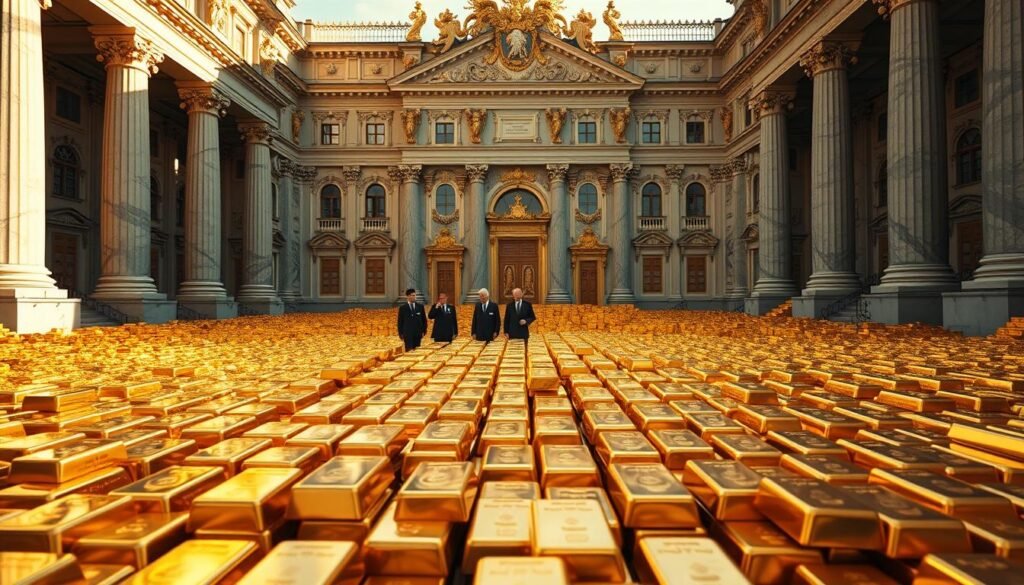
After the Soviet Union fell, Russia kept gold at the heart of its economy. The new government expanded its gold reserves. They saw gold as a safe asset.
This strategy helped Russia face economic ups and downs. It included financial crises and changes in global prices.
Now, Russia’s gold reserves show its long-standing bond with gold. This bond reflects a commitment to economic strength. Knowing this history can help you understand gold’s role in finance, both nationally and personally.
Historical Context: China’s Traditional View on Gold
Gold has been important in China for thousands of years. It stands for wealth, power, and good luck. It’s deeply rooted in Chinese culture and tradition.
Cultural Significance of Gold in Chinese Society
In Chinese society, gold is more than a metal. It’s a symbol of good luck and prosperity. It’s used in ceremonies like weddings and birthdays.
Gold is also seen in intricate designs and ornaments. This shows the skill and art of Chinese goldsmiths.
The love for gold goes back to the Han Dynasty. This history has made gold a key part of Chinese culture.
Pre-2000s Chinese Gold Market and Policies
Before the 2000s, China’s gold market was closed. The government controlled gold imports and exports tightly. The country’s gold reserves were smaller back then.
The government’s gold policies focused on controlling the market. They had strict rules on gold trading and building gold reserves. This set the stage for future changes.
| Year | Gold Reserve (Tonnes) | Policy Change |
|---|---|---|
| 1990 | 395 | Strict control over gold imports |
| 2000 | 395 | Initial steps towards market liberalization |
| 2008 | 1,054 | Significant increase in gold reserves |
Current Gold Reserves: Russia vs. China
Russia and China are both working hard to grow their gold reserves. This shows their strong interest in gold. It also gives us clues about their economic plans and how they affect the world.
Official Gold Holdings by Russia
Russia has been buying a lot of gold. By the second quarter of 2025, it had 2,330 tons. This shows Russia’s plan to spread out its wealth and not rely too much on other currencies.
The Russian government is not just buying gold. It’s also working to make more gold in Russia. This makes Russia a big player in the world of gold.
Official and Estimated Gold Holdings by China
China had 2,299 tons of gold by the second quarter of 2025. This is a bit less than Russia’s, but China’s efforts are still very important. China’s gold reserves are officially 2,299 tons, but some think there might be more.
China is getting gold in two main ways. It buys it directly and also invests in gold mining. This careful strategy helps China grow its gold reserves.
| Country | Gold Reserves (tons) |
|---|---|
| Russia | 2,330 |
| China | 2,299 |
Looking at Russia and China’s gold reserves shows their focus on strengthening their economies. As they keep adding to their gold, it will be fascinating to see how it changes the global economy and gold prices.
Russia’s Gold Accumulation Strategy Since 2008
Since 2008, Russia has been growing its gold reserves. This is part of a plan to lessen its dependence on the US dollar. It’s a move to diversify its financial assets and boost its economic standing worldwide.
De-Dollarization Efforts Through Gold
Russia’s gold buildup is linked to its efforts to reduce dollar reliance. By adding to its gold reserves, Russia aims to lessen its exposure to US dollar swings. This strategy is key for keeping economic stability amidst global tensions. Gold acts as a safe asset, protecting against economic sanctions and currency shifts.
Domestic Gold Production and Acquisition Methods
Russia uses a mix of state and private sectors to get gold. This approach helps Russia grow its gold reserves effectively.
State-Owned Mining Operations
State-owned mines are crucial for Russia’s gold output. These mines are key in adding to Russia’s gold stock. The government’s oversight ensures gold mining meets national economic goals.
Private Sector Purchases
Russia also buys gold from private mines. These private mines add to the country’s gold production. Their gold is often bought by the state or central bank, increasing Russia’s gold reserves.
By mixing state-led efforts with private sector involvement, Russia has successfully built up its gold reserves since 2008. This strategy boosts Russia’s economic strength and shows its aim to cut US dollar dependence.
China’s Systematic Gold Accumulation Approach
China has a smart plan for adding gold to its reserves. It buys gold and makes strategic investments. This plan helps China grow its gold reserves over time.
The Shanghai Gold Exchange and State Purchases
The Shanghai Gold Exchange is key for China’s gold strategy. It helps the government buy gold efficiently. Experts say it’s a reliable place for gold trading.
Through this exchange, China buys gold from home and abroad. This way, it gets gold from many sources.
Strategic Gold Mining Investments Domestically and Abroad
China also invests in gold mining at home and abroad. This strategy boosts its gold reserves and global influence.
African Mining Operations
In Africa, China has made big investments in gold mining. It works with local companies and governments. This has helped China get more gold reserves.
Countries like Ghana and Mali have seen a lot of Chinese investment. This has helped their gold mining sectors grow.
South American Partnerships
China has also partnered with South American countries. Peru and Argentina have seen Chinese investment in mining. These partnerships give China more gold and help the local economies.
China’s smart approach to gold helps it grow economically. Its strategies are aimed at long-term success.
Why Gold Remains Central to National Reserve Strategies
As global economic worries grow, gold stays key in national reserve plans. You might ask why gold is so important for countries. It’s because of its long history, trustworthiness, and how it holds up in tough times.
Physical Gold vs. Digital Assets
Central banks often choose physical gold over digital assets for reserves. Gold’s realness and its long-standing value make it a reliable choice. Unlike digital assets, gold can’t be hacked or fail due to tech problems.
- High liquidity
- Universal acceptance
- No counterparty risk
Gold’s Performance During Economic Crises
Gold has always shown its worth in tough economic times. For example, in the 2008 crisis, gold prices went up as people looked for safe places to put their money. This makes gold a great choice for national reserves.
In summary, gold’s dependability and past success make it a vital part of national reserve plans. As economic worries keep rising, gold will likely stay a top choice for central banks around the world.
Geopolitical Motivations Behind Gold Accumulation
Global tensions are on the rise, and Russia and China are stockpiling gold. You might wonder why they’re doing this so fast. Their reasons are complex and strategic.
Reducing Dependency on the US Dollar
Russia and China want to lessen their reliance on the US dollar. They’re building up their gold reserves. This move helps them avoid economic sanctions and reduces the dollar’s sway over their economies.
By diversifying their assets, they’re also reducing risks tied to the dollar. Here’s a table showing how their reserve composition has changed:
| Country | Pre-2010 Gold Reserves (%) | Current Gold Reserves (%) |
|---|---|---|
| Russia | 5% | 20% |
| China | 1.5% | 3.5% |
Preparing for Economic Sanctions and Financial Isolation
Another reason is to prepare for economic sanctions and isolation. Gold acts as a financial shield for both countries. It can be used to face economic challenges from other nations, like the US.
The geopolitical scene is getting more complex. Knowing why Russia and China are buying gold helps us understand market trends. It’s crucial to keep up with these developments for your investment plans.
Economic Benefits of National Gold Reserves
In the world of finance, gold is crucial for a nation’s strength. You might ask, how does gold help a country’s economy? It does so by offering stability and security when money matters are uncertain.
National gold reserves can stabilize a country’s currency and fight inflation. Russia and China have been adding gold to their reserves. This shows gold’s key role in their economic plans.
Currency Stabilization Effects
Gold reserves help keep a country’s currency stable. They can back a currency, boosting confidence in its value. This is vital during economic downturns, when currency changes can hurt trade and investment.
For example, if a country’s currency weakens due to sanctions or tensions, gold reserves can help. They can be used for international deals, lessening the effects of these issues. This supports the country’s economy and currency.
Inflation Hedging at National Scale
Gold is a strong defense against inflation. As inflation goes up, gold’s value often increases. This makes gold a key asset for countries wanting to safeguard their wealth.
For instance, when inflation is high, a country’s currency might lose value. But with gold reserves, it can lessen inflation’s impact. Gold’s value usually goes up during inflation, acting as a financial shield against economic troubles.
The Global Impact of Russia-China Gold Purchases
Have you wondered how Russia and China’s gold buying affects the world economy? Their increased gold demand changes international gold prices and supply chains. Knowing this helps you understand global gold markets better.
The gold purchases by Russia and China have big effects on international gold markets. Some key impacts include:
- Price Volatility: Higher demand means higher gold prices, affecting investors and buyers worldwide.
- Supply Chain Disruptions: The increased demand causes supply chain problems, making gold harder to find for others.
- Market Speculation: Russia and China’s aggressive buying sparks speculation about gold price changes.
Price Effects on International Gold Markets
The price effects on international gold markets are crucial. As Russia and China buy more gold, prices per ounce have seen big swings. This volatility comes from several factors, including:
- Increased Demand: Russia and China’s higher demand drives up prices.
- Supply Constraints: Limited gold supply makes prices go up even more.
- Market Sentiment: Investor feelings and speculation also affect price changes.
The global impact of Russia-China’s gold purchases is complex. It affects not just gold prices but also the wider financial markets. By understanding these dynamics, you can make better investment choices.
Collaborative Gold Strategies Between Russia and China
Russia and China are teaming up to reduce their reliance on Western finance. This partnership is key to understanding their economic goals and future moves. It shows how they are working together in global finance.
They are creating joint gold trading mechanisms and looking into gold-backed systems outside of SWIFT. This move is part of their plan to boost their financial freedom and avoid global economic risks.
Joint Gold Trading Mechanisms
The creation of joint gold trading systems is a big step for Russia and China. It makes their gold market more connected, which helps with money flow and lowers costs. This also helps them avoid Western financial control, boosting their financial power.
For example, a joint gold trading platform could make transactions smoother and provide steady income. This partnership could make the global gold market more varied and strong.
BRICS Nations and Gold-Backed Alternatives to SWIFT
Russia and China are also part of BRICS, working on gold-backed alternatives to SWIFT. The SWIFT system, mainly run by Western countries, is a big risk for countries under sanctions.
By making a gold-backed system, BRICS aims for a safer, independent financial network. This move not only strengthens their financial health but also helps create a more open global financial system.
| Country | Gold Reserves (Tons) | Gold-Backed Currency |
|---|---|---|
| Russia | 2,300 | Yes |
| China | 2,168 | Yes |
| India | 754 | No |
Both Russia and China have large gold reserves. These reserves support their gold-backed currencies and financial plans. The table shows their gold reserves and gold-backed currencies, showing their push for financial freedom.
Investment Lessons from National Gold Accumulation Strategies
Russia and China’s gold strategies teach us about diversifying our investments. They show how to build a strong gold reserve. These lessons can guide our own investment choices.
Portfolio Diversification Principles
Learning from Russia and China, we see the value of diversifying. Adding gold to your portfolio can protect against economic ups and downs. It helps stabilize your investments.
Optimal Gold Allocation Percentages
Finding the right amount of gold in your portfolio depends on your goals and risk level. A good range is 5% to 15%. This balance helps you enjoy gold’s benefits without risking too much.
Physical Gold vs. Gold ETFs and Mining Stocks
There are many ways to invest in gold. Physical gold gives you a real asset to hold. Gold ETFs make investing easy without storage worries. Gold mining stocks can increase your returns by leveraging gold prices.
Timing Strategies Based on Central Bank Activities
Watching central bank gold buys can guide your investment timing. Seeing trends in their purchases can give you economic insights. This helps you decide when to invest in gold.
By tracking major central banks, like Russia and China, you can predict market shifts. This knowledge lets you adjust your strategy to seize opportunities and avoid risks.
How Individual Investors Can Apply These Gold Strategies
You can use the lessons from national gold strategies to boost your own investments. Learning from countries like Russia and China can help you make better choices for your portfolio.
Understanding what drives central banks to buy gold is crucial. Central banks’ gold buying can greatly affect gold prices and availability. Watching these trends can help you find the best times to invest in gold.
Entry Points Based on Central Bank Purchasing Patterns
Central banks’ gold buying patterns are important for investors. When they buy gold, it might be a good time for you to invest too. Here are some tips:
- Keep an eye on central bank gold reserve updates
- Watch how gold prices change after central bank buys
- Think about the global politics behind central bank gold purchases
Diversification Approaches for Different Economic Scenarios
Diversifying your investments is essential. By thinking about different economic situations, you can adjust your gold investments. For example:
- In uncertain times, add more gold to your portfolio as a safe choice.
- When the economy is growing, you might put less of your money into gold.
- If inflation is high, gold can protect your money from losing value.
By diversifying and keeping up with global economic news, you can make smarter gold investment choices.
Conclusion: The Future of Gold in International Relations and Personal Investment
Gold is becoming more important in the world economy, thanks to countries like Russia and China. They are adding gold to their reserves, changing how we see money and investments. This move could affect everything from how we value money to where we invest.
Knowing about these changes can help you make better choices with your money. Russia and China’s moves show gold’s value as a safe place to keep wealth. As the world’s economy grows, gold’s appeal is likely to stay strong, thanks to both countries and individual investors.
Grasping how gold is being used and its effects on the world can open up new chances for you. Whether you’re new to investing in gold or have been doing it for a while, keeping up with trends is crucial. It helps you navigate the shifting world of international finance.