You might be surprised to learn that gold is crucial in the fast-growing world of the Internet of Things (IoT). The need for better, safer, and greener tech is driving the use of gold in IoT devices. This is changing many industries.
Gold’s special qualities make it perfect for boosting IoT device performance and dependability. As we dive deeper into IoT’s vast possibilities, gold’s importance in this tech is growing.
Key Takeaways
- The integration of gold in IoT is enhancing device efficiency and safety.
- Gold’s unique properties make it ideal for IoT technology.
- The convergence of gold and IoT is revolutionizing various industries.
- IoT devices with gold are more reliable and sustainable.
- The future of IoT technology is closely tied to the use of gold.
The Convergence of Gold and IoT Technology
The mix of gold and IoT technology is changing how we make modern electronics. As IoT grows, we need materials that make devices work better and last longer. Gold is key in this change because of its special properties.
The Evolution of IoT and Materials Science
The Internet of Things has grown a lot since it started. It’s moved from simple gadgets to complex systems that use many technologies. Materials science has helped a lot, with scientists looking for better materials. Gold is a top choice because it’s great at conducting, doesn’t rust, and can be shaped easily.
- Improves how devices connect and work
- Keeps devices from rusting, making them last longer
- Can be shaped in many ways for different uses
Why Gold Matters in Connected Devices
In connected devices, gold is used in parts like connectors and switches. It helps signals move quickly and doesn’t rust, keeping devices working well. This makes gold perfect for IoT devices that need to be reliable and precise. As IoT tech gets better, gold’s importance will grow too.

Gold: The Essential Element for IoT Innovation
In the world of IoT, gold is key for innovation. It’s important because of its unique properties. These properties help make IoT devices reliable and efficient.
Historical Use of Gold in Electronics
Gold has been in electronics for decades. It’s great for conducting electricity and doesn’t corrode easily. In the past, it was used in computers and phones because it was so reliable.
Gold contacts and connectors were common. They offered a top-notch connection with little resistance.
Transition to Modern IoT Applications
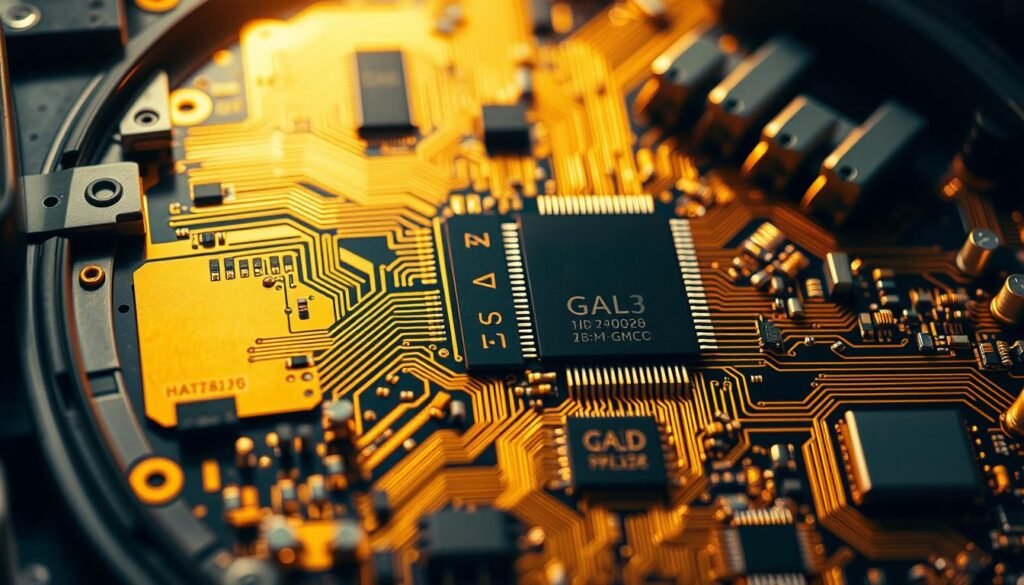
Gold’s use has moved to modern IoT devices. It’s used in many parts, like switches and contacts. Its ability to resist corrosion and keep conducting is key.
In smart homes, gold keeps connections stable over time. This is crucial for the devices’ performance.
Current Market Demand for Gold in Technology
The demand for gold in tech is growing fast. This is because more devices are connecting. The need for reliable, high-performance parts is increasing.
This demand isn’t just for gadgets. It’s also for industrial IoT, where gold’s durability shines. As IoT grows, so will the need for gold.
In summary, gold is more than just a valuable metal. It’s vital for IoT. Its history, use in modern tech, and current demand show its importance. As IoT keeps evolving, gold’s role will stay crucial.
Unique Properties of Gold for IoT Applications
Gold’s properties are key to improving IoT technology. It’s a vital material in making IoT devices work better. Gold’s special qualities make IoT devices efficient, reliable, and high-performance.
Conductivity and Corrosion Resistance
Gold is known for being very conductive and resistant to corrosion. These traits are essential for IoT devices. They face many environmental challenges.
Performance in Humid Environments
In damp places, many materials fail quickly. But gold stays strong. So, IoT devices with gold parts work well even when others don’t.
Long-term Reliability Benefits
Gold’s resistance to corrosion means IoT devices last longer. This is crucial for applications where failure can be costly.
Malleability and Ductility Advantages
Gold is very malleable and ductile. It can be shaped into many forms without breaking. This is great for making IoT devices, like wiring and connectors.
Gold’s ability to be drawn into thin wires is perfect for IoT’s complex circuits. This makes it easier to create smaller, more advanced IoT devices.
Thermal Properties in IoT Contexts
Gold also has good thermal properties. It’s great for IoT devices that get hot. Its high thermal conductivity helps spread heat, improving device performance and life.
| Property | Benefit in IoT |
|---|---|
| Conductivity | Efficient signal transmission |
| Corrosion Resistance | Long-term device reliability |
| Malleability and Ductility | Flexible design options |
| Thermal Properties | Effective heat dissipation |
Gold’s Critical Role in IoT Sensors and Circuits
Gold is key in making advanced IoT sensors and circuits. It’s needed for both reliability and efficiency. Gold’s great conductivity, resistance to corrosion, and ability to be made small make it essential.
Gold-Based Sensing Technologies
Gold-based sensing technologies are changing the IoT world. They make data collection more accurate and reliable. Gold’s electrical properties help create sensitive sensors for detecting environmental changes.
Chemical Sensors Using Gold Electrodes
Chemical sensors with gold electrodes are very important. They can find tiny amounts of chemicals. This is useful for environmental monitoring and health checks. Gold makes these sensors more sensitive and precise.
Pressure and Temperature Sensing Applications
Gold is also used for sensing pressure and temperature. It works well in harsh conditions. This gives important data for both industrial and consumer uses.
Miniaturization Capabilities
Gold’s ability to be made small is a big plus. It can be turned into thin wires and tiny contacts. This helps make smaller, more efficient IoT devices. Smaller devices are key for wearable tech and daily life integration.
- Enables the development of smaller IoT devices
- Improves the efficiency of data collection and transmission
- Enhances the overall performance of IoT systems
Performance Enhancement in Extreme Conditions
Gold works well in tough conditions. It stays reliable in high temperatures and corrosive environments. This is crucial for IoT systems that need to work well for a long time.
In conclusion, gold is vital for IoT sensors and circuits. It supports advanced sensing and works well in harsh conditions. As IoT tech grows, gold’s role will become even more important, leading to new innovations.
Wearable IoT Devices: Gold as a Game-Changer
Wearable IoT devices are now a big part of our lives. Gold plays a key role in these technologies. Let’s explore how gold helps.
Medical Wearables and Gold Components
Gold is making a big difference in medical wearables. It improves how these devices work and last. Here are a few examples:
Continuous Glucose Monitors
Gold is great for continuous glucose monitors. It’s good at conducting signals and doesn’t rust. This means the monitors work well and give accurate readings.
ECG and Heart Rate Sensors
Gold is also used in ECG and heart rate sensors. Its softness lets makers create detailed circuits. These circuits can fit comfortably on your body and track your heart well.
Consumer Smart Devices Using Gold
Gold also helps in consumer smart devices like smartwatches and fitness trackers. It makes these devices last longer and look better. This makes people want to buy them more.
Durability and Longevity Improvements
Gold makes wearable IoT devices last longer and work better. It doesn’t rust or tarnish. This means devices stay in good shape and look great for a long time. You don’t have to replace them as often.
Using gold, makers can create devices that are efficient, reliable, and last longer. This makes them more sustainable for us.
Smart Home Technology and Gold Components
Transforming your home into a smart haven involves gold’s crucial role. Gold components are key to smart home devices’ performance and reliability. We’ll look at gold’s use in smart home sensors, its impact on reliability, and the cost-benefit for manufacturers.
Gold in Smart Home Sensors
Gold is used in smart home sensors for its great conductivity and resistance to corrosion. These traits keep sensors accurate and working well over time. For example, gold-coated contacts in temperature and humidity sensors make them last longer and work better.
Reliability Factors in Connected Homes
Reliability is key for a smooth smart home experience. Gold components play a big role by cutting down signal loss and keeping performance steady. This is vital for security systems and home automation.
Cost-Benefit Analysis for Manufacturers
Gold is expensive, but its benefits often make it worth it. Manufacturers need to weigh gold’s cost against its performance and longevity. A cost-benefit analysis shows that gold in key parts can save money in the long run through less maintenance and replacements.
| Component | Benefit of Gold | Impact on Cost |
|---|---|---|
| Smart Home Sensors | Improved conductivity and corrosion resistance | Initial cost increase, but long-term savings |
| Contacts and Connectors | Enhanced reliability and durability | Moderate cost increase |
| Circuits and Wiring | Reduced signal loss and improved performance | Higher initial investment, but reduced maintenance costs |
Industrial IoT Applications Leveraging Gold
Gold is more than just a valuable metal; it’s key in the Industrial IoT world. It makes solutions more efficient and long-lasting. As more industries use IoT, the need for gold grows.
Manufacturing Sensors and Gold Elements
Sensors are crucial in manufacturing, watching over and guiding production. Gold is chosen for these sensors because it conducts well and doesn’t corrode easily.
Predictive Maintenance Systems
Predictive maintenance is vital in today’s manufacturing. It spots problems early, cutting down on downtime. Gold sensors and connectors are essential, offering steady data and lasting performance.
Quality Control Applications
Gold is also used in quality checks. Its conductivity and flexibility help make precise, reliable tools. This ensures products are top-notch.
| Application | Benefits of Gold |
|---|---|
| Predictive Maintenance | Reliable data transmission, durability |
| Quality Control | High precision, reliability |
Critical Infrastructure Monitoring
Critical spots like bridges and power grids need constant watch. Gold sensors are used here because they handle tough conditions well and give accurate info.
Harsh Environment Applications
Industrial settings are often tough, with extreme heat, corrosive stuff, and more. Gold’s resistance to corrosion and its conductivity in harsh conditions make it perfect for IoT in these places.
Using gold in Industrial IoT helps industries work better, save on maintenance, and make better products. As IoT grows, gold’s importance will likely grow too.
Gold Nanoparticles: Revolutionizing IoT Capabilities
Gold nanoparticles are changing how IoT devices work. They are making sensing and detection better. This is a big change in how IoT is used in different fields.
Sensing and Detection Innovations
Gold nanoparticles make IoT sensors more accurate. They can spot tiny changes in the environment and health. For example, they can find disease biomarkers at very low levels. This is key for better healthcare technology.
Energy Efficiency Improvements
Gold nanoparticles also make IoT devices use less energy. They improve how well circuits conduct electricity. This means IoT devices can run longer on batteries.
Next-Generation IoT Applications
Gold nanoparticles are leading to new IoT uses. We’ll see better wearable tech, smart buildings, and advanced industrial systems. These will bring big changes in many areas, like healthcare and manufacturing.
| Application | Benefit of Gold Nanoparticles |
|---|---|
| Wearable Devices | Enhanced sensing capabilities and energy efficiency |
| Smart Infrastructure | Improved durability and performance in harsh environments |
| Industrial IoT | Advanced sensing and detection for predictive maintenance |
As we keep using gold nanoparticles in IoT, we’ll see more new ideas. These will keep changing the tech world.
The Economics of Gold in the Internet of Things
Understanding gold’s role in IoT is key for both makers and buyers. It affects both cost and how well things work. Gold’s use in IoT has big economic effects that must be looked at closely.
Supply Chain Considerations
The gold supply chain for IoT is complex. It involves mining, refining, and making things. You must think about where gold comes from. It’s important for cost and for the planet and people.
Cost Optimization Strategies
To cut costs, makers can try a few things. They can use less gold or find cheaper materials. They can also recycle gold from old devices. This lowers the need for new gold.
| Cost Optimization Strategy | Description | Potential Savings |
|---|---|---|
| Minimize Gold Usage | Reduce the amount of gold used in IoT devices without compromising performance. | Up to 20% |
| Alternative Materials | Explore other materials that offer similar benefits to gold at a lower cost. | Up to 30% |
| Gold Recycling | Recycle gold from used IoT devices to reduce the need for new gold. | Up to 15% |
Market Value Projections
The value of gold in IoT is expected to go up. This is because more people will want IoT devices. The value will keep growing as technology improves and more devices are used.
Sustainability Challenges and Solutions
The IoT industry is growing fast, and we need to use precious metals like gold wisely. You’re part of a group that’s leading the way in making things better. It’s key to know the challenges and find solutions for a greener future.
Recycling Gold from IoT Devices
Recycling gold from old IoT devices is now crucial. Urban mining techniques help get gold from old gadgets. This cuts down on new mining and lessens electronic waste.
Urban Mining Techniques
Urban mining pulls precious metals from old electronics. It saves natural resources and lowers mining’s environmental harm.
Circular Economy Approaches
Using circular economy methods means making IoT devices that can be recycled. This way, gold and other valuable materials can be reused.
Reducing Gold Content While Maintaining Performance
Manufacturers are working to use less gold in IoT devices without losing quality. They’re improving designs and finding new materials to do this.
Ethical Sourcing Initiatives
It’s important to source gold ethically for IoT devices. Companies are starting programs to track gold’s origin. They want to make sure it’s mined fairly and with care for the environment.
| Sustainability Measure | Impact | Implementation |
|---|---|---|
| Recycling Gold | Reduces electronic waste and conserves resources | Urban mining and recycling technologies |
| Reducing Gold Content | Minimizes material usage without performance loss | Design optimization and material substitution |
| Ethical Sourcing | Ensures responsible sourcing practices | Supply chain transparency and auditing |
Case Studies: Successful Gold-IoT Implementations
Gold in IoT technology has led to many new uses in different fields. You’re about to see some key examples. They show how gold helps in IoT projects and what challenges come with it.
Healthcare Monitoring Systems
Gold is key in healthcare tech because it conducts well and doesn’t rust. For example, in wearable health trackers, gold helps send accurate data. A smartwatch that checks heart rate and blood oxygen is a great example.
Benefits: It’s more accurate, lasts longer, and is more comfortable for patients.
| Feature | Gold-Based Sensor | Conventional Sensor |
|---|---|---|
| Accuracy | High | Moderate |
| Durability | High | Low |
| Patient Comfort | High | Moderate |
Smart City Infrastructure
Gold helps a lot in smart city tech, like in sensors and connections. For instance, gold in smart traffic systems keeps data flowing well between cars and roads.
Advantages: It’s more reliable, cuts down on upkeep, and makes traffic smoother.
Agricultural Technology Solutions
In farming tech, gold is used in sensors to check soil moisture and temperature. This info helps farmers use water better and grow more crops.
Outcomes: It leads to more crops, saves water, and lowers costs.
Future Innovations at the Intersection of Gold and IoT
The future looks bright for gold and IoT. Gold’s special properties make it perfect for improving IoT tech. Expect big changes as scientists keep finding new ways to use it.
Research and Development Trends
Right now, scientists are working on making IoT devices better. They want them to be more conductive, durable, and small. They’re looking into using gold nanoparticles to make these devices more efficient and compact. This trend will keep pushing the limits of what’s possible.
Emerging Applications
New uses for gold in IoT are exciting. Think advanced medical wearables, smart home gadgets, and industrial sensors. For example, gold-based biosensors are being made for real-time health monitoring. These advancements are making things better and opening up new possibilities.
Potential Disruptive Technologies
Gold and IoT could lead to big changes. Imagine using gold nanowires for flexible electronics and gold for energy harvesting.
“The integration of gold nanowires into flexible electronics could revolutionize the way we interact with devices,” says Dr. Jane Smith, a leading researcher in the field.
These technologies could change the game. They might let us make new kinds of devices and use less power.
| Innovation | Description | Potential Impact |
|---|---|---|
| Gold Nanoparticles | Integration into IoT components for enhanced efficiency | Improved device performance |
| Gold-Based Biosensors | Real-time health monitoring for medical wearables | Advanced healthcare capabilities |
| Gold Nanowires | Flexible electronics for new device form factors | Revolutionary user interaction |
Conclusion: The Golden Future of IoT
Gold is changing the IoT world, and you can lead this change. Gold’s special qualities make it key for IoT gadgets, from smart wear to industrial tools.
Gold’s high conductivity and resistance to corrosion make IoT devices better. Gold nanoparticles also open up new ways for sensing and detecting.
The need for gold in IoT will keep growing, pushing innovation forward. Soon, we’ll see devices that make life and work better.
The IoT’s future is bright, thanks to gold. Embracing this tech will help you stay ahead in our fast-changing world. With gold leading the way, we’re set for a more connected and prosperous future.