In 2025, the world of precious metals is changing a lot. Gold has hit new record highs in all major currencies. This is more than silver, platinum, palladium, and most other commodities have gained in a year. This has made many investors and fans curious about what’s happening.
You’re not the only one trying to understand these changes. We’ll look at the world of precious metals together. You’ll learn about the things that affect their prices and how to choose the right investments. Knowing how gold compares to other precious metals is important for understanding the market.
Key Takeaways
- Gold has reached new record highs in 2025, surpassing other precious metals.
- The surge in gold prices is influenced by various market and economic factors.
- Understanding the comparison between gold and other precious metals is key to making informed investment decisions.
- Investors should consider the performance of silver, platinum, and palladium in relation to gold.
- Staying informed about market trends is crucial for navigating the precious metals market.
The Precious Metals Landscape in 2025
In 2025, the precious metals market is full of ups and downs. It’s key to keep up with the latest news. Knowing the trends and what affects precious metals is vital for smart choices.
Current Market Overview
The precious metals market is always changing, with big price swings. For example, silver jumped 78% by Oct. 20, reaching a record high. Gold also saw a 65% rise in the same time frame. These changes show what’s happening in the market and how investors are acting.
Key Factors Influencing Precious Metals in 2025
Several things are shaping the prices of precious metals in 2025. These include economic signs, how much is used in industry, and global events. Knowing these can help you move through the market more easily.
| Metal | Price Change | Influencing Factors |
|---|---|---|
| Gold | 65% increase | Economic uncertainty, investor demand |
| Silver | 78% increase | Industrial demand, investment |
| Platinum | Varied | Automotive industry demand, supply constraints |
By keeping up with these factors, you can make better choices in the precious metals market.
Gold: The Enduring Standard of Precious Metals
In 2025, gold is a key player in the precious metals market. It offers stability in uncertain times. Gold is a reliable choice for investors.
Gold’s Performance in Recent Years
Gold has shown resilience and growth in recent years. Its price has steadily increased. Central banks have bought over 1,000 tons each year for three years.
This has boosted demand and solidified gold’s reputation as a trusted store of value. Its stability and appeal are clear.
Gold’s Unique Properties and Value Propositions
Gold’s worth goes beyond its monetary value. It has ductility, conductivity, and resistance to corrosion. These qualities make it essential in electronics, dentistry, and jewelry.
Gold is also rare and hard to extract. This scarcity adds to its value, making it a popular investment.
Gold’s Role in the 2025 Economy
In 2025, gold will remain crucial as a hedge against inflation and currency fluctuations. Investors rely on gold to protect their assets. Demand from central banks and individuals keeps gold at the heart of the precious metals market.
Silver: The Industrial Precious Metal
In 2025, silver’s demand is on the rise due to its industrial uses. This makes it a key metal to keep an eye on. We’ll look at its role in the market, its uses, and its investment potential.
Market Position in 2025
Silver’s market status in 2025 is strong, thanks to record industrial demand. This demand comes mainly from solar panels, electronics, and healthcare. The growth of solar energy has greatly increased silver’s demand because of its great electrical conductivity.
- Solar energy sector demand
- Electronics manufacturing
- Healthcare applications
Industrial Applications Driving Silver Demand
Silver’s special properties make it crucial in many industries. Its high thermal and electrical conductivity, along with its malleability and ductility, are perfect for:
- Photovoltaic cells in solar panels
- Electrical contacts and switches
- Medical devices and antimicrobial coatings
Silver as an Investment Alternative
Silver is also seen as a good investment choice. Its potential for capital appreciation and as a hedge against inflation attracts investors. Though it’s more volatile than gold, silver is more affordable for new investors.
Adding silver to your investment portfolio can be wise, even in uncertain economic times.
Platinum: Luxury and Industrial Utility
Platinum is special because it’s both a luxury item and a key industrial metal. It’s not just for fancy jewelry. It’s also vital in many industries.
Market Dynamics in 2025
The platinum market in 2025 is a balance between supply and demand. Key factors influencing platinum prices include:
- Geopolitical tensions in major platinum-producing regions
- Fluctuations in global automotive production
- Investor sentiment towards precious metals
Automotive Industry Impact
The car industry is a big user of platinum, mainly for catalytic converters. As cars change, the shift towards electric vehicles (EVs) affects platinum. EVs need less platinum, but hydrogen fuel cells might create new demand.
Investment Profile
Platinum’s investment appeal comes from its two roles. Its industrial use keeps prices stable. But, as a precious metal, it’s also affected by market mood and volatility. Diversifying your investment portfolio with platinum can protect against economic ups and downs.
Palladium: The Industrial Powerhouse
Palladium is becoming a key player in the world of precious metals. It’s known for its use in the automotive industry. This is because it helps reduce harmful emissions from vehicles.
Palladium’s Rising Importance
Palladium’s role in cutting down vehicle emissions is growing. As rules to protect the environment get tougher, so does the need for palladium. This is making it a more attractive investment.
Supply Constraints and Demand Drivers
The supply of palladium is tight, mainly coming from South Africa and Russia. This shortage, along with increasing demand, is pushing up its price. It’s something to think about if you’re looking to invest in palladium.
Palladium’s Investment Considerations
Thinking about investing in palladium? It has a lot of potential but can be quite volatile. Here’s how it compares to other precious metals:
| Metal | Volatility | Growth Potential | Industrial Demand |
|---|---|---|---|
| Palladium | High | High | Strong |
| Gold | Low | Moderate | Moderate |
| Silver | Moderate | High | Strong |
| Platinum | Moderate | Moderate | Strong |
Palladium is unique because of its high growth potential and strong demand. But, its volatility is something to watch out for when investing.
Gold vs. Silver: A Comprehensive Comparison
Understanding the differences between gold and silver is key for smart investment choices. Each metal has its own characteristics and uses. These factors affect their market trends and investment value.
Price Ratio Analysis
The gold to silver price ratio is vital for investors. It shows how many silver ounces you can buy with one gold ounce. Over the last century, this ratio has swung between 30:1 and 120:1. Today, it’s about 75:1, hinting that silver might be cheaper than gold.
Volatility and Stability Factors
Silver’s price is more unpredictable than gold’s. This is because silver is in high demand for industrial uses, which changes with the economy. Gold, by contrast, is viewed as a safe investment. Its price is less influenced by industrial needs and more by investment and central bank actions.
Investment Return Comparison
Both gold and silver have the potential for big gains. But silver’s volatility can lead to bigger price changes. Silver has outperformed gold in some times, like during industrial booms. Gold, though, tends to stay steady during tough economic times.
| Metal | Average Annual Return | Volatility |
|---|---|---|
| Gold | 5% | Low-Moderate |
| Silver | 7% | High |
Knowing these details can guide you in deciding between gold, silver, or both for your investment portfolio.
Gold vs. Platinum: Luxury Metal Showdown
Exploring precious metals, you’ll see gold and platinum often compared. They’re both luxury and valuable, but in different ways.
Historical Price Relationships
Gold and platinum have different price behaviors. Gold is often seen as a safe investment, influenced by economic worries. Platinum, on the other hand, is more tied to car parts demand.
This shows in their prices. Gold is usually more stable, while platinum’s price can swing more.
Industrial Demand Differences
Gold and platinum are used differently in industries. Gold is mainly for jewelry and investments. Platinum is key for car parts, like catalytic converters.
This affects their prices. Platinum’s price can change a lot with car production.
Investment Case Comparison
Investing in gold and platinum has its own perks. Gold is great for protecting against inflation and market ups and downs. Platinum also offers value, thanks to its use in cars.
Choosing between them depends on your investment goals and how much risk you’re willing to take.
| Characteristics | Gold | Platinum |
|---|---|---|
| Primary Use | Jewelry and Investment | Automotive and Industrial |
| Price Volatility | Generally Stable | More Volatile |
| Investment Profile | Safe-Haven Asset | Industrial and Investment |
Gold vs. Palladium: Traditional vs. Modern
When you think about investing in precious metals, knowing the difference between gold and palladium is key. Each metal has its own traits, shaped by various market elements.
Market Correlation Analysis
Gold and palladium are both precious, but their prices don’t always move together. Palladium’s price can swing wildly, thanks to its big use in cars for pollution control. This makes it a good choice for diversifying your investment in precious metals.
Supply-Demand Dynamics
Gold and palladium have different uses and supplies. Gold is mainly for jewelry and as an investment, with a steady supply. Palladium, though, is mostly used in cars, making its price more tied to car production and rules on pollution.
Risk-Reward Profiles
Gold is seen as a safer bet, often used to protect against inflation and economic worries. Palladium might offer bigger gains because of its industrial use, but it’s riskier. You must think about your risk level and goals before choosing.
Knowing these differences helps you decide if gold, palladium, or both fit in your investment mix.
Investment Vehicles for Precious Metals
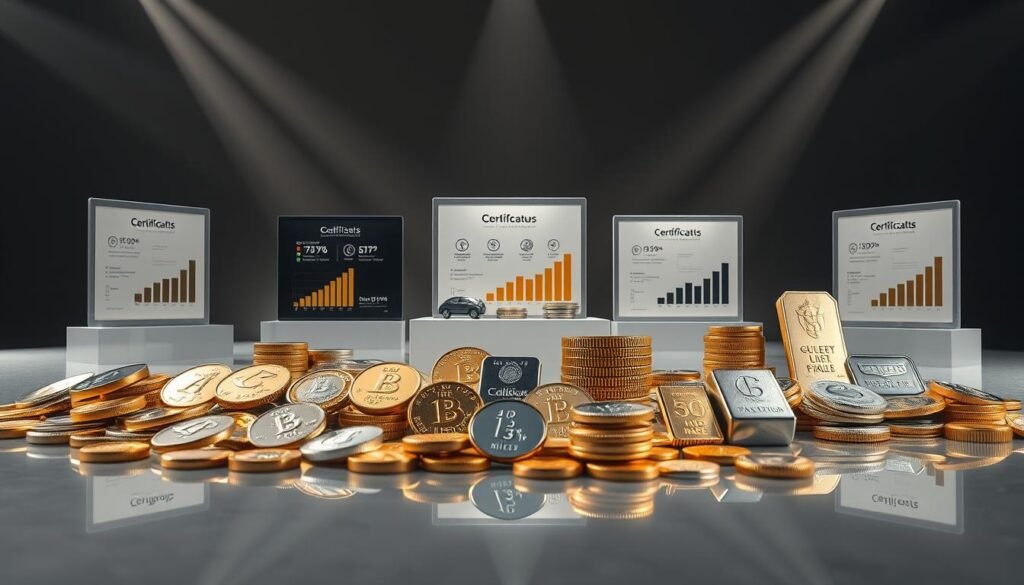
Precious metal investing has many options, from owning metals directly to using financial tools. You can pick the right vehicle based on your goals and how much risk you’re willing to take.
Physical Ownership Options
Directly owning precious metals is a common choice. This can be done through:
- Coins and Bars: These are favorites among investors, coming in different purities and sizes.
- Collectibles and Numismatics: Rare coins with historical or beauty value can grow in value over time.
Having physical metals gives you a real asset. But, it also means you need to store them safely and insure them.
Paper Investments
If you don’t want to own physical metals, paper investments are a good alternative:
- ETFs and Mutual Funds: These track the price of precious metals, making it easy to diversify your investment.
- Mining Stocks and Royalty Companies: Investing in companies that mine or have royalties on precious metals can give you a big exposure to metal prices.
Paper investments are liquid and can spread out your risk. But, they might have fees.
Derivative and Futures Markets
For more advanced investors, there are derivative and futures markets:
- Futures Contracts: These let investors bet on the future price of precious metals.
- Options: Investors can buy the right to buy or sell precious metals at a set price, but they’re not obligated to.
Derivatives are complex and risky. But, they offer flexibility and the chance for big gains.
Risk and Volatility Assessment of Gold and Other Metals
When thinking about investing in precious metals, it’s key to look at their risk and volatility. Gold is often seen as a safe choice, but it still has price swings that can affect your investment.
Historical Volatility Comparison
Looking at the past, gold, silver, platinum, and palladium show different volatility levels. Gold is usually less volatile, with about 15% annual volatility. Silver and palladium, on the other hand, can be more volatile, sometimes over 20%. Knowing these trends can guide your investment choices.
Correlation With Economic Crises
Precious metals react differently in economic crises. Gold usually does well, acting as a shield against inflation and market drops. For example, during the 2008 crisis, gold prices went up as people looked for safe places to invest. But, metals like silver and platinum might not always follow this pattern, as their use in industry can be hit hard by economic troubles.
Hedging Effectiveness
The role of precious metals as hedges varies. Gold is often seen as a solid hedge against inflation and currency value drops. Other metals, while valuable, might not be as reliable due to their use in industry. Looking at each metal’s hedging ability can help you spread out your investments and reduce risks.
Economic Indicators Affecting Precious Metals
It’s key to know how economic signs shape precious metals in 2025. As an investor, keeping up with these signs helps you make smart choices. This includes understanding the effects on gold, silver, platinum, and palladium.
Inflation and Interest Rate Impacts
Inflation and interest rates play big roles in precious metal prices. When inflation goes up, money’s value drops. This often leads people to invest in precious metals as a safe choice. But, higher interest rates can make money stronger, making metals less appealing. Watching inflation and interest rates is vital for making good choices.
Currency Strength Correlations
The strength of big currencies, like the US dollar, affects precious metal prices a lot. A stronger dollar makes metals pricier for those outside the US, possibly lowering demand. But, a weaker dollar makes metals cheaper, boosting demand and prices. It’s important to watch how currencies change.
Geopolitical Risk Factors
Geopolitical tensions and risks also shape precious metal prices. When there’s political instability or global conflicts, gold becomes more sought after, raising its price. Silver, platinum, and palladium can also see price changes due to global events, affecting supply and demand. Keeping up with global news is key for investing in precious metals.
Industrial Applications: Comparing Utility Value
Precious metals are key in today’s technology and more. They are used in many fields, from electronics to green energy. This shows their wide range of uses.
Technology and Electronics Usage
In the tech world, silver is top for conducting electricity. It’s great for soldering and contacts. Gold is also a big player because it’s ductile and doesn’t corrode easily. It’s used in connectors and circuits.
Medical and Scientific Applications
In medicine and science, precious metals are prized for being safe and good at starting reactions. Platinum helps in cancer treatments. Palladium is in dental work and car converters. They also resist corrosion, making them perfect for labs.
Green Energy and Environmental Technologies
Green energy needs has boosted demand for these metals. Silver is in solar panels for its conductivity. Platinum and palladium are key in fuel cells. They also help cut down emissions in cars.
| Metal | Technology/Electronics | Medical/Scientific | Green Energy/Environmental |
|---|---|---|---|
| Silver | Electronics, Conductivity | Medical Imaging | Solar Panels |
| Gold | Connectors, Circuitry | Dental, Medical Implants | – |
| Platinum | Catalysts | Chemotherapy, Laboratory Equipment | Fuel Cells |
| Palladium | Catalytic Converters | Dental Alloys | Catalytic Converters |
Storage, Security, and Liquidity Considerations
Investing in precious metals requires understanding storage, security, and liquidity. These aspects greatly affect your investment’s performance and how easily you can access it.
Physical Storage Options and Costs
You can store your precious metals in home safes, bank safety deposit boxes, or third-party facilities. Home safes are convenient but might not be secure enough. Bank safety deposit boxes are safer but have limited hours. Third-party facilities are secure but cost more.
Insurance and Security Differences
Insurance for precious metals varies. Home or renters insurance might cover some, but with limits. Separate insurance policies offer better coverage. Adding security like alarms and safes helps too. Knowing your insurance and security details is key.
Liquidity and Market Access
Liquidity is crucial. Metals like gold are easy to sell or trade. Others might be harder to liquidate. Market access is also important. You should be able to buy and sell through trusted dealers or exchanges. Knowing the market and having a plan for selling helps in making smart choices.
Future Trends: Where Precious Metals Are Heading
The future of precious metals is being shaped by several key factors. These include technological breakthroughs and sustainability concerns. As we look ahead to 2025 and beyond, understanding these trends is crucial for investors and consumers alike.
Emerging Technologies Impact
Emerging technologies are changing the precious metals market. Advancements in green energy technologies are boosting demand for metals like silver and platinum. These metals are used in fuel cells and solar panels.
Also, innovations in electronics are increasing demand for gold and palladium. This is because of their excellent conductivity properties.
Changing Consumer Preferences
Consumer preferences are shifting towards sustainable and ethically sourced products. This change is affecting the precious metals industry. There’s a growing demand for metals mined and processed with minimal environmental impact.
This trend is influencing the market dynamics of gold, silver, platinum, and palladium. Consumers are willing to pay more for responsibly sourced metals.
Sustainability and Ethical Considerations
Sustainability and ethical considerations are becoming more important in the precious metals sector. Eco-friendly mining practices and recycling of precious metals are gaining traction. This is because consumers and investors prioritize environmental stewardship.
This shift is expected to influence the long-term viability and pricing of precious metals. Metals with a lower environmental footprint are likely to be favored.
Tax Implications for U.S. Precious Metal Investors
The tax rules for precious metal investors in the U.S. are complex. When you invest in gold, silver, platinum, or palladium, knowing the tax rules is key. It helps you make smart choices and might lower your taxes.
U.S. Tax Treatment by Metal Type
The IRS has different rules for each precious metal. For example, gold and silver are taxed at a maximum of 28% if sold for a profit. But, platinum and palladium have their own rules. Keeping good records of your trades is crucial for accurate tax reporting.
- Gold: Taxed as a collectible
- Silver: Taxed as a collectible
- Platinum and Palladium: Also considered collectibles with specific reporting requirements
Strategic Tax Planning for Metal Investments
To improve your tax plan, think about using a self-directed IRA. It can help your investments grow without taxes. Also, holding metals for over a year might get you a lower tax rate. Always talk to a tax expert to find the best tax plan for you.
Conclusion: Making Informed Precious Metal Choices in 2025
Investing in precious metals in 2025 is complex. It’s important to know about gold, silver, platinum, and palladium. This knowledge helps you make choices that fit your financial goals.
Choosing the right metal depends on its properties and uses. Gold is valued for its history, while silver is useful in many industries. Platinum and palladium offer luxury and are rare. A mix of these metals is best for your portfolio.
Keep an eye on economic factors like inflation and interest rates. Also, watch for global events that might affect metal prices. Knowing about new technologies and what people want can guide your investment.
By staying informed, you can make wise choices. This will help your money grow and stay safe in 2025.