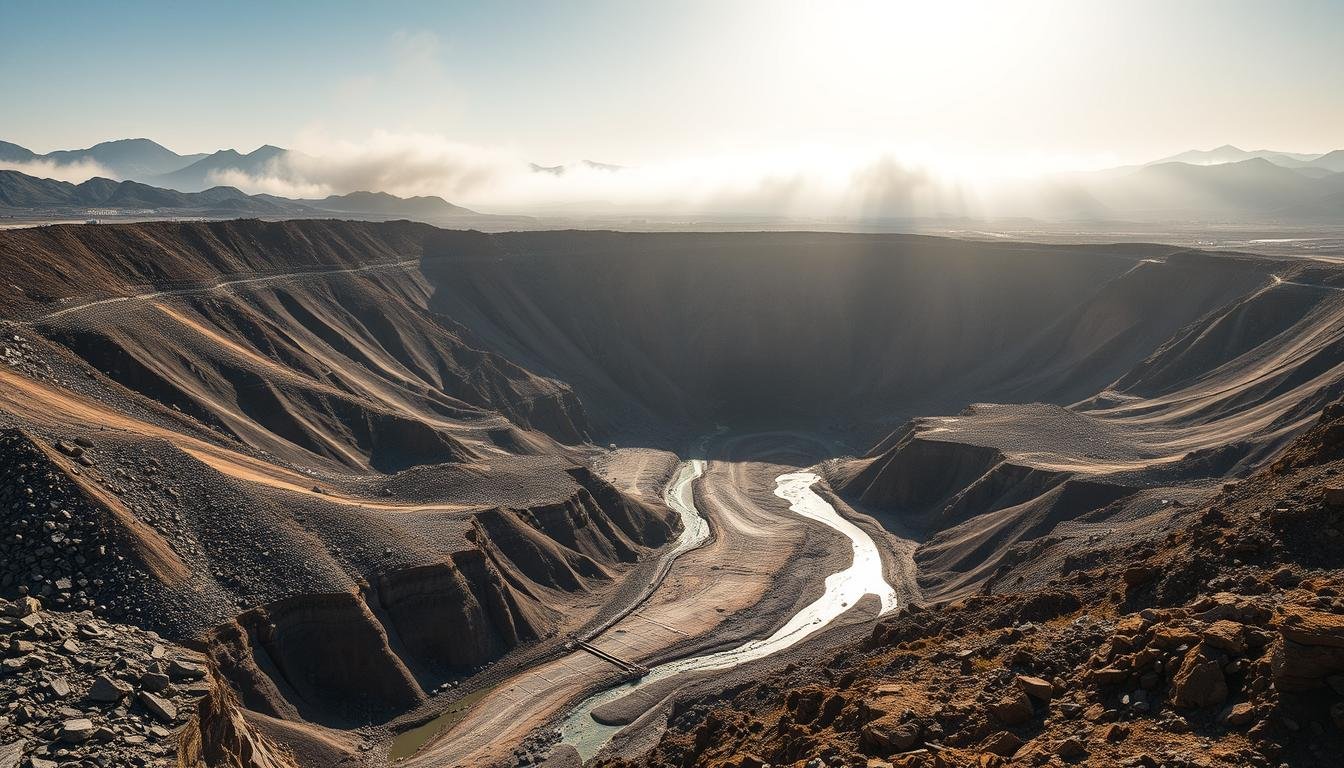
Gold mining is a big problem for our planet. It harms the environment in many ways. This includes polluting water, destroying nature, and putting workers’ health at risk.
When we look into gold mining, we see its big impact on Earth. It’s not just the mining site that suffers. It also hurts nearby communities and animals.
Key Takeaways
- The environmental impact of gold mining is significant and far-reaching.
- Mining activities can contaminate water sources and destroy ecosystems.
- Workers in the gold mining industry face serious health risks.
- Sustainable practices are crucial to mitigating the environmental impact.
- Understanding the issue is the first step towards creating positive change.
The Global Gold Industry Overview
Gold is a highly valued commodity that has grown a massive global industry. This industry has big economic effects. You might be surprised to learn that gold is not just for jewelry; it’s also a big part of many economies worldwide.
Economic Significance of Gold Mining
Gold mining is very important economically. It creates jobs, brings in government money, and boosts local economies. In many places, gold mining is key to supporting thousands of people’s lives.
Scale of Global Gold Production
The amount of gold produced globally is huge, with millions of ounces made every year. 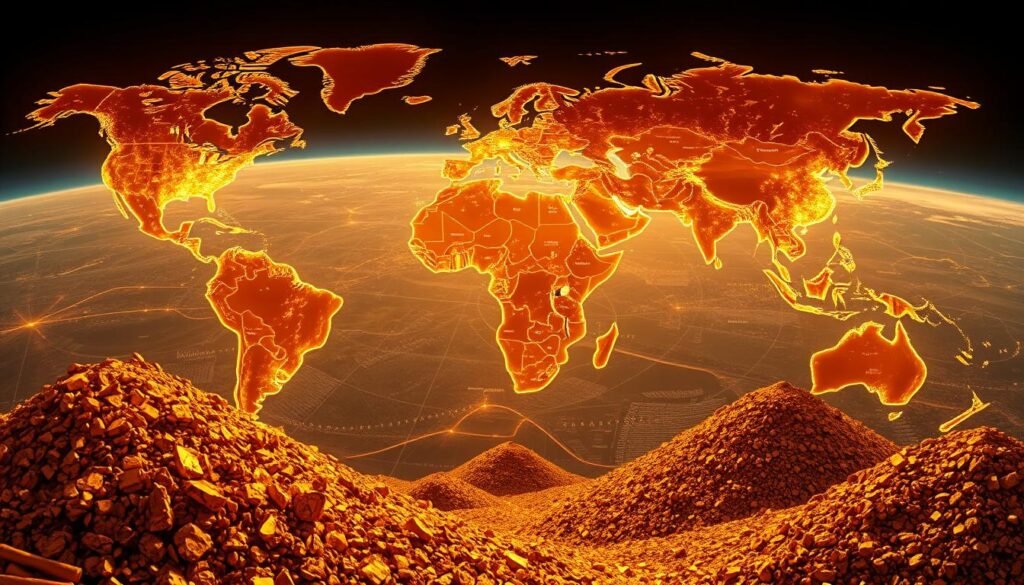 The global gold industry makes over 3,000 tons of gold yearly. This makes it a big part of the world’s economy.
Major Gold Producing Countries
So, who leads in gold production? The big players are China, Australia, and Russia, among others. These countries have lots of gold and the latest mining tech. They lead the global gold market.
Knowing about the global gold industry is key to understanding its mining impact on the environment and communities. As we dive deeper, you’ll see how gold mining affects economic growth and the environment.
Gold Mining Processes and Methods
Gold mining uses many techniques, each affecting the environment differently. The choice of method depends on the area’s geology, the ore’s quality, and costs.
Open-Pit Mining
Open-pit mining is a common gold extraction method. It involves removing soil and rock to reveal gold-bearing ore.
Equipment and Scale
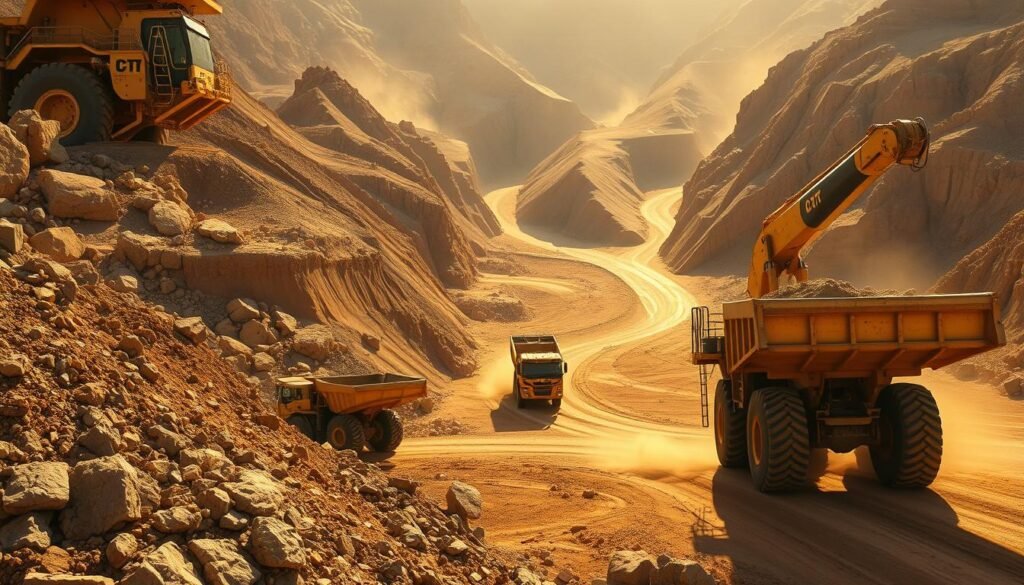
Open-pit mines use big machines like excavators and haul trucks. These operations can be huge, covering whole mountainsides.
Environmental Footprint
Open-pit mining has a big environmental impact. It can cause deforestation, destroy habitats, and pollute water. This is due to chemicals used in mining.
Underground Mining
Underground mining is used for gold ore deep underground. It involves digging tunnels to reach the ore, which is then processed.
Placer Mining
Placer mining gets gold from riverbeds and streams. It can harm aquatic ecosystems if not managed well.
Heap Leaching
Heap leaching extracts gold from low-grade ore. It stacks ore and uses chemicals to extract gold. This method can leak chemicals into the environment.
Chemical Processes in Gold Extraction
Chemical processes are key in gold extraction but also carry big environmental risks. It’s important to know these processes to understand the gold mining industry’s challenges.
Cyanide Leaching
Cyanide leaching is a common method for extracting gold. It uses cyanide to dissolve gold from ore.
Process Description
The process starts with crushing gold ore. Then, a cyanide solution is applied to extract the gold. This method is effective but requires careful handling of cyanide.
Environmental Risks
Cyanide use poses big environmental risks, like water pollution. If not managed right, cyanide can harm the environment severely.
| Chemical Process | Environmental Risk | Mitigation Measure |
|---|---|---|
| Cyanide Leaching | Water Pollution | Proper Waste Disposal |
| Mercury Amalgamation | Mercury Poisoning | Use of Mercury-Free Methods |
| Alternative Methods | Varies | Regular Environmental Monitoring |
Mercury Amalgamation
Mercury amalgamation is used in gold extraction, mainly in artisanal mining. It’s risky for health and the environment because of mercury toxicity.
Mercury Use: Mercury helps form an amalgam with gold, making extraction easier. But, it can cause mercury poisoning if not handled right.
Alternative Chemical Methods
New chemical processes are being developed to address environmental concerns in gold extraction. These include safer leaching agents and methods that use less toxic chemicals.
Research and development: Scientists are working hard to make gold extraction safer and more environmentally friendly.
Water Pollution from Gold Mining
Gold mining harms both the environment and human health through water pollution. It’s important to know how it affects water. This includes the many ways gold mining pollutes water.
Acid Mine Drainage
Acid mine drainage is a big problem in gold mining areas. It happens when sulfide minerals in rock meet air and water. This creates sulfuric acid.
Formation Process
The acid mine drainage process starts with sulfide minerals oxidizing. This releases iron and sulfur into the water.
Long-term Consequences
The effects of acid mine drainage last a long time. It can pollute water and harm aquatic life.
Heavy Metal Contamination
Gold mining also pollutes with heavy metals. Metals like mercury and lead get into the environment.
Cyanide and Mercury in Water Systems
Cyanide and mercury are big issues in gold mining. Cyanide is used in extraction, and mercury in small-scale mining. Both can poison water, risking health.
Impact on Aquatic Ecosystems
Gold mining’s impact on water is huge. It can kill off species, mess up food chains, and change ecosystems.
Key effects include:
- Habitat destruction
- Reduced biodiversity
- Increased toxicity in the food chain
It’s crucial to protect water from gold mining’s harm. Knowing the risks helps us see why we need green mining ways.
Air Quality Impacts of Gold Mining
Gold mining affects air quality by releasing dust, greenhouse gases, and toxic emissions. It’s important to know how gold mining impacts air quality.
Dust and Particulate Matter
Gold mining operations release a lot of dust and particulate matter. This harms air quality and can hurt people’s health. The inhalation of dust can lead to serious respiratory issues, affecting miners and local communities.
Greenhouse Gas Emissions
Gold mining uses a lot of energy, leading to greenhouse gas emissions. These emissions come from the energy needed to mine and process gold ore.
Energy Consumption in Processing
Processing gold ore requires a lot of energy. Activities like crushing, grinding, and using heavy machinery use a lot of energy. This energy often comes from fossil fuels, increasing gold mining’s carbon footprint.
Carbon Footprint Comparison
Gold mining has a big environmental impact compared to other industries. But, there are efforts to use cleaner energy and more efficient technologies to reduce this impact.
Mercury Vapor Emissions
Mercury is used in some gold mining to extract gold. When heated, it releases mercury vapor, a dangerous neurotoxin. The release of mercury vapor is a serious environmental and health concern, affecting humans and wildlife.
The United Nations Environment Programme says, “Mercury emissions from artisanal and small-scale gold mining are significant. Efforts to reduce these emissions are crucial for protecting human health and the environment.”
It’s key to understand the air quality impacts of gold mining to find ways to lessen them. By using cleaner technologies and reducing energy use, the gold mining industry can lessen its environmental impact.
Land Degradation and Soil Contamination
Gold mining has big environmental problems like land degradation and soil contamination. It harms ecosystems and biodiversity. Knowing how gold mining affects land and soil helps us see the issue’s complexity.
Deforestation and Habitat Destruction
Gold mining causes deforestation, which destroys habitats and leads to soil erosion. This erosion makes water bodies dirty. The damage to local ecosystems can last a long time.
Soil Erosion and Sedimentation
Soil erosion is a big problem from gold mining. Without plants, soil erodes and fills rivers and streams. It’s important to control erosion to lessen these effects.
Long-term Land Use Changes
Gold mining changes land use for a long time. After mining stops, the land may not be good for its old use. Knowing these changes helps plan what to do with the land later.
Post-Mining Landscapes
After mining, the land looks different. In some cases, it can be used for farming or nature. But, this needs careful planning and doing.
Rehabilitation Challenges
Fixing mined land is hard. It involves making the soil stable, planting new plants, and making sure it’s safe. Fixing the land is key to fixing the environment.
| Land Use | Pre-Mining | Post-Mining |
|---|---|---|
| Agriculture | Active farmland | Potential for rehabilitation |
| Conservation | Natural habitats | Restored ecosystems |
| Urban Development | Minimal infrastructure | Possible redevelopment |
Understanding gold mining’s effects on land and soil helps us find better ways to mine. We must tackle land degradation and soil contamination to reduce gold mining’s environmental harm.
Biodiversity Loss in Gold Mining Regions
Biodiversity loss is a big problem in gold mining areas. It harms the balance of ecosystems. Gold mining destroys habitats, pollutes, and disrupts natural places. This leads to the loss of plants and animals.
Impact on Flora and Fauna
Gold mining hurts both plants and animals in many ways. It destroys their homes, causing the loss of plant and animal species. Pollution from mining chemicals also changes the local ecosystem. This makes it hard for some species to live.
Ecosystem Disruption
Ecosystem disruption is a big problem caused by gold mining. Removing plants and changing landscapes messes up the food chain. This disruption can have long-lasting effects on the ecosystem, making recovery hard.
Endangered Species Threats
Gold mining areas often harm the homes of endangered species. This can push species closer to extinction. Conservation efforts are crucial in these areas to protect vulnerable species.
Case Studies of Affected Species
Many case studies show how gold mining hurts endangered species. For example, in the Amazon rainforest, gold mining threatens the homes of jaguars and giant otters.
Conservation Efforts
There are efforts to reduce biodiversity loss from gold mining. These include restoring habitats, protecting endangered species, and using sustainable mining. Supporting conservation efforts is key to saving biodiversity in gold mining areas.
Social and Community Impacts
Gold mining affects more than just the environment. It also deeply impacts local communities. It’s important to look at the human side of gold mining and how it affects nearby residents.
Displacement of Indigenous Communities
Gold mining often leads to the displacement of indigenous communities. When mining takes over their lands, these communities lose their homes and cultural heritage. This can cause long-term mental health issues and economic problems.
Health Concerns for Mining Communities
Mining communities face many health risks. Occupational hazards are a big worry, as miners work in dangerous conditions. They are at risk of accidents and exposure to harmful substances.
Occupational Hazards
Miners deal with many dangers on the job. They are exposed to dust, chemicals, and the risk of mine collapses. These risks can cause respiratory diseases, injuries, and even death.
Long-term Health Effects
The health problems from gold mining don’t stop at work. Long-term exposure to mining pollutants can cause chronic health issues. These problems affect not just miners but also their families and the whole community.
Socioeconomic Consequences
Gold mining also has big socioeconomic effects on local communities. While it can bring in money, it can also cause inequality and social disruption. The arrival of outsiders can put a strain on local resources and infrastructure, leading to social tensions.
It’s key to understand these social and community impacts to improve gold mining. By recognizing the challenges faced by communities, we can work towards better outcomes for everyone involved.
Environmental Disasters in Gold Mining
Gold mining has caused some of the worst environmental disasters in recent years. These incidents have harmed ecosystems and communities. The gold mining industry has faced criticism for cyanide spills and mine disasters worldwide.
Baia Mare Cyanide Spill (Romania)
In 2000, a cyanide spill in Romania’s Baia Mare area released huge amounts of cyanide. This disaster showed the dangers of using cyanide in gold mining. It led to new rules and better practices in the industry.
Ok Tedi Mine Disaster (Papua New Guinea)
The Ok Tedi mine in Papua New Guinea has caused big environmental problems. It has dumped mine waste into the Ok Tedi River, harming local communities and ecosystems. This disaster has sparked talks about managing mine waste.
Summitville Mine (Colorado, USA)
The Summitville mine in Colorado is another environmental disaster linked to gold mining. It caused acid mine drainage and pollution, needing long-term cleanup efforts. Fixing Summitville has involved many people and methods to lessen its environmental harm.
Causes and Prevention
Knowing why these disasters happen is key to stopping them. Poor waste management, lack of rules, and tech failures are main reasons. Strong safety rules and oversight can help avoid these problems.
Remediation Efforts
Fixing environmental damage from gold mining includes water treatment and land restoration. Good fixes need a team effort from governments, mining companies, and local groups. Supporting efforts to clean up and mine sustainably is important.
Environmental disasters in gold mining have big and lasting effects. By learning from these incidents, we can prevent more and push for better mining ways.
The Environmental Impact of Gold in Artisanal Mining
Artisanal gold mining helps many people make a living but harms the environment badly. It involves using mercury, cutting down trees, and polluting water. These actions have serious effects on our planet.
Mercury Use in Artisanal Mining
Mercury is used to get gold from ore in artisanal mining. But, this method is very harmful to health and the environment.
Health and Environmental Consequences
Using mercury in mining releases toxic vapors into the air and water. This causes serious health problems for miners and nearby communities. It can lead to brain damage and birth defects. Mercury also harms fish and other wildlife in water ecosystems.
“Mercury exposure is a major health risk for artisanal miners and their communities, with long-term effects on health and the environment.”
Alternative Techniques
There are safer ways to mine gold, like using borax or other chemicals. It’s important to promote these methods to lessen the harm to the environment.
- Borax method for gold extraction
- Cyanide-free gold extraction techniques
- Gravity separation methods
Environmental Footprint of Informal Mining
Informal mining causes a lot of environmental damage. It leads to deforestation, soil erosion, and water pollution. Without rules, these problems get worse, harming ecosystems for a long time.
Challenges in Regulation
It’s hard to control artisanal mining because it’s not official and has many miners. To fix this, we need to work with local people and teach them about sustainable mining.
| Challenge | Description | Potential Solution |
|---|---|---|
| Lack of Regulation | Informal mining operates outside legal frameworks. | Establish clear regulations and enforcement mechanisms. |
| Mercury Use | Mercury is used for gold extraction, causing health and environmental issues. | Promote alternative, mercury-free techniques. |
| Environmental Degradation | Mining activities lead to deforestation and water pollution. | Implement sustainable mining practices and rehabilitation programs. |
To tackle the environmental damage from artisanal gold mining, we need a big plan. This includes finding better ways to mine, making rules, and supporting green practices.
Regulatory Frameworks and Environmental Standards
Regulatory frameworks are key in making gold mining more sustainable worldwide. They aim to lessen the bad effects of mining on the environment. This ensures mining is done in a way that respects the planet.
International Mining Regulations
International mining rules set a standard for environmental care in mining. Groups like the International Council on Mining and Metals (ICMM) create rules. These rules help companies follow the best ways to manage the environment.
National Environmental Policies
Every country has its own environmental policies for mining. These policies depend on the country’s laws, environment, and what they value most. For example, the US has strict rules for mining.
Case Study: US Mining Regulations
The US has strong rules for mining, like the General Mining Act of 1872 and the National Environmental Policy Act (NEPA). These laws make mining companies check their impact on the environment. They also make companies take steps to lessen harm.
Enforcement Challenges
Even with rules, enforcing them is hard. Problems like not enough money, corruption, and lack of support can stop enforcement. This can lead to damage to the environment.
Industry Self-Regulation
The gold mining industry also has its own rules. This includes programs and codes that encourage mining to be done right.
Here’s a look at how different rules work:
| Regulatory Approach | Description | Examples |
|---|---|---|
| International Regulations | Guidelines set by international bodies | ICMM Principles |
| National Policies | Country-specific regulations | US NEPA, Canadian Environmental Assessment Act |
| Industry Self-Regulation | Voluntary initiatives by mining companies | Fairmined Certification, Responsible Minerals Initiative |
Sustainable Gold Mining Practices
The gold mining sector is moving towards more sustainable methods. This shift aims to lessen its environmental impact. The industry is now exploring ways to make mining more efficient and profitable.
Cleaner Production Technologies
Adopting cleaner production technologies is a major focus. This includes:
- Cyanide-Free Processing: New gold extraction methods are being developed. They eliminate cyanide use, reducing water pollution risks.
- Energy Efficiency Innovations: The industry is using new technologies to cut energy use. This lowers greenhouse gas emissions and costs.
Mine Rehabilitation and Closure Planning
Mine rehabilitation and closure planning are key to sustainable mining. They aim to restore mined lands to a safe state. This minimizes long-term environmental harm.
Good planning lets the land be reused for farming or conservation. This is crucial for sustainable mining.
Water Conservation Strategies
Water conservation is essential in gold mining. The industry is using efficient water systems and recycling water. These steps help protect local water sources and lessen mining’s environmental impact.
By embracing these sustainable practices, the gold mining sector can greatly reduce its environmental harm. It also boosts operational efficiency and supports a sustainable future.
Responsible Gold Standards and Certification
Responsible gold standards are becoming more important for sustainable mining. They help protect the environment and support local communities. As gold demand rises, so does the need for practices that are good for the planet and fair to workers.
Fairmined and Fairtrade Gold
Fairmined and Fairtrade Gold are well-known for responsible gold sourcing. These programs make sure gold is mined fairly, safely, and benefits local communities. By choosing these options, buyers support sustainable mining.
Certification Programs
Many certification programs help promote responsible gold mining. Here are a few:
- RJC (Responsible Jewellery Council): This certification ensures jewelry is made responsibly.
- IRMA (Initiative for Responsible Mining Assurance): It focuses on mining that’s good for the environment and people.
Responsible Jewelry Council
The Responsible Jewellery Council (RJC) sets a high standard for the jewelry industry. RJC members follow strict rules on human rights, labor, and the environment.
Initiative for Responsible Mining Assurance
IRMA is a group that sets standards for mining. It checks mining sites to make sure they meet its high standards. This includes protecting the environment and treating workers fairly.
Ethical Sourcing Initiatives
Ethical sourcing is key to responsible gold standards. It tracks gold from mining to the final product. This ensures it’s mined and processed responsibly. Supporting ethical sourcing helps make the gold industry more sustainable.
Recycled Gold as a Sustainable Alternative
The gold industry is now focusing on recycling as a sustainable solution. By choosing recycled gold, you help reduce the environmental harm caused by traditional mining.
Environmental Benefits of Gold Recycling
Gold recycling has many environmental perks. It cuts down on energy use and waste. Recycling gold needs much less energy than mining. It also avoids the use of harmful chemicals.
The Gold Recycling Process
The recycling process starts with collecting gold from old jewelry, electronics, and more. This gold is then melted and purified. The result is high-quality gold for new jewelry or other uses.
Market for Recycled Gold
The market for recycled gold is expanding. This growth is fueled by people wanting sustainable products. Consumer awareness is key in this trend, as more folks discover the value of recycled gold.
Consumer Awareness and Demand
As people care more about the environment, demand for recycled gold goes up. This change is pushing the industry to be more eco-friendly.
Industry Adoption
The gold industry is meeting this demand by investing in recycling tech and green practices.
| Benefits | Traditional Gold Mining | Recycled Gold |
|---|---|---|
| Energy Consumption | High | Low |
| Waste Production | Significant | Minimal |
| Environmental Impact | Substantial | Reduced |
Consumer Choices and Environmental Impact
Choosing gold jewelry wisely is key to supporting green mining. As a buyer, you can shape the gold mining world’s green footprint with your choices.
Understanding Gold Jewelry Sourcing
It’s vital to know where gold jewelry comes from and how it’s mined. Look for details on mining methods and the company’s green efforts.
Questions to Ask When Buying Gold
Before buying, ask these questions:
- Is the gold from mines that care about the environment?
- Does the company focus on sustainability and protecting nature?
- Are there labels or certifications for green gold?
Supporting Sustainable Gold Initiatives
Support green gold by buying from eco-friendly companies. Choose brands with green mining certifications.
Ethical Retailers and Brands
Some sellers and brands source gold from mines that follow strict green and social rules. Backing these brands helps green mining grow.
Consumer Advocacy
You can also push for greener gold mining. Support policies that protect the environment and promote sustainability.
By choosing wisely and backing green gold efforts, you help make gold mining better for our planet.
Conclusion: The Future of Environmentally Responsible Gold Mining
Gold mining has a big impact on the environment, from polluting water to harming land. As gold demand keeps rising, we must use green mining methods. This means finding ways to mine gold that don’t hurt the planet.
Supporting green gold mining helps protect our planet and its people. We can do this by using new, cleaner mining tech. Also, we should plan how to fix the damage after mining and save water. You can help by backing green gold projects and picking gold products that are made responsibly.
Our actions today shape the future of gold mining. As buyers, you have a big role in choosing what gold products to buy. Together, we can make the gold industry better for both our wallets and the planet.