You might have inherited or will inherit family heirlooms like beautiful jewelry. These items are more than just valuable; they hold sentimental worth and family history. Many families don’t know the true value of their inherited jewelry because it’s not appraised or insured.
When you inherit jewelry, you face both emotional and financial challenges. Knowing the value of these heirlooms helps you make smart choices about their future. Whether you want to keep family history alive or explore the financial side of your inheritance, we’re here to help.
Key Takeaways
- Inheriting jewelry can have significant financial implications.
- Appraising and insuring inherited jewelry is crucial for understanding its value.
- Family heirlooms can hold both sentimental and monetary worth.
- Managing inherited jewelry requires considering both emotional and financial aspects.
- Understanding the value of your heirlooms can inform decisions about their future.
The Enduring Value of Gold Jewelry Heirlooms
Gold jewelry heirlooms symbolize love, legacy, and financial security across generations. They are more than just beautiful pieces or valuable metals. They hold historical significance and play a key role in family histories.
Historical Significance of Gold as a Store of Value
Gold has been a reliable store of value for centuries. It acts as a hedge against inflation and economic downturns. Its durability and scarcity make it highly sought after.
Gold’s Role in Wealth Preservation Throughout History
Gold has been used to preserve wealth throughout history. From ancient times to today, gold coins, bars, and jewelry have safeguarded wealth across generations.
How Gold Has Outperformed Other Assets During Economic Uncertainty
During economic uncertainty, gold often outperforms other assets. Investors seek safe-haven assets like gold when markets are volatile.
| Asset | Average Annual Return During Economic Downturns |
|---|---|
| Gold | 5% |
| Stocks | -2% |
| Bonds | 2% |
Gold has historically provided a stable store of value during economic downturns. This makes gold jewelry heirlooms valuable financial assets, not just sentimental pieces.
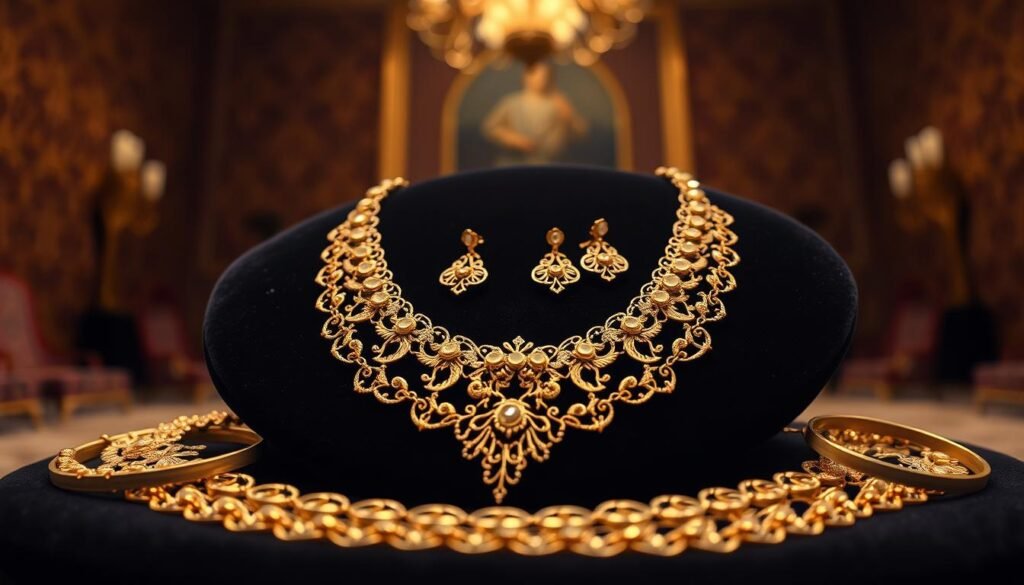
Understanding the historical significance and financial value of your gold jewelry heirlooms is key. It empowers you to manage your family’s legacy effectively, whether keeping, selling, or passing them down.
Understanding the Financial Worth of Inherited Gold Jewelry
When you get gold jewelry from someone, knowing its value is key. This helps you decide whether to keep it, sell it, or give it to someone else. The value of such items can be both real and emotional.
Differentiating Between Intrinsic and Sentimental Value
The value of gold jewelry can be split into two parts: its real worth and its emotional value. Intrinsic value is how much the gold is worth if melted down. This depends on its weight and purity. Sentimental value is about the feelings and history tied to the piece.
Calculating Melt Value vs. Artistic Value
To figure out the melt value, you need to know the gold’s karat and weight. Then, use the current gold price to find its melt value. But, some gold jewelry also has artistic or historical value. This can be more than its melt value, like if it’s old or made by famous designers.
When Sentimental Worth Exceeds Financial Value
Often, the emotional value of gold jewelry is more important than its money value. For example, a grandmother’s engagement ring might not be very valuable but means a lot to the family. As one expert says,
“The true value of heirloom jewelry lies not just in its gold content, but in the stories and memories it carries.”
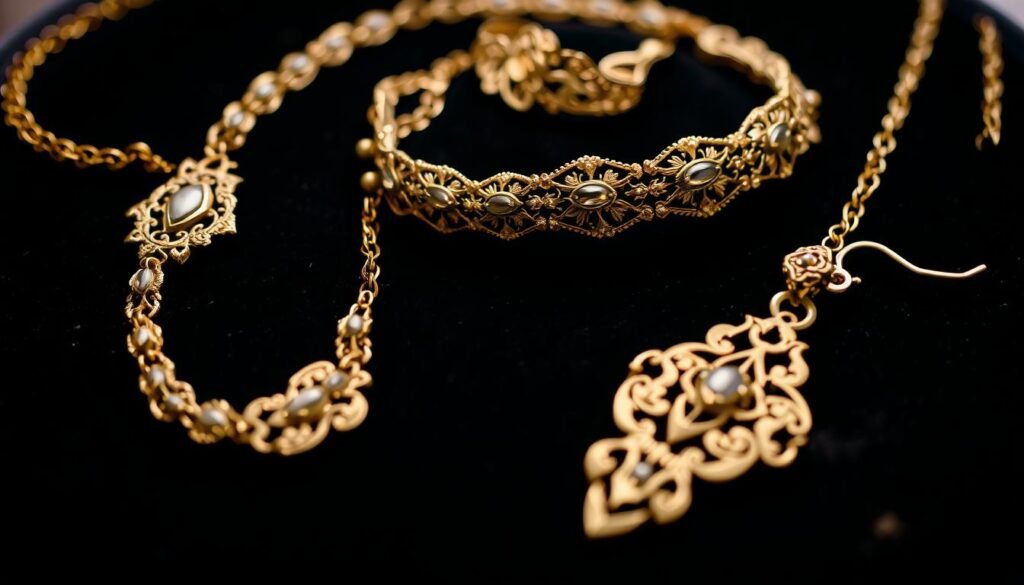
Valuing gold jewelry from your family means looking at both its financial and emotional worth. By understanding these values, you can make better choices about your inherited jewelry.
Assessing Your Gold Jewelry Collection’s Market Value
Understanding the worth of your gold jewelry is key. A professional appraisal is vital. It shows the market value of your collection. It also helps with insurance, selling, or passing it down.
Professional Appraisal Methods and Costs
Appraisers use different methods to value your gold jewelry. They look at craftsmanship, hallmarks, and gold prices. The appraisal cost depends on the appraiser’s skill, jewelry complexity, and location.
- Appraisal Costs: Usually between $50 to $200 per hour, based on the appraiser’s credentials and jewelry type.
- Methods: Includes visual checks, weighing, and sometimes, tools like microscopes or X-ray fluorescence.
Finding Reputable Jewelry Appraisers
To find a good appraiser, check for certifications from the Gemological Institute of America (GIA) or the American Society of Appraisers (ASA). These show the appraiser’s training and ethics.
Understanding Appraisal Certificates and Their Importance
An appraisal certificate details your jewelry, its value, and the appraiser’s credentials. It’s vital for insurance, estate planning, and selling.
| Certificate Details | Importance |
|---|---|
| Jewelry Description | Helps identify the piece |
| Market Value | Essential for insurance and sales |
| Appraiser Credentials | Verifies the appraiser’s expertise |
Professional appraisals help you understand your gold jewelry’s value. This knowledge aids in making smart choices about your collection. Whether for insurance, selling, or inheritance, it’s crucial.
The Impact of Gold Purity on Heirloom Value
Gold purity, shown by karat markings, is key to valuing your heirlooms. It influences not just the value but also durability and look.
Decoding Karat Markings and Their Financial Implications
Karat markings on gold jewelry show its purity. Knowing these markings helps figure out your gold’s worth.
The Difference Between 10K, 14K, 18K, and 24K Gold
Gold jewelry comes in different purities, marked in karats (K). Common ones are 10K, 14K, 18K, and 24K. 10K gold is 41.7% gold, 14K gold is 58.3%, 18K gold is 75%, and 24K gold is 99.9% gold. The higher the karat, the more valuable but softer the gold.
| Karat Rating | Gold Content | Characteristics |
|---|---|---|
| 10K | 41.7% | More durable, less valuable |
| 14K | 58.3% | Balanced durability and value |
| 18K | 75% | More valuable, softer |
| 24K | 99.9% | Most valuable, very soft |
How Karat Rating Affects Resale Value
The karat rating of your gold jewelry affects its resale value. Higher karat means more value. But, craftsmanship, condition, and demand also matter.
Understanding karat markings is key to valuing your gold heirlooms. This knowledge helps you decide whether to keep, sell, or pass down your jewelry.
Antique and Vintage Gold: Premium Value Considerations
The value of antique and vintage gold jewelry comes from several factors. These include craftsmanship, how rare it is, and its provenance. Knowing these can help you see the real worth of your jewelry.
When Craftsmanship Exceeds Material Value
Antique and vintage gold jewelry is often more valuable because of its craftsmanship. The detailed designs and skilled work from the past are highly prized. This is true for both collectors and those who love jewelry.
Identifying Signature Techniques of Notable Jewelry Periods
Each jewelry period has its own unique styles and techniques. For example, Art Deco is known for its geometric shapes and fine details. Victorian jewelry, on the other hand, is famous for its intricate filigree.
Knowing these styles can help you figure out when your jewelry was made. This can also tell you about its potential value.
Provenance Documentation and Its Impact on Value
Provenance, or the history of ownership, is very important for antique and vintage gold jewelry. If a piece has a strong history, like being owned by a famous person, its value can go up a lot. A jewelry expert once said,
“Provenance is key to unlocking the true value of antique jewelry; it’s not just about the material, but the story behind it.”
Understanding the craftsmanship, history, and provenance of your jewelry can help you see its true value. This knowledge is useful for taking care of your jewelry, insuring it, and deciding when to sell it.
Tax Implications of Inheriting Gold Jewelry
When you inherit gold jewelry, it’s not just a valuable item. You also face potential tax obligations. It’s key to understand these tax implications to manage your new assets well.
Inheriting gold jewelry can lead to big tax issues, like estate and inheritance taxes. It’s important to handle these taxes right to avoid financial surprises.
Estate Tax Considerations for Valuable Gold Collections
Estate tax is a big deal when you inherit valuable gold jewelry. This tax is on the total value of the deceased’s estate before it goes to heirs.
Federal Estate Tax Thresholds for Jewelry Assets
The federal estate tax hits estates over a certain amount. For 2024, that’s $12.06 million. But, this number can change, so it’s important to keep up.
State-Specific Inheritance Tax Rules for Valuable Heirlooms
Some states have their own inheritance tax rules. For example, New Jersey and Pennsylvania might tax gold jewelry you inherit. Knowing your state’s rules is crucial for tax compliance.
Key Considerations:
- Get advice from a tax expert about your inherited gold jewelry’s tax implications.
- Keep good records of the jewelry’s value for tax purposes.
- Know any state-specific inheritance tax rules that might apply to you.
Understanding the tax implications of inheriting gold jewelry helps you make smart decisions. It also ensures you follow tax laws.
Financial Planning with Gold Heirloom Jewelry
Adding your gold jewelry to your financial plans can help pass down family treasures. It’s key to see its value beyond just memories. This way, you can manage it well in your estate.
Incorporating Jewelry Assets into Estate Planning
Planning your estate with gold jewelry is more than just picking who gets what. It’s about keeping your family’s treasures safe and passing them down right. Start by cataloging your jewelry collection. Note the gold content, craftsmanship, and any historical value.
Designating Specific Pieces to Heirs
Designating certain pieces for your heirs is a smart move. You can do this with a clearly written will or a family heirloom agreement. This way, you avoid conflicts and make sure your wishes are followed.
Trusts and Other Legal Structures for Jewelry Collections
Using trusts or other legal setups can protect your jewelry collection even more. For example, a trust can manage and distribute your assets as you wish. This might lower taxes and keep your gold jewelry safe for the future.
When adding jewelry to your estate plans, talk to a pro for the best approach. They can help with setting up trusts, writing clear distribution plans, and making sure your collection is insured.
Insuring Your Family’s Gold Heirlooms
Gold heirlooms are a valuable family asset. They need special insurance to keep them safe. You want to protect your jewelry from loss, theft, or damage.
Specialized Insurance Options for Valuable Jewelry
There are many insurance options for your gold heirlooms. You can add a rider to your homeowner’s or renter’s insurance. Or, you can choose a standalone jewelry insurance policy.
Riders vs. Standalone Jewelry Insurance Policies
A jewelry insurance rider can be added to your policy. It covers your gold heirlooms. But, it might have limits and a deductible.
A standalone jewelry insurance policy offers more. It’s made for valuable jewelry and has better coverage.
- More comprehensive coverage
- Higher coverage limits
- Specialized claims handling
Coverage Limitations and Premium Considerations
When picking a policy, think about coverage limitations and premium considerations. Look at the policy’s terms. This includes the coverage amount, deductible, and any exclusions.
Experts say, “The key to insuring your gold heirlooms is to understand the policy’s coverage and limitations.”
“Insuring jewelry requires a thorough understanding of the policy’s terms and conditions to ensure you’re adequately protected.”
By knowing your insurance options and picking the right policy, you can protect your gold heirlooms for future generations.
Preservation Techniques to Maintain Gold’s Value
Keeping gold jewelry in top shape is more than just cleaning it. It’s about keeping its value high over time. The right storage and care for environmental conditions are key.
Proper Storage Methods for Long-term Value Retention
Storing gold jewelry right is essential to keep its value. Here are some tips:
- Store each piece separately to prevent scratching and tangling.
- Use a soft, lined jewelry box or a velvet pouch to protect against damage.
- Consider a jewelry armoire or safe for high-value collections.
Optimal Environmental Conditions for Gold Preservation
Environmental factors are crucial for gold jewelry preservation. To keep it in good shape:
- Keep gold jewelry away from direct sunlight and extreme temperatures.
- Avoid exposure to chemicals, including household cleaners and perfumes.
- Maintain a stable humidity level to prevent tarnish and damage.
Security Considerations for High-Value Collections
For valuable gold collections, security is a top priority. Think about:
- Investing in a home safe or a safety deposit box at your bank.
- Keeping an inventory of your jewelry, including photographs and descriptions.
- Regularly reviewing and updating your insurance coverage.
By using these preservation techniques, your gold jewelry will stay valuable and loved for many years.
Market Factors Affecting Your Gold Heirlooms’ Value
Knowing what affects your gold heirlooms’ value is key. Their worth depends on their gold content and craftsmanship. It also depends on market factors outside of them.
How Global Gold Prices Impact Heirloom Valuation
Global gold prices greatly influence your gold heirlooms’ value. The price of gold changes based on the global market. This includes supply and demand, economic conditions, and world events.
The Relationship Between Spot Gold and Jewelry Value
The spot gold price is a key value indicator for gold jewelry. When spot gold prices go up, so does the value of your heirlooms. But, other factors like condition, rarity, and demand also play a role.
Economic Indicators That Influence Gold Markets
Several economic indicators can change gold markets and your heirlooms’ value. These include inflation rates, interest rates, and currency changes. For example, when the economy is uncertain, gold prices often rise as investors seek safe assets.
To understand how these indicators affect gold prices, let’s look at a table:
| Economic Indicator | Impact on Gold Prices | Reason |
|---|---|---|
| Inflation Rate | Positive | Gold is seen as a hedge against inflation, so when inflation rises, gold prices tend to increase. |
| Interest Rates | Negative | Higher interest rates make bonds and other fixed-income investments more attractive, potentially reducing demand for gold. |
| Currency Fluctuations | Variable | A strong currency can make gold more expensive for foreign investors, potentially reducing demand and prices. |
As the table shows, different economic indicators can affect gold prices in different ways. Keeping up with these factors can help you make better decisions about your gold heirlooms.
The Dilemma: Selling vs. Keeping Family Gold
Deciding whether to sell or keep family gold is a personal choice. It’s influenced by financial, emotional, and historical factors. You must weigh the financial benefits against the sentimental value and family history of these items.
Financial Considerations When Liquidating Heirloom Jewelry
Selling heirloom jewelry is a big financial decision. There are several factors to consider to get the best sale price.
Timing the Market for Optimal Returns
Timing is key. Gold prices change, and selling when prices are high can increase your returns. Keep an eye on gold prices and be ready to sell when it’s the best time.
Choosing the Right Sales Channel for Maximum Value
Choosing the right place to sell is also crucial. Different buyers offer different prices for gold jewelry. Here’s a look at common sales channels:
| Sales Channel | Typical Buyer | Price Offered |
|---|---|---|
| Local Jewelers | Individuals, collectors | Higher, based on item’s condition and rarity |
| Gold Buyers/Pawn Shops | Resellers, refiners | Based on gold content, lower than jewelers |
| Online Marketplaces | Individuals, collectors, businesses | Varies widely, potential for high prices with right marketing |
| Auctions | Collectors, enthusiasts | Potential for high prices, but commission fees apply |
As shown in the table, each sales channel has its pros and cons. Researching and comparing offers from different buyers can help you find the best deal for your family gold.
The decision to sell or keep family gold is a balance between financial and emotional factors. By carefully evaluating your options and timing, you can make an informed decision that respects both the monetary and sentimental value of your heirlooms.
Modern Approaches to Managing Jewelry Heirlooms
Exploring jewelry heirlooms today means discovering new ways to care for them. Modern methods use technology to keep their value safe and easy to check.
Digital Documentation and Valuation Tools
Digital tools have changed how we manage jewelry heirlooms. Now, you can quickly find out what your jewelry is worth. This makes keeping records current and helps you make smart choices about your heirlooms.
Blockchain Technology for Jewelry Authentication
Blockchain is now used to check if jewelry is real. It makes sure your jewelry’s history and value are safe and clear. Using blockchain protects your heirlooms’ authenticity and worth.
Portfolio Management Apps for Tangible Assets
Apps for managing tangible assets like jewelry help you keep track of your heirlooms. They let you see how your collection’s value changes over time. This information helps you decide what to do with your jewelry.
The table below shows how old ways compare to new digital methods for managing jewelry heirlooms:
| Aspect | Traditional Methods | Modern Digital Approaches |
|---|---|---|
| Documentation | Paper records, physical appraisals | Digital files, online appraisals |
| Authentication | Physical examination by experts | Blockchain technology for secure records |
| Valuation | Periodic physical appraisals | Real-time valuation tools and market tracking |
Conclusion: Balancing Sentiment and Financial Prudence with Gold Heirlooms
Dealing with gold heirlooms is a delicate balance. You’ve learned to value your inherited jewelry, understand gold purity, and know about taxes. This knowledge helps you make smart choices.
Good legacy planning means keeping sentimental value and making smart financial moves. By adding your jewelry to your estate plan and looking into special insurance, you protect your family’s treasures. This ensures they stay safe and valued for years.
Managing gold heirlooms is an ongoing task. Keep up with market changes and use new ways to document and value your items. This balance helps create a lasting legacy for your family.
By controlling your gold heirlooms and making smart choices, you protect your family’s history and your financial future. Keep learning and get professional advice. This way, your gold heirlooms will always be a meaningful part of your legacy.