You’ve probably heard “follow the crowd” before. In finance, this is called herd mentality. It’s when people follow others without thinking it through.
Picture a big group of investors buying gold all at once. This makes the price go up. Then, more people buy gold, making the price go even higher. This shows how crowd behavior works.
Knowing about herd mentality is key in finance, like with gold rallies. Spotting crowd behavior helps you make better choices with your money.
Key Takeaways
- Herd mentality is a phenomenon where individuals follow the actions of others in finance.
- Crowd behavior can significantly impact financial markets, including gold prices.
- Recognizing herd mentality can help you make more informed investment decisions.
- Understanding the signs of crowd behavior is crucial in navigating financial markets.
- Being aware of herd mentality can help you avoid following the crowd blindly.
The Psychology Behind Market Movements
Understanding market movements means looking into the psychology that drives them. As an investor, you’re part of a crowd influenced by many factors.
Basic Human Instincts in Financial Decisions
Basic human instincts shape our financial choices. The urge to follow the crowd, known as herd behavior, is strong. Experts say, “people who exhibit herding instincts will follow the same investments because many others do.” This is because following the crowd feels safe.
- Following the crowd can provide a sense of security.
- It often leads to a lack of personal analysis.
- Herd behavior can result in missed opportunities.
Fear and Greed as Market Drivers
Fear and greed are key emotions that move markets. Fear can make people sell quickly, while greed makes them buy more. These feelings often lead to irrational market actions, causing ups and downs.
- Fear can cause rapid market downturns.
- Greed can inflate market bubbles.
- Both emotions can lead to irrational market behavior.
Understanding Herd Behavior in Financial Markets
Exploring the world of financial markets? Knowing about herd behavior is key to smart choices. Herd behavior means people follow a group, even if it doesn’t feel right to them.
Definition and Characteristics of Herd Mentality
Herd mentality makes people act like the crowd, often because of feelings, not facts. This can cause big market swings. Investors make choices based on what others think, not what’s really happening.
A key aspect of herd mentality is its ability to create self-reinforcing trends. More investors join in, making the trend stronger. This pulls in even more people.
Why Investors Follow the Crowd
Investors follow the crowd for many reasons. Two big ones are wanting to fit in and fear of missing out (FOMO).
Social Validation in Investment Choices
People follow the crowd for a sense of belonging. Seeing many others invest in something makes it seem safer. It’s easier to trust the crowd’s choices than to think for yourself.
Fear of Missing Out (FOMO)
FOMO drives investors to join the crowd too. The fear of missing big gains makes them act, even if they’re not sure about the investment.
“Herd instinct has a history of starting large, unfounded market rallies and sell-offs that are often based on a lack of fundamental support to justify either.”
Knowing these reasons can help you make better choices. Don’t just follow the crowd.
| Characteristics of Herd Mentality | Impact on Investors |
|---|---|
| Conformity to group actions | Potential for significant losses if the trend reverses |
| Emotion-driven decisions | Missed opportunities for rational investment choices |
| Self-reinforcing trends | Increased market volatility |
Gold: The Ultimate Safe Haven Asset
In times of financial trouble, investors often choose gold as a reliable safe haven. You might wonder why gold is still trusted despite market ups and downs. The answer is its solid performance in times of crisis and uncertainty.
Gold’s Traditional Role in Times of Crisis
Gold has been a symbol of wealth and stability for centuries. When the economy is down, its value often goes up. Investors look for safer options, like gold.
The Ohio Police & Fire Pension Fund recently put 5% of its nearly $16 billion into gold. This shows gold’s appeal in uncertain times. Many investors see gold as a way to protect against market swings.
Key characteristics of gold that make it a safe haven include:
- Liquidity: Gold can be easily bought and sold.
- Universal acceptance: It’s valued worldwide.
- Scarcity: The supply of gold is limited, which can drive up its value.
Why Investors Flock to Gold During Uncertainty
When things are uncertain, investors look for assets that aren’t tied to the stock market. Gold’s value often moves in the opposite direction of stocks. It’s also seen as a safe place to keep wealth, protecting against inflation and currency loss.
The table below shows gold’s performance during past economic crises:
| Year | Economic Event | Gold Price Change |
|---|---|---|
| 2008 | Global Financial Crisis | +25% |
| 2020 | COVID-19 Pandemic | +30% |
Gold has done well in times of crisis, making it a key part of a well-rounded investment portfolio.
Historical Patterns of Gold Rallies
Investors can learn a lot by looking at gold’s past rallies. These patterns show how gold reacts when the economy is shaky or markets are volatile.
Notable Gold Rushes Throughout History
Gold has been highly valued for centuries. Its price has changed due to many historical events. For example, ancient Rome’s gold discoveries boosted its economy.
In the 1800s, the California Gold Rush drew many to seek their fortunes. This shows gold’s appeal during tough economic times.
Modern Era Gold Price Surges
In recent times, gold prices have risen due to economic crises and global tensions. Two key times were the 1970s gold boom and the rally after the 2008 financial crisis.
The 1970s Gold Boom
The 1970s were marked by high inflation and the fall of the Bretton Woods system. As inflation rose, gold became a safe choice. Its price jumped over 600% during the decade.
Post-2008 Financial Crisis Rally
After the 2008 crisis, gold prices soared again. Investors sought safe assets, pushing gold prices up. By 2011, gold hit a record high. This was due to factors like quantitative easing and worries about government debt.
| Event | Year | Impact on Gold Price |
|---|---|---|
| California Gold Rush | 1848-1855 | Significant increase in gold supply |
| 1970s Gold Boom | 1970s | Over 600% price increase |
| Post-2008 Financial Crisis Rally | 2008-2011 | All-time high reached in 2011 |
Anatomy of a Gold Market Rally
Gold prices are rising, and it’s key to understand why. A gold market rally is when gold prices jump up fast. This happens because of economic signs, how investors act, and what people think about the market.
Typical Triggers for Price Surges
Many things can make gold prices go up. Economic worries, global tensions, and fears about inflation are big ones. Institutional flows into gold also matter a lot, when interest rates are low.
- Economic downturns or recessions
- Geopolitical conflicts or tensions
- Inflation or currency devaluation concerns
Stages of Market Excitement and Panic
A gold market rally has different phases, from excitement to panic. Knowing these stages helps investors make smart choices.
| Stage | Characteristics | Investor Behavior |
|---|---|---|
| Initial Excitement | Gradual price increase, positive economic indicators | Cautious investment, portfolio diversification |
| Market Euphoria | Rapid price surge, heightened media coverage | Increased investment, fear of missing out (FOMO) |
| Panic Buying | Sharp price spike, widespread panic | Aggressive buying, risk of overpaying |
Understanding a gold market rally helps you deal with these complex market moves. It makes your investment choices smarter.
Crowd Psychology in Precious Metals Trading
When you trade precious metals, knowing about crowd psychology is key. The crowd’s actions can shape market trends. This knowledge can guide your investment choices.
Two main forces drive crowd psychology in precious metals trading: information cascades and emotional contagion. These can cause big market shifts, often due to group behavior more than analysis.
Information Cascades in Gold Markets
Information cascades happen when people follow others, thinking they know something you don’t. In gold markets, this can quickly raise prices. More investors buy, fearing they’ll miss out.
For example, if a well-known investor says gold will do well, many will buy. They see this as a sign of gold’s growth potential, even if they don’t get the full story.
| Characteristics | Information Cascades | Individual Decision Making |
|---|---|---|
| Decision Basis | Following others | Personal analysis |
| Market Impact | Rapid price changes | Gradual adjustments |
| Investor Behavior | Fear of missing out (FOMO) | Risk assessment |
Emotional Contagion Among Investors
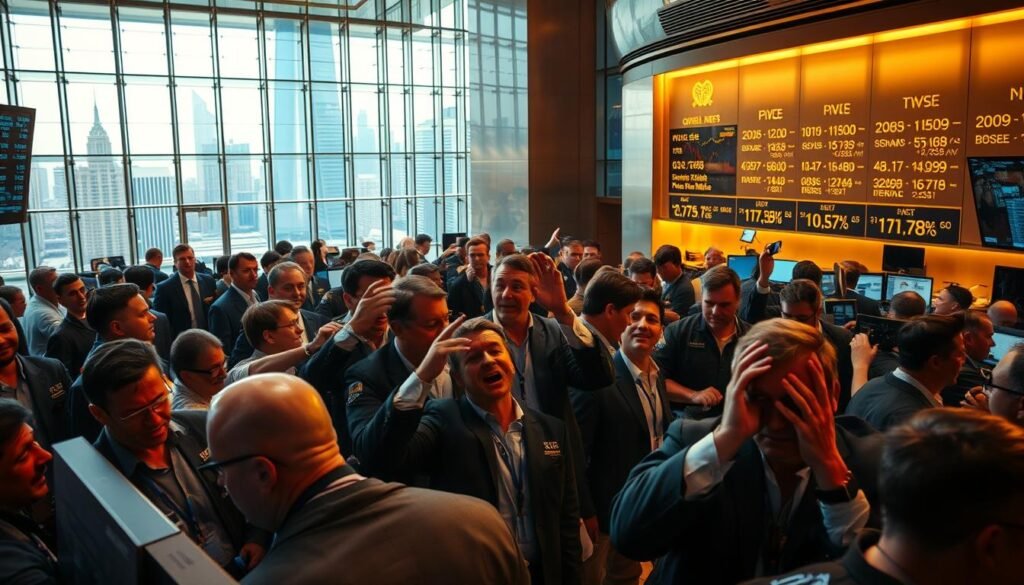
Emotional contagion is when your emotions mirror those around you. In precious metals trading, it can spread fear, excitement, or panic. This collective behavior shapes market trends.
For instance, when the economy is uncertain, fear spreads among investors. This leads to a rush to safe assets like gold. This emotional response can make prices move more than their true value.
Grasping these concepts can help you trade precious metals better. By spotting information cascades and emotional contagion, you can make smarter choices. This way, you can avoid following the crowd blindly.
The Role of Media in Amplifying Gold Market Trends
Media coverage has a big impact on gold prices, making trends more noticeable. It’s important to see how different media channels affect investor behavior and market mood.
News Coverage and Market Sentiment
News coverage is key in shaping market mood. When big news outlets talk about economic troubles or global tensions, people start to see gold as a safe choice. This increased interest can boost demand and push gold prices up. For example, during crises, news often talks about gold’s role as a reliable value, making investors more interested.
Social Media’s Impact on Modern Gold Rallies
Social media is now a big player in gold rallies. Sites like Twitter and Reddit let people share news and views fast, creating a big impact. This quick sharing can change market mood quickly, leading to fast price changes.
Twitter and Reddit’s Influence on Price Movements
Twitter and Reddit have a big say in market mood. For instance, tweets from famous people can spread fast, changing how investors see things. As noted, “our friend Jesse Felder tweeted about inflation worries,” showing social media’s power.
Financial Influencers and Gold Market Narratives
Financial influencers on social media shape gold market stories. Their views can sway investor choices, affecting the market trend. It’s key for investors to carefully check the info from influencers and look at many sources before deciding.
| Media Channel | Impact on Gold Market | Example |
|---|---|---|
| News Coverage | Increases awareness and demand | Economic instability reports |
| Rapid information dissemination | Influencer tweets on inflation | |
| Community-driven market sentiment | Discussion forums on gold investment |
Institutional vs. Retail Investor Behavior in Gold Markets
It’s key to know how institutional and retail investors act in gold markets. They each have their own way of investing, shaping the market’s trends and results.
Professional Investment Approaches
Institutional investors, like pension funds and hedge funds, invest in gold with a strategic mindset. For example, the Ohio Police & Fire Pension Fund put 5% of its $16 billion into gold. This shows a thoughtful investment choice. They look at gold as a way to protect their money from market ups and downs and inflation.
Institutional investors do deep research before investing. They look at market trends, economic signs, and world events. Their big trades can really affect gold prices.
Retail Investor Behavior During Rallies
Retail investors act differently during gold price increases. They might follow market feelings, news, and the fear of missing out (FOMO). When gold prices go up, they might quickly invest, hoping for fast profits. This can make gold prices jump as more people buy.
Retail investors can make choices based on emotions, sometimes buying into gold rally hype. Yet, they’re also important for the market, adding liquidity and helping set prices.
Knowing how both types of investors behave can help you make better gold investment choices. Understanding their differences can help you better navigate the gold market and find growth opportunities.
Recognizing the Signs of Herd-Driven Gold Movements
It’s key for investors to spot herd behavior in gold markets. Knowing the signs can help you make better choices. This is crucial in the complex world of gold investing.
Early Indicators of Crowd Behavior
A sudden price jump is a first sign of crowd behavior. Media coverage also plays a big role, boosting investor sentiment. Look for spikes in trading volumes too, as they show many investors moving together.
Market Signals That Suggest Herd Activity
To spot herd activity, watch for certain market signals. These include volume and volatility patterns, and sentiment indicators.
Volume and Volatility Patterns
More trading volume often means a big price change is coming. High volatility shows investors are reacting emotionally. For example, Comex silver futures saw a big jump in trading, hinting at herd behavior.
Sentiment Indicators to Monitor
Keep an eye on the Commitment of Traders (COT) report for trader positions. A big change in positions can signal a trend shift. Also, watch gold ETFs and mutual fund flows to see what retail investors are doing.
| Indicator | Description | Sign of Herd Behavior |
|---|---|---|
| Trading Volume | Increase in trading activity | High volume with price move |
| Volatility | Price fluctuations | High volatility with emotional reactions |
| COT Report | Net positions of traders | Significant shift in net positions |
Psychological Factors Unique to Gold Investing
Gold has been a key factor in investment choices for centuries. It taps into cultural and emotional aspects. Understanding these factors is key when exploring gold investing.
Cultural and Historical Attachments to Gold
Gold has always been seen as a symbol of wealth and power. This cultural significance affects investment decisions. For example, the US Mint’s Silver Eagle coins show the economic and cultural impact of precious metals.
Gold’s role in times of economic uncertainty is also significant. Investors often see gold as a safe asset. This is due to its cultural value and perceived stability.
Emotional Responses Specific to Precious Metals
Investing in gold can trigger strong emotions. People feel excitement when prices rise and anxiety when they fall. These feelings are intense because of gold’s perceived value and history.
It’s important to understand these emotional responses. Recognizing how culture and emotions affect your choices helps in making better investment decisions. This way, you can better handle the complexities of gold investing.

| Psychological Factor | Description | Impact on Gold Investing |
|---|---|---|
| Cultural Attachments | Gold’s historical and cultural significance | Influences investment decisions based on perceived value |
| Emotional Responses | Strong emotional reactions to gold price movements | Can lead to impulsive investment decisions |
| Safe-Haven Perception | Gold’s role during economic uncertainty | Drives investment during times of financial stress |
Contrarian Strategies in Gold Investing
In gold investing, a contrarian approach can lead to big wins. You know that market trends often follow the crowd, without checking the facts. Contrarian strategies mean making choices that go against what most people think.
Risks and Rewards of Going Against the Herd
Investing against the crowd in gold has its ups and downs. You might lose money if the trend keeps going. But, history shows that going against the trend can pay off big when the market changes.
Timing and understanding the market are key to winning. You should:
- Keep an eye on market trends
- Look at economic signs and world events
- Be ready to act when the time is right
Success Stories of Contrarian Gold Investors
Many have made a lot of money by betting against the crowd in gold. Warren Buffett, for example, has made smart moves by buying when prices are low. This includes investments in gold mining or production.
“Price is what you pay. Value is what you get. Whether we’re talking about socks or stocks, I like buying quality merchandise when it’s marked down.”
Buffett’s way of thinking can guide gold investors. Look for chances to buy when prices are low and everyone is negative. This way, you can make money as gold prices go back up.
Technological Influences on Modern Gold Rally Dynamics
The way gold rallies work has changed a lot with new technology. Now, as an investor, you’re part of a fast-paced global market. This change affects how gold is traded and how rallies start and keep going.
Algorithmic Trading and Herd Behavior
Algorithmic trading is big in gold markets now. It makes prices move and can lead to herd behavior. These programs trade based on set rules, making trends stronger.
When many algorithms react the same way, prices can jump up or down fast. Knowing this can help you make better choices with your money.
Digital Gold and New Investment Vehicles
New ways to invest in gold have come up, like digital gold. Gold ETFs are one big change.
Gold ETFs and Their Market Impact
Gold ETFs let you invest in gold without owning it. They follow gold’s price, making it easier to mix gold with other investments. Gold ETFs have become very popular, which affects gold prices and rallies.
Cryptocurrency vs. Gold: New Herd Behaviors
Cryptocurrencies have added a new twist to gold markets. When the economy is shaky, people often turn to gold and cryptocurrencies. This can lead to new patterns in how investors move their money.
It’s important to understand this to make smart choices with your investments.
Navigating Gold Market Volatility During Mass Movements
To succeed in the gold market, you need knowledge, strategy, and emotional control. Investing in gold means managing risk well, which is key for your financial health.
Risk Management Strategies
Good risk management is essential for gold investing. It includes several strategies to reduce losses and increase gains.
Position Sizing and Diversification
Position sizing is crucial for managing risk. It’s about deciding how much of your money to put into gold. Experts suggest not to put more than 25% of your net worth in gold. This balance helps manage risk and reward.
Diversifying your investments is also important. By spreading your money across different types of investments, you can protect your portfolio from big swings in the gold market.
Using Stop Losses Effectively
Stop-loss orders are a key risk management tool. They let you set a price at which your gold will be sold automatically. This limits losses if the market goes against you. It’s important to set these levels wisely, considering the gold market’s usual ups and downs.
Maintaining Emotional Discipline
Emotional control is just as important as risk management. Fear and greed can lead to bad investment choices. Stick to your strategy and avoid making quick decisions based on short-term market changes. It’s good to stay informed but not too caught up in market news.
| Risk Management Strategy | Description | Benefit |
|---|---|---|
| Position Sizing | Allocating appropriate portfolio percentage to gold | Balances risk and potential reward |
| Diversification | Spreading investments across different assets | Protects portfolio from gold market fluctuations |
| Stop Loss Orders | Automatically selling gold at a set price | Limits potential losses |
Conclusion: Balancing Individual Judgment and Market Wisdom
Exploring gold markets and herd mentality shows us the need for balance. This balance is between your own judgment and understanding the market. We’ve looked at how psychology affects market moves and gold’s past rallies.
Knowing about herd mentality is key. It helps you make smart investment choices. Stay updated on trends but also trust your own thoughts.
Combining your own judgment with market knowledge helps you seize chances and avoid risks. As you continue investing, being alert and flexible is crucial. The gold market is always changing.
Being aware of what drives herd mentality and gold price increases helps you make better choices. Your ability to mix personal insight with market knowledge is a big plus. It helps you reach your financial goals.