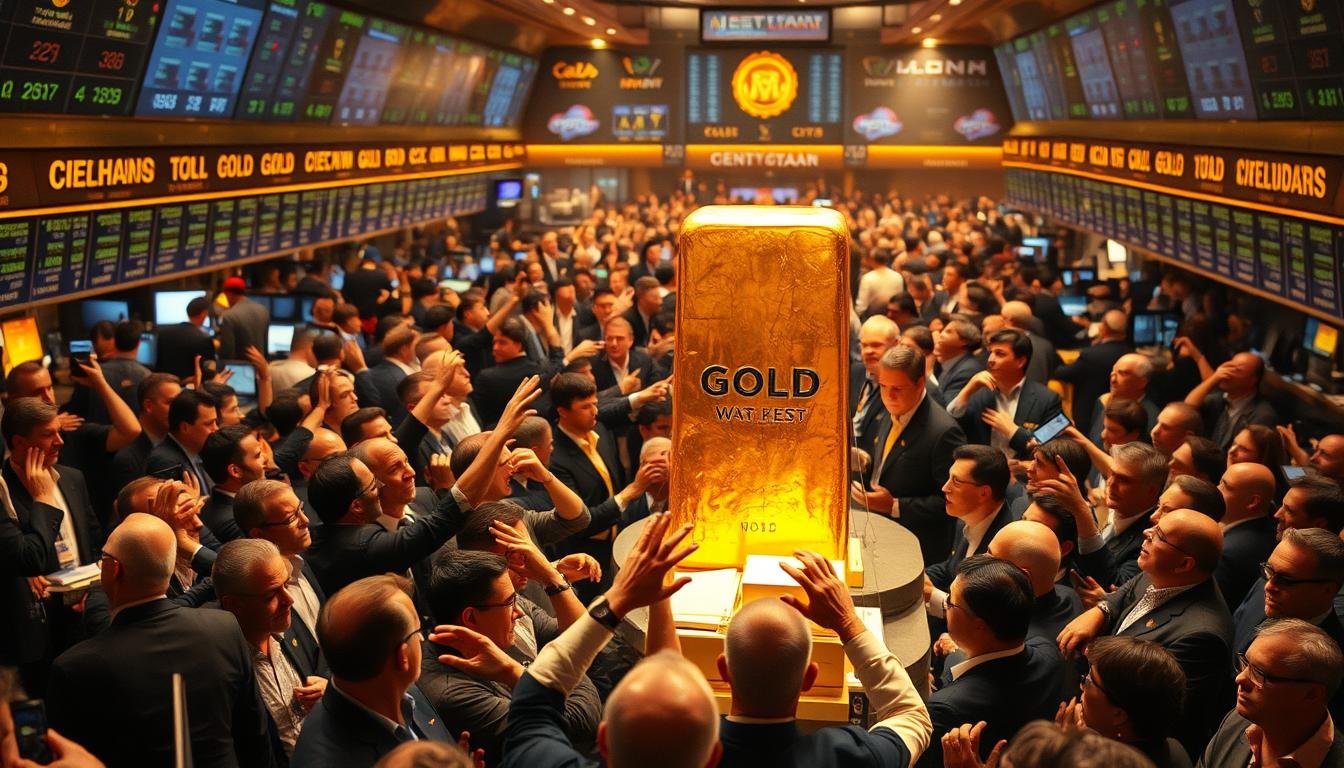
You’ve probably seen it: gold prices suddenly jump up overnight. But what causes this? It’s often because of herd mentality. This is when investors follow the crowd, not really understanding the market.
As an investor, you’re also affected by crowd psychology. In fact, what others do can greatly influence your choices. Knowing how herd mentality plays a part in gold rallies can help you make better decisions. It can also help you avoid getting swept up in the excitement.
Key Takeaways
- Recognize how herd mentality affects investment decisions.
- Understand the role of crowd psychology in gold rallies.
- Learn to make informed investment choices.
- Avoid getting caught up in market hype.
- Develop strategies to navigate complex market dynamics.
The Psychology Behind Market Movements
When you explore gold investing, knowing the psychological factors is key. How investors think and feel greatly affects the market, mainly during gold rallies. It’s not just about numbers; emotions and psychology are crucial too.

Basic Human Instincts in Financial Decisions
Fear and greed shape many financial choices. In gold investing, these feelings are even stronger. Investors often choose gold as a safe spot during uncertainty, fearing losses elsewhere. Yet, the chance to miss out on gains can lead to herd mentality, pushing gold prices up as more join in.
Fear and Greed as Market Drivers
Fear and greed powerfully move the gold market. Fear of economic downturns or global issues pushes investors to gold, raising its price. Greed, or the fear of missing out (FOMO), makes investors rush into gold, boosting prices further. A financial expert says, “Fear and greed are the yin and yang of market psychology, constantly influencing investor decisions.”
Knowing these psychological forces can guide your gold investment choices. By grasping the impact of fear and greed, you can better understand gold market shifts.
Understanding Herd Behavior in Financial Markets
Learning about herd behavior in financial markets can help investors make better choices. Herd behavior means people follow a group, even if it doesn’t feel right to them.
Definition and Characteristics of Herd Mentality
Herd mentality means people don’t make their own decisions. They rely on what others do. This can cause market bubbles and crashes because prices go up or down together.
The Science Behind Collective Decision Making
Studies show that group decisions are influenced by social proof and fear of missing out (FOMO). These factors make investors follow the crowd, ignoring their own thoughts.
Historical Examples of Market Herding
There have been times when market herding happened, like the dot-com bubble and the 2008 financial crisis. In these cases, investors followed the crowd, causing big changes in the market.
| Event | Description | Impact |
|---|---|---|
| Dot-com Bubble | Investors flocked to tech stocks, driving prices to unsustainable levels. | Market crash when bubble burst. |
| 2008 Financial Crisis | Investors followed the crowd in buying mortgage-backed securities. | Global financial downturn. |

Gold’s Unique Position in the Investment World
Gold has always been a key part of investment portfolios. It’s not just about its value; it’s also about its history and use today. Gold stands out because it’s both a commodity and a currency, a mix that has drawn investors for ages.
Historical Significance of Gold as Currency
Gold has been used as money for thousands of years. Ancient people used it to make coins and trade. Its value was known everywhere, making it a top choice for buying and selling.
Today, gold’s past still shapes how we see it. Central banks and investors see it as a safe place to keep money, even when the economy is shaky.
Modern Role in Investment Portfolios
In today’s investments, gold helps spread out risk. It doesn’t move with stocks and bonds, making it a good choice for balancing portfolios. This helps protect against market ups and downs.
You can add gold to your investments in several ways. You can buy physical gold, invest in gold ETFs, or look into mining stocks. Each option has its own benefits and fits different investment plans.
Why Gold Attracts Emotional Investment Decisions
Gold stirs strong feelings in investors. It’s seen as a symbol of wealth and safety. When money worries rise, many turn to gold for comfort.
Gold’s emotional pull can sometimes lead to irrational investment decisions. It’s crucial to stay informed and think carefully about your choices. Balance the emotional draw of gold with smart analysis.
Anatomy of a Gold Rally
Understanding a gold rally can help you make smart investment choices. A gold rally is when gold prices go up a lot and stay that way. This happens because of many market and economic factors.
Typical Triggers for Gold Price Surges
Gold prices often go up because of economic uncertainty, inflation concerns, and geopolitical tensions. When people doubt the economy or financial markets, they turn to gold. They see it as a safe place to put their money. Also, worries about inflation make people buy gold to protect their money’s value.
Other things that can make gold prices go up include currency devaluation and central bank policies that change how much money is worth. Knowing what causes these price increases can help you guess when gold might go up.
Stages of a Gold Market Rally
A gold market rally goes through different stages. Knowing these stages can help you move through the market better.
Early Accumulation Phase
The early phase is when smart money starts buying gold. This is when people who know what’s happening start to buy. Even though prices might not go up a lot, this phase is important for what comes next.
Public Participation Phase
As the rally gets stronger, more people start buying gold, making prices go up. This stage gets a lot of media attention and interest from the public, making the rally even bigger.
Mania and Distribution Phase
The last stage is when speculative buying and exuberance take over. Prices can jump up fast here. But, smart investors start selling, passing their gold to people who don’t know as much.
By understanding the anatomy of a gold rally, including its triggers and stages, you can better navigate the complexities of the gold market and make more informed investment decisions.
How Crowd Psychology Amplifies Gold Price Movements
Learning about crowd psychology in gold prices can help you understand market trends. It shows how collective behavior can push prices higher than their true value. This is because many investors act together, influencing the market.
FOMO (Fear of Missing Out) in Gold Markets
FOMO plays a big role in gold markets. When gold prices go up, investors worry they’ll miss out on profits. This fear leads to a lot of buying, which raises the price even more.
Panic Buying and Selling Patterns
Panic buying and selling are common in gold markets. When the economy is shaky, people buy gold as a safe choice. This can cause prices to jump up quickly. But, if people start selling fast, prices can drop sharply.
The Snowball Effect in Gold Price Momentum
The snowball effect is when gold prices start moving and then get bigger. This attracts more investors, pushing prices even higher. It can cause big swings in prices, as more people join in, fearing they’ll miss out or wanting to sell.
Knowing about crowd psychology helps you understand gold markets better. It can guide you in making smarter investment choices.
The Role of Media in Shaping Gold Market Sentiment
The media has a big role in how people feel about gold. Knowing this can help you make better choices. Watching news and social media about gold shows how it can change market trends.
News Coverage and Market Reactions
News can really affect gold prices. Good news about gold can make people want to buy more. But bad news can make them sell. For example, when the economy is shaky, gold is seen as a safe choice, drawing in investors.
Social Media’s Impact on Modern Gold Trading
Social media is key in shaping gold market feelings. Online places let investors share info and views, affecting market trends. But, be careful of false info and check different sources before investing.
Recognizing Media-Driven Gold Narratives
To invest wisely, you need to spot media-driven gold stories. Watch out for headlines that are too good to be true and biased reports. Look for reliable sources and check the facts to form your own gold market view.
Understanding how media affects gold market feelings can help you craft a smarter investment plan. This plan should consider the complex mix of media and market trends.
Institutional vs. Retail Investor Behavior in Gold Markets
It’s key to know how institutional and retail investors affect the gold market. When looking into gold investments, seeing how each group impacts trends is vital.
Influence of Big Players on the Gold Market
Institutional investors, like hedge funds and banks, shape the gold market. Their big trades can change prices a lot. They use advanced research to guide their choices, affecting the market’s mood.
For example, if big investors buy more gold, it might signal a price increase. But if they sell, it could mean prices will drop.
Retail Investor Tendencies During Gold Rallies
Retail investors, though, tend to follow trends. In gold rallies, they often feel FOMO and buy quickly. This can make the rally stronger.
But, they might sell fast during downturns. This can make prices fall even more, making it tough for others.
Following the Smart Money in Gold Investments
Watching what institutional investors do can help you. They are called “smart money.” Their moves can show you where the market might go.
| Investor Type | Market Influence | Investment Behavior |
|---|---|---|
| Institutional Investors | High | Informed, strategic decisions |
| Retail Investors | Moderate | Trend-following, emotional decisions |
Knowing how both types of investors act can help you invest better in gold. It can lead to smarter choices and better results.
Contrarian Investing: Going Against the Gold Herd
Understanding contrarian investing is key in the gold market. This strategy means making choices that go against what most people think. In gold investing, it’s about buying when others sell and selling when others buy.
Contrarian investing isn’t about being stubborn. It’s about making smart choices based on deep analysis. By being a contrarian, you can find opportunities that others might miss.
Principles of Contrarian Gold Investment
The main idea of contrarian gold investing is to spot when the market is too extreme. This could be when gold prices are very high or very low. As a contrarian, you look for signs of overreaction and prepare for a change.
Some key principles include:
- Monitoring market sentiment indicators
- Analyzing fundamental factors that could influence gold prices
- Being patient and willing to go against the crowd
Identifying Overbought and Oversold Gold Markets
To succeed with a contrarian strategy, you must know when the gold market is too high or too low. You use technical and fundamental analysis tools for this. For example, the Relative Strength Index (RSI) can show if gold is overbought (above 70) or oversold (below 30).
Success Stories and Cautionary Tales
There are many stories of successful contrarian investors in gold. For example, those who bought gold in 2008, when prices fell, made a lot of money as prices rose later. But, there are also stories of investors who lost a lot by not understanding the market.
Before trying contrarian investing in gold, make sure to research well. Combine contrarian insights with thorough analysis to make better investment choices.
Technical Analysis: Identifying Herd Movements in Gold Charts
Technical analysis is key in spotting crowd behavior in gold markets. Gold charts offer insights into market mood. This guide will show you how to spot crowd behavior, volume analysis, and chart patterns in gold rallies and selloffs.
Key Indicators of Crowd Behavior
Several technical indicators help spot crowd behavior in gold markets. These include moving averages, relative strength index (RSI), and Bollinger Bands. Together, they give a full view of market mood. For example, if the RSI shows gold is overbought, it might mean the crowd is too bullish, leading to a correction.
Volume Analysis During Gold Market Shifts
Volume analysis is key to understanding price movements. High volume on a price rise shows strong buying. Low volume might mean investors are unsure. High volume on a price fall signals panic selling. By looking at volume and price, you get a clearer picture of market dynamics.
Chart Patterns During Gold Rallies and Selloffs
Chart patterns like head and shoulders, triangles, and wedges offer clues on market moves. A breakout from a triangle might mean a trend continues. A head and shoulders pattern could signal a change. Spotting these patterns helps you predict market shifts and adjust your strategy.
Using these technical tools, you can better understand crowd behavior in gold markets. This knowledge helps you make smarter investment choices.
Psychological Biases Affecting Gold Investors
The gold market is influenced by psychological biases that can impact your investment choices. Knowing these biases can help you make better decisions and avoid common mistakes.
Understanding the psychological factors in the gold market can improve your investment strategy. Several biases affect gold investors, often without them realizing it.
Confirmation Bias in Gold Investment Decisions
Confirmation bias happens when you look for information that supports your beliefs about gold prices. For example, if you think gold prices will go up, you might focus on news that agrees with you. This can lead you to ignore opposing views. To avoid this, seek out different opinions and question your own beliefs.
Recency Bias and Its Impact on Gold Trading
Recency bias makes you rely too much on recent events when investing. In gold, this might mean thinking a recent price increase will keep going. To fight this, look at historical data and keep a long-term view.
Overconfidence in Gold Market Predictions
Overconfidence can make you think you can predict gold prices better than you can. This might lead you to take too much risk or not diversify enough. Recognizing your limits and staying humble in your investments can help.
Herd Mentality as a Self-Fulfilling Prophecy
Herd mentality means following the crowd in gold investments, which can create self-fulfilling prophecies. As more people follow the trend, it strengthens the market direction. Being aware of this can help you make your own investment choices.
| Bias | Description | Mitigation Strategy |
|---|---|---|
| Confirmation Bias | Seeking information that confirms existing beliefs | Seek diverse perspectives, challenge assumptions |
| Recency Bias | Giving undue importance to recent events | Consider historical data, maintain a long-term perspective |
| Overconfidence | Overestimating one’s ability to predict market movements | Recognize the limits of your knowledge, stay humble |
| Herd Mentality | Following the crowd in investment decisions | Make independent decisions based on your analysis |
Global Economic Factors That Trigger Herd Behavior in Gold Markets
Herd behavior in gold markets is often triggered by significant global economic events and trends. As an investor, understanding these factors can help you make more informed decisions. This can help you avoid getting caught up in market frenzies.
Inflation Concerns and Gold Rushes
One of the primary global economic factors that influences gold prices is inflation concerns. When inflation rises or is expected to rise, investors often turn to gold. This is because gold is seen as a hedge against the eroding purchasing power of their currencies.
This can lead to a surge in gold prices as more investors buy into the market. Inflation concerns can stem from various factors, including expansive monetary policies, supply chain disruptions, or significant increases in commodity prices. As inflation expectations grow, so does the demand for gold, driving prices higher.
Geopolitical Tensions and Safe Haven Seeking
Geopolitical tensions are another crucial factor that can trigger herd behavior in gold markets. During times of political instability, conflicts, or unexpected geopolitical events, investors often seek safe-haven assets. Gold is traditionally viewed as a safe haven.
During such periods, investors flock to it, driving up its price. The 2022 Russia-Ukraine conflict is a recent example where geopolitical tensions led to a surge in gold prices as investors sought refuge from market volatility.
Currency Devaluation Scenarios
Currency devaluation scenarios also play a significant role in influencing gold prices. When a major currency, such as the US dollar, faces devaluation risks, investors often turn to gold. This is because gold is seen as a store of value that is not tied to any particular currency.
A weakening dollar makes gold cheaper for investors holding other currencies, potentially increasing demand and driving prices up. Central bank actions, such as quantitative easing, can lead to currency devaluation concerns. This further boosts gold’s appeal.
Central Bank Policies and Gold Sentiment
Central bank policies have a profound impact on gold market sentiment. Interest rate decisions, quantitative easing programs, and gold reserve management by central banks can all influence gold prices. For instance, when central banks lower interest rates or implement quantitative easing, it can lead to a decrease in the opportunity cost of holding gold.
This makes it more attractive to investors. When central banks increase their gold reserves, it can signal a vote of confidence in gold as an asset. This can potentially encourage other investors to follow suit.
Developing a Rational Gold Investment Strategy
A good gold investment strategy starts with clear goals, disciplined choices, and understanding the market. When you invest in gold, having a solid plan is key.
Setting Clear Investment Goals
First, you must know what you want from your gold investments. Do you want to protect against inflation, spread out your investments, or make money from price changes? Clear goals help you make better choices and keep you focused. Think about what you aim to achieve and set clear, achievable targets.
Creating a Disciplined Approach to Gold Investing
Investing in gold wisely means following a strict plan. This plan should match your goals and how much risk you can take. Staying true to your strategy helps you avoid acting on emotions. Regularly check and tweak your plan to keep on track.
Portfolio Allocation Considerations
Deciding how much of your money to put into gold depends on your financial situation, goals, and how much risk you can handle. A balanced portfolio usually has a mix of investments, with gold as a safety net. Talking to a financial advisor can help find the right balance for you.
Tools for Emotional Control During Gold Market Volatility
Gold market ups and downs can be tough to handle, but there are ways to manage your feelings. Use price alerts, stop-loss orders, and check your portfolio often. Staying disciplined and focused on your long-term goals is crucial for dealing with market swings.
Creating a smart gold investment strategy helps you make better choices and reach your financial goals. A well-planned approach is your best shield against gold market unpredictability.
Case Studies: Famous Gold Market Rallies Driven by Herd Mentality
Gold market rallies have often been fueled by herd mentality. This is when investors follow the crowd instead of making their own choices. Looking at these events can give us valuable insights into how markets work.
The 1970s Gold Bull Market
The 1970s saw a big rise in gold prices. This was due to high inflation and worries about currency value. Investors rushed to buy gold, which made prices go up even more. The main reasons were:
- Economic uncertainty from oil embargoes and stagflation
- The dollar losing value after the Bretton Woods system failed
- More people wanting gold as a safe place to put their money
2008-2011 Financial Crisis Gold Surge
In 2008, gold prices went up as investors looked for safe places to put their money. The crisis caused a big economic downturn, leading to:
- Big efforts by central banks to print more money
- More fear and uncertainty among investors
- A move towards safer assets, with gold being a big winner
This time showed how fear can push gold prices up during tough financial times.
COVID-19 Pandemic and Gold Prices
The COVID-19 pandemic also led to a big rise in gold prices. The global economy faced huge challenges, causing investors to turn to gold. This made its price reach new highs. The main reasons were:
- Global economic lockdowns and fears of recession
- Big efforts by governments and central banks to stimulate the economy
- Low interest rates, making gold a more attractive option
These examples show how herd mentality affects gold prices. They highlight the need to understand how investors behave to predict market trends.
Conclusion: Navigating the Psychological Landscape of Gold Investing
You now know how herd mentality affects gold markets. It’s key to see how your feelings and others’ actions shape your choices. Knowing these psychological factors helps you make better decisions.
Understanding the psychological side of gold investing is vital. This knowledge helps you make smart choices in the gold market. You can create a strategy that fits your financial goals.
Keep in mind that knowing about herd mentality is essential. Stay updated, and you’ll be more likely to reach your financial goals. With a clear grasp of the psychological landscape, you can confidently move through the gold market.