Have you seen the recent changes in gold prices after the Federal Reserve’s rate cuts? The latest cut made gold stay near $2,700 per ounce. This has made people curious about how global rate cuts affect its value.
It’s key to know that rate cuts can make gold more appealing as an investment. When rates go down worldwide, investors look for safe places to put their money. This can push gold prices up. But, the link between rate cuts and gold prices isn’t simple. Many things influence it.
Looking at today’s market and the past of global rates and gold prices helps us understand what’s next.
Key Takeaways
- Global rate cuts can increase the appeal of safe-haven assets like gold.
- The relationship between rate cuts and gold prices is influenced by multiple factors.
- Understanding historical trends can provide insights into future gold performance.
- Investors often turn to gold during periods of economic uncertainty.
- The current market situation suggests a continued interest in gold.
The Fundamental Relationship Between Interest Rates and Gold
Interest rates and gold are closely linked, affecting global markets. As an investor, knowing this relationship is key to making smart choices. Gold’s price is influenced by many factors, but interest rates are a big one.
Why Gold Is Sensitive to Interest Rate Changes
Gold reacts to changes in interest rates because holding gold becomes less appealing when rates go up. But when rates drop, gold becomes more attractive.
The Negative Correlation Explained
The link between gold and interest rates is negative. Lower interest rates make gold more appealing because it doesn’t earn interest. Alan Greenspan said, “Gold is a store of value, a hedge against inflation and currency debasement.”
Historical Evidence of This Relationship
In the 1970s, gold prices went up when interest rates were high and rising. This shows gold’s role as a hedge against inflation. High rates often mean a strong economy or high inflation, pushing gold prices up.
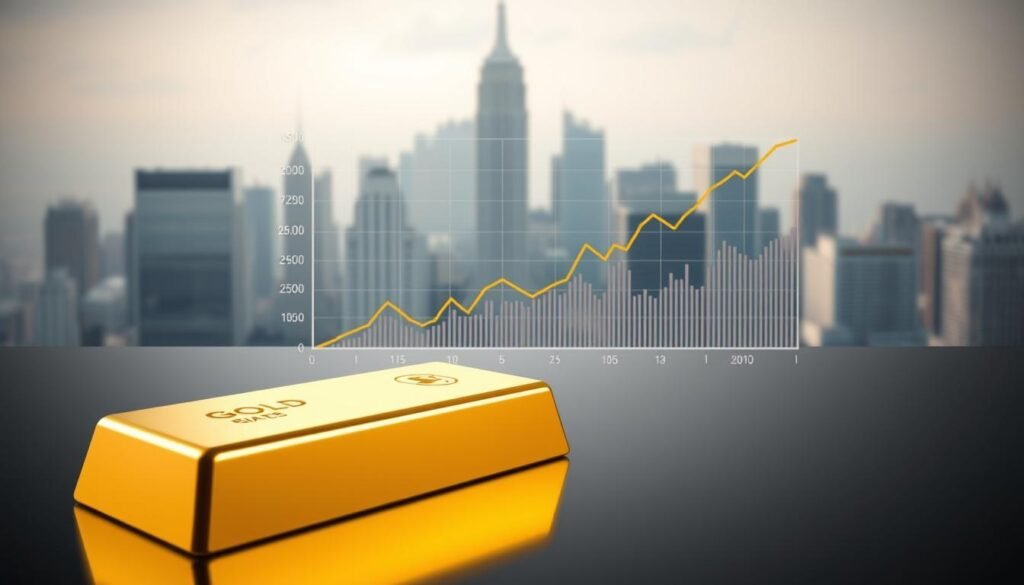
Understanding this relationship helps you deal with global monetary policy’s impact on gold. By spotting rate changes and their gold effects, you can make better investment choices.
Historical Patterns: Gold Performance During Rate Cut Cycles
Looking at gold’s past performance during rate cuts can offer insights. It helps us understand the trends and patterns. This knowledge is crucial for investors.
Analysis of Major Rate Cut Periods (1980-2000)
In the 1980s and 1990s, the world saw many rate cuts. Gold prices changed a lot. This was due to inflation, currency changes, and world events.
| Period | Rate Cut Details | Gold Price Movement |
|---|---|---|
| 1980-1982 | Rates cut from 20% to 8% | Gold fell from $615 to $300 |
| 1991-1993 | Rates cut from 8% to 3% | Gold rose from $350 to $390 |
Recent History: Post-2008 Financial Crisis Rate Cuts
The 2007-2009 crisis led to big rate cuts. Rates dropped from 5.25% to almost zero. Gold prices jumped over 39% in 24 months. This shows gold’s value as a safe asset.
Quantitative Easing and Gold Prices
During the crisis, rate cuts were paired with quantitative easing (QE). QE is when central banks buy securities to boost the economy. This expansion makes currencies weaker, making gold more appealing.
Recovery Period Rate Normalization
When economies started to heal and rates rose, gold prices wavered. Knowing these patterns helps investors predict future trends.

Understanding Central Bank Rate Policies and Their Global Impact on Gold Markets
Central banks are key in shaping gold markets with their monetary policies. Their interest rate decisions can make gold more or less attractive as an investment. Knowing this is vital for smart investment choices.
Federal Reserve Rate Decisions and Gold Price Movements
The Federal Reserve, the US central bank, greatly affects global gold markets. Adjusting interest rates changes gold’s appeal. Lower rates make gold more attractive. Think about how these decisions fit with your investment goals.
How Other Major Central Banks Influence the Gold Market
Other major central banks also shape gold prices. Their policies impact currency values, interest rates, and investor views on gold.
European Central Bank
The European Central Bank (ECB) is another important player. The ECB’s rate and quantitative easing decisions affect the euro and gold prices. Accommodative policies can weaken the euro, possibly raising gold prices.
Bank of Japan
The Bank of Japan (BoJ) is known for its unique policies, like negative interest rates. These actions can change global liquidity and gold demand. Keep an eye on BoJ policy changes for their impact on gold.
People’s Bank of China
The People’s Bank of China (PBOC) is growing in influence in gold markets, mainly through gold purchases. The PBOC’s moves can signal gold demand trends and affect prices. Understanding the PBOC’s strategies is key for investment decisions.
| Central Bank | Monetary Policy Tool | Impact on Gold |
|---|---|---|
| Federal Reserve | Interest Rates | Lower rates boost gold |
| European Central Bank | Quantitative Easing | Weaker euro, higher gold |
| Bank of Japan | Negative Interest Rates | Increased global liquidity, higher gold |
| People’s Bank of China | Gold Reserve Purchases | Increased demand, higher gold prices |
The Inverse Correlation: Why Gold Often Rises When Global Rates Fall
Gold often goes up when global rates drop. But why does this happen? It’s all about how global monetary policy and rate changes affect us all.
Statistical Evidence of the Rate-Gold Relationship
Gold prices and interest rates have a strong inverse link. Studies show gold prices go up when rates fall. This is because lower rates make gold a more attractive option.
This pattern is backed by data. Gold does well when money policies are relaxed.
Exceptions to the Rule: When Gold Doesn’t Follow Rate Cuts
But, there are times when gold doesn’t follow the usual trend. For example, in deflationary environments, gold might not behave as expected. Also, if the dollar gets stronger even with rate cuts, gold’s usual rise can be lessened.
Deflationary Environments
In deflation, the usual gold-interest rate link can fail. Deflation can reduce spending and investment, impacting gold demand. It’s key for investors to understand these exceptions.
Dollar Strength Despite Rate Cuts
Another exception is when the dollar gets stronger despite rate cuts. This can happen if people see the dollar as a safe place to put their money. In such cases, gold’s price can be limited, even with rate cuts.
Global Monetary Policy Coordination and Its Effects on Gold Volatility
The world of global finance is complex. The way central banks set their policies affects gold’s price. Knowing this helps you make smart investment choices.
Synchronized vs. Divergent Rate Policies
When big central banks set their rates the same, the economy can be more stable. This can make gold prices less volatile. But, if their rates are different, gold prices can swing more. This happens because investors look for safe places to put their money when things are uncertain.
Case Study: 2019-2020 Global Rate Adjustments
The years 2019 to 2020 show how global policy changes affect gold prices.
Pre-Pandemic Rate Environment
In 2019, big central banks like the Federal Reserve started to change their policies. They were trying to help the economy, which helped gold prices a bit.
Pandemic Response Coordination
When COVID-19 hit, central banks around the world worked together to ease money. This move made gold prices go up as people looked for safe investments.
The table below shows important events and how gold prices changed during this time.
| Period | Central Bank Actions | Gold Price Movement |
|---|---|---|
| Pre-Pandemic (2019) | Rate cuts and easing | Moderate increase |
| Pandemic Response (2020) | Coordinated monetary easing | Significant surge |
It’s key to understand how global monetary policies work together. This knowledge helps predict gold prices. By keeping up with central bank moves, you can make better investment choices.
Regional Rate Cut Influence: How Different Economies Affect Gold Performance
It’s key for investors to grasp how rate cuts in different areas affect gold markets. As the world economy changes, the way rate cuts impact gold varies greatly. This is true across different economies and regions.
U.S. Rate Cuts: The Primary Driver of Gold Markets
Rate cuts in the U.S. have a big impact on gold markets. When the Federal Reserve changes interest rates, it affects financial markets worldwide. It’s important to see how these changes affect gold prices.
Lower interest rates in the U.S. often lead to higher gold prices. This is because holding gold becomes more attractive. Investors often buy gold when interest rates are low, which boosts demand and prices.
European Central Bank Policy Effects on Gold Valuation
The European Central Bank (ECB) also shapes gold’s value. ECB rate decisions can change the euro’s strength against other currencies. This affects gold prices.
When the ECB lowers rates, the euro weakens. This makes gold more costly for investors in the eurozone. Yet, it can also boost gold demand as a safe asset, possibly raising prices.
Asian Central Banks and Their Influence on Regional Gold Demand
Asian central banks, like those in China and India, play a big role in gold demand. Cultural and investment preferences in these countries drive gold use. For example, if the local currency falls during rate cuts, investors might buy gold. This can increase demand and affect global gold prices.
| Central Bank | Rate Cut Impact | Effect on Gold |
|---|---|---|
| Federal Reserve (U.S.) | Primary driver of global gold markets | Increased gold prices |
| European Central Bank (ECB) | Influences euro value and gold affordability | Potential increase in gold demand |
| Asian Central Banks | Drives regional gold demand | Increased gold consumption |
Gold as a Safe Haven Asset During Global Rate Cut Environments
When global rate cuts are common, gold becomes even more appealing as a safe haven. You might be searching for ways to safeguard your investments during economic uncertainty. Gold has been a trusted choice for investors looking for a safe place during times of monetary easing.
Why Investors Flock to Gold During Monetary Easing
When monetary easing happens, investors start to doubt traditional assets like stocks and bonds. They then look to gold as a safe value and a way to protect against losses. Gold’s value remains steady over time, even when other assets swing wildly.
Measuring Gold’s Effectiveness as a Portfolio Stabilizer
To see how well gold stabilizes portfolios, we look at its link to equities during rate cuts. We also compare its volatility to other safe havens. This study shows how gold can reduce potential losses in portfolios.
Correlation with Equities During Rate Cuts
Gold has a low link to equities, making it great for diversifying. During rate cuts, this link weakens even more. This offers a shield against the ups and downs of the stock market.
Volatility Comparison with Other Safe Havens
Gold is less volatile than other safe havens like the Swiss franc or Japanese yen. This makes it a good choice for investors wanting to reduce losses in uncertain times.
Understanding gold’s role as a safe haven in rate cut environments helps you make better investment choices.
Currency Devaluation: How Rate Cuts Weaken Fiat Money and Strengthen Gold
Global monetary policies change, and rate cuts can lead to currency devaluation. This makes gold a strong alternative. You might be curious about how this happens. Let’s look at the link between rate cuts, currency devaluation, and gold’s performance.
The Mechanism of Currency Depreciation Following Rate Cuts
When interest rates drop, the return on investments in that currency falls. This can cause the currency’s value to drop as investors seek better returns. As a result, the currency weakens compared to other currencies or assets like gold.
Key factors contributing to currency depreciation include:
- Reduced investor confidence
- Increased money supply
- Lower returns on investments
Gold’s Historical Role as an Alternative to Devaluing Currencies
Gold has always been seen as a safe asset and a hedge against currency devaluation. In times of significant currency decline, gold tends to do well. Investors often choose gold to keep their wealth safe when fiat currencies lose value.
Case Studies of Currency Crises and Gold Performance
Let’s look at some historical examples where gold did well during currency crises. For instance, during the 2008 financial crisis, gold prices rose as investors lost faith in fiat currencies.
Examining gold-to-currency ratios during rate cut cycles shows gold’s strong performance. As currencies weaken, the gold-to-currency ratio often goes up. This shows gold’s growing strength.
The Time Lag Effect: When Gold Responds to Global Rate Changes
Gold’s reaction to global rate changes is affected by a time lag. This delay can show up as quick or slow price changes in gold markets.
Immediate vs. Delayed Price Reactions in Gold Markets
The effect of global rate changes on gold prices can differ. Sometimes, gold prices change right after rate announcements. Other times, the change comes later. Knowing these patterns is key for smart investment choices.
| Reaction Type | Characteristics | Investor Impact |
|---|---|---|
| Immediate | Rapid price adjustment following rate announcements | Requires swift decision-making |
| Delayed | Gradual price changes over time after rate changes | Allows for more considered investment strategies |
Anticipatory Movements: How Gold Prices Move Before Official Rate Announcements
Gold prices can also move before official rate announcements. This is because of market expectations. It’s influenced by future indicators and economic forecasts.
By grasping the time lag effect and anticipatory movements, investors can handle the challenges of global rate changes. They can see how these changes affect gold’s performance.
Strategic Gold Investment Approaches During Global Rate Cut Cycles
The link between global rate cuts and gold prices is intricate, requiring a smart investment plan. Central banks’ rate adjustments significantly affect gold markets. It’s key for investors to grasp these shifts to seize rate cut cycle opportunities.
Physical Gold vs. Gold ETFs in Rate-Sensitive Markets
Investors have choices like physical gold and gold ETFs during rate cut cycles. Physical gold is a real asset, giving investors a secure feeling. Yet, gold ETFs are easier to invest in, offering liquidity without storage needs. The choice depends on investor preferences and market conditions.
Gold Mining Stocks: Leveraged Exposure to Rate Cut Benefits
Gold mining stocks offer a way to benefit from rate cuts. As gold prices climb with lower rates, mining companies profit more. This can lead to higher stock prices, potentially offering better returns than gold itself. Yet, it’s vital to look at the risks and management quality of these companies.
Timing Strategies for Gold Purchases Based on Rate Forecasts
Timing is everything in gold investments during rate cut cycles. Investors can use rate forecasts to plan their moves. Analyzing technical and fundamental data helps find the best times to buy.
Technical Indicators to Watch
- Moving averages to identify trends
- Relative Strength Index (RSI) to gauge overbought or oversold conditions
- Bollinger Bands to assess volatility
Fundamental Signals for Entry Points
- Central bank rate decisions and forward guidance
- Economic indicators such as inflation rates and GDP growth
- Geopolitical events that could impact gold prices
By using these strategies and keeping up with global rate trends, investors can make better gold investment choices.
The Inflation Factor: How Rate Cuts, Monetary Expansion, and Gold Interact
Rate cuts, monetary expansion, and gold are closely linked to inflation. When central banks lower interest rates, they add more money to the economy. This can cause people to spend more, which might lead to higher prices.
The Mechanism of Inflation Following Rate Cuts
Lower interest rates make borrowing cheaper. This encourages people and businesses to borrow more. With more demand, prices can go up, causing inflation. Monetary expansion from rate cuts also increases money in circulation.
- Increased borrowing and spending
- Rise in demand for goods and services
- Potential for higher prices and inflation
Gold’s Historical Performance During Inflationary Periods
Gold is often seen as a shield against inflation. When inflation goes up, the value of paper money can drop. This makes gold more valuable. Let’s look at some key times in history.
1970s Stagflation and Gold
In the 1970s, the world saw stagflation, a mix of slow growth and high inflation. Gold prices soared, going from $35 per ounce in 1970 to $850 by 1980.
Modern Inflation Episodes
In recent years, gold has done well when inflation is high. For example, in the early 2000s, as inflation worries grew, gold prices went up, reaching new peaks.
Understanding how rate cuts, inflation, and gold relate can help investors. As money policies change, watching inflation closely is key for those interested in gold.
Analyzing Gold Performance Metrics During Global Rate Cut Environments
Gold’s performance during global rate cuts is a key topic for investors and economists. Central banks adjusting interest rates affects gold markets. It’s crucial to understand these impacts.
Price Volatility Measurements and Patterns
Gold price volatility rises when investors look for safe assets during rate cuts. Historical data shows gold prices are more volatile during monetary easing. Metrics like standard deviation and beta help gauge gold’s risk compared to other assets.
Trading Volume Changes and Investor Sentiment
Rate cuts boost gold market trading volume as investors rebalance their portfolios. Trading volume changes reveal investor sentiment and market direction. During rate cuts, gold attracts more investors, increasing both prices and volumes.
Gold vs. Other Precious Metals During Rate Cuts
Comparing gold to other precious metals during rate cuts offers insights. Silver, platinum, and palladium react differently to rate changes. Their unique supply and demand factors influence their prices.
Silver Performance Comparison
Silver is more volatile than gold and sees big price swings during rate cuts. Its industrial uses add complexity to its price.
Platinum and Palladium Reactions
Platinum and palladium, key in autos and industries, react differently to rate cuts. Their prices are closely tied to economic growth expectations. They’re interesting to watch during monetary policy changes.
Rate Policy Effects on Various Gold Investment Vehicles
Investors in gold face a complex world of rate policy effects. Rate cuts can change how attractive different gold investments are.
Bullion and Coins: Direct Ownership Benefits
Buying bullion and coins means you own gold directly. This offers privacy and tangibility. When rates drop, more people want physical gold. This can make premiums go up.
Gold Futures and Options: Leveraged Exposure
Gold futures and options let you bet on gold prices. You can make money if prices rise or protect against falls. But, they come with higher risks.
Gold-Backed Securities and Cryptocurrencies
Gold-backed securities and cryptocurrencies mix gold with digital assets. They offer diversification and liquidity. But, they’re new, so they have unique risks.
Gold ETFs and Mutual Funds
Gold ETFs and mutual funds make investing in gold easy. You don’t need to store physical gold. They’re popular for their diversification and ease of trading. The main benefits are:
- Liquidity
- Transparency
- Low management fees
Digital Gold and Blockchain Assets
Digital gold and blockchain assets use blockchain to invest in gold. They offer new ways to invest in gold. They promise security and transparency.
Case Studies: Major Gold Price Movements Following Significant Global Rate Cuts
Looking at gold price movements after big rate cuts helps us understand the market better. By studying past events, we can see how gold reacts to changes in money policy.
The 2001-2003 Rate Cut Cycle and Gold Rally
In 2001-2003, the Federal Reserve cut rates to help the economy. This move made gold prices go up, as people looked for safe investments. Gold went from about $250 per ounce in 2001 to over $400 by 2003, showing a big jump.
The 2007-2009 Financial Crisis Response and Gold Surge
The 2007-2009 financial crisis made central banks worldwide cut rates aggressively. Gold prices soared as investors wanted safe assets and worried about inflation. Gold prices almost doubled, going from around $600 per ounce in 2007 to over $1,200 by 2009.
The COVID-19 Pandemic Rate Cuts and Gold’s Record Highs
When COVID-19 hit, central banks cut rates again to protect the economy. This led to a big rise in gold prices, as investors sought safe havens. Gold prices hit new highs, going over $2,000 per ounce in 2020, as people tried to escape market ups and downs.
Future Outlook: Projected Rate Policies and Gold Performance Forecasts
The future of gold is linked to rate policies. Investors need to keep up with these changes. We’ll look at how rate cuts might affect gold prices, both now and in the future.
Short-Term Rate Cut Expectations (2023-2024) and Gold Implications
Experts think rate cuts will shape gold prices in the short term. Many investors believe rate cuts will happen soon. This could boost gold demand.
| Year | Projected Rate Cuts | Gold Price Impact |
|---|---|---|
| 2023 | 2-3 cuts | Positive |
| 2024 | 3-4 cuts | Highly Positive |
Long-Term Gold Performance Projections in a Changing Rate Environment
Gold is expected to thrive in a low-rate world. But, changes in the economy and gold’s relationship with rates could change this view.
Structural Factors Affecting Gold’s Future
Many factors will shape gold’s future. These include central bank actions, global tensions, and new technologies. As Jim O’Neill, a renowned economist, noted, “Gold’s future isn’t just about rates. It’s about the whole economy.”
“Gold is a safe-haven asset that tends to perform well during times of economic uncertainty.” –
Potential Disruptions to Traditional Gold-Rate Relationships
Unexpected changes in global policies or economic surprises could upset gold’s usual relationship with rates. Investors need to stay alert and adjust their plans.
Conclusion: Navigating Gold Investments in a Dynamic Global Rate Environment
Understanding gold investments means knowing how global interest rates affect them. The world’s interest rates keep changing, which impacts gold prices and how you invest. Rate cuts often lead to more people wanting gold, making prices go up.
It’s important to keep an eye on what central banks, like the Federal Reserve, do. Their actions can change global interest rates. This helps you guess how gold might do in different situations.
Whether you’re experienced or new to investing in gold, knowing what you’re doing is key. As rates change, staying up-to-date and flexible is crucial for success in gold investments.