You’ve probably seen gold prices go up and down a lot lately. This is because of the Federal Reserve’s changes in interest rates. Recently, gold prices went back down after a two-day rise. This happened because investors thought there wouldn’t be a big interest rate cut from the US Federal Reserve next month.
It’s important to know how rate cuts affect gold. The recent cuts have made gold prices go up a lot. They’ve even hit a record high in October, with more than a 50% increase this year.
Key Takeaways
- The Federal Reserve’s decisions on interest rates significantly impact gold prices.
- Recent rate cuts have led to a surge in gold prices.
- Understanding this relationship is key to making informed investment decisions.
- Gold prices can be volatile, influenced by investor expectations.
- Staying informed about rate cuts can help you navigate gold investments.
The Relationship Between Interest Rates and Gold Prices
It’s key for investors to grasp how interest rates and gold prices interact. This complex relationship affects investment plans and market results.
Historical Correlation Patterns
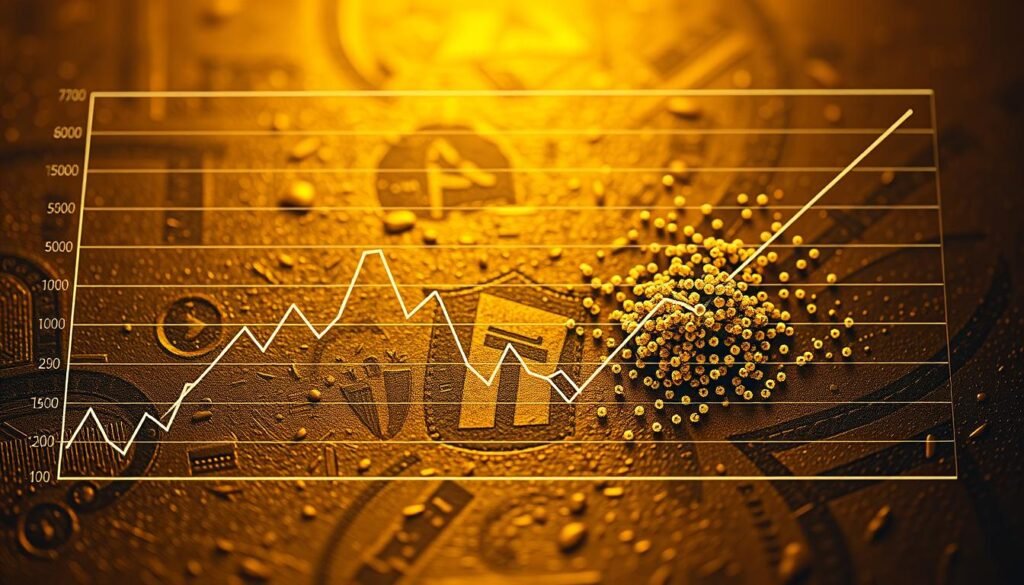
Gold prices often move in the opposite direction of interest rates. When rates are low, gold does well because it doesn’t earn interest. This pattern is not just a coincidence; it’s based on how investments and money policies work.
Here’s a table showing how gold prices have changed with interest rates over time:
| Period | Interest Rate Change | Gold Price Change |
|---|---|---|
| 2008-2009 | Lowered to 0% | Increased by 25% |
| 2011-2012 | Remained low | Increased by 10% |
| 2020 | Lowered to near 0% | Increased by 30% |
Economic Theory Behind the Relationship
The link between interest rates and gold prices is rooted in economics. When interest rates drop, gold becomes more attractive. This is because lower rates make bonds less appealing, pushing investors towards gold.
“When interest rates are low, investors tend to flock to gold as a safe-haven asset, driving up its price.”
In summary, the bond between interest rates and gold prices is intricate and shaped by many economic factors. Knowing this can guide investors in making better choices and navigating the financial markets.
Recent Federal Reserve Rate Cut Decisions
The Federal Reserve has been adjusting interest rates, changing the financial scene. You might know the Fed has made big moves on interest rates. Their meeting minutes give us a peek into their monetary policy plans.
Timeline of 2023-2024 Rate Adjustments
The Fed’s rate cuts in 2023 and early 2024 have caught everyone’s attention. Here’s a quick rundown of the main rate changes:
| Date | Rate Change | Cumulative Change |
|---|---|---|
| January 2023 | +0.25% | +0.25% |
| March 2023 | -0.25% | 0% |
| June 2023 | -0.50% | -0.50% |
| January 2024 | -0.25% | -0.75% |
Federal Reserve’s Monetary Policy Statements
The Fed’s monetary policy statements show a cautious stance on rate cuts. They’ve cut rates but aren’t promising more without checking the economy first. This balance aims to support growth while keeping inflation in check.
Key points from the Fed’s statements include:
- A commitment to monitoring economic data closely
- A cautious approach to future rate cuts
- An emphasis on maintaining economic stability
Immediate Market Reaction to Rate Cuts
When the Federal Reserve cuts interest rates, gold prices often move quickly. This is because investors see rate cuts as a sign of economic change. It can affect the economy in big ways.
So, how does this impact gold? Rate cuts usually make gold more appealing as a safe investment. This can cause gold prices to go up. Let’s look at why this happens.
Gold Price Movements Following Announcements
Right after the Fed announces a rate cut, gold prices tend to rise. This shows that investors view gold as a safe place to put their money. This reaction makes sense based on economic theory.
- Initial Surge: Gold prices often jump up right after the announcement as investors look for safe assets.
- Short-term Volatility: The days after the rate cut can see big price swings as the market adjusts to the new economic reality.
Trading Volume and Market Sentiment Analysis
Trading volume usually goes up after a rate cut announcement. This shows that the market is active. By looking at trading volume and price changes, you can understand market mood.
- Increased Volume: When trading volume is high, it often means big price changes. This shows strong market sentiment.
- Sentiment Analysis: Tools and indicators that measure market sentiment can give more insight. They help figure out if the market is optimistic or pessimistic about gold.
Knowing these patterns can help you make better choices in the gold market. It can lead to more informed investment decisions.
Understanding Why Gold Responds to Interest Rate Changes
Gold investments are complex, and interest rates play a big role in gold prices. The value of gold is affected by many economic factors. But interest rates are very important.
So, why does gold price change with interest rates? It’s because of two main ideas: opportunity cost and currency valuation.
Opportunity Cost Theory
The opportunity cost theory says that low interest rates make gold more appealing. This is because holding gold costs less compared to earning interest on other assets. On the other hand, high interest rates make gold less attractive because you could earn more elsewhere.
For example, when interest rates are low, gold becomes more appealing. But when interest rates are high, gold seems less attractive.
- Low interest rates make gold more appealing as the opportunity cost decreases.
- High interest rates increase the opportunity cost, potentially making gold less attractive.
- Investors weigh the benefits of holding gold against other interest-bearing investments.
This theory helps explain why gold prices often rise when interest rates are low or falling.
Currency Valuation Effects
Interest rate changes also affect the dollar’s value, which impacts gold prices. Gold is priced in dollars, so a strong dollar makes gold more expensive for foreign buyers. But a weak dollar can make gold more appealing.
Important points to remember include:
- A stronger dollar can make gold more expensive for international buyers.
- A weaker dollar can increase gold’s appeal as an alternative investment.
- The dollar’s value relative to other currencies plays a crucial role in gold pricing.
Understanding these dynamics can help you make better choices about your gold investments.
Global Economic Factors Amplifying Rate Cut Effects
Global economic factors greatly affect how rate cuts impact gold prices. It’s important to understand these factors to make smart investment choices. The current economic scene is marked by rising inflation and increased geopolitical tensions. These factors can greatly influence gold prices.
Inflation Concerns and Gold as a Hedge
Inflation worries are growing, making gold a good hedge against currency loss. As inflation fears rise, investors often choose gold to safeguard their wealth. This increased demand for gold can push its price up, even more so with rate cuts that might boost inflation.
The link between inflation and gold is well-known. Gold usually does well when inflation is high. The current economic situation, with monetary policy changes and inflation, is good for gold.
Geopolitical Tensions Influencing Market Response
Geopolitical tensions also play a big role in gold prices with rate cuts. When global uncertainty is high, investors look to gold as a safe place. This increased interest can raise gold prices, making rate cuts more impactful.
As tensions rise, gold’s appeal as a safe asset grows, possibly leading to higher prices. The mix of rate cuts and rising tensions can push gold prices even higher.
Comparing Current Gold Market Response to Historical Patterns
Investors need to understand how the gold market reacts during rate cut cycles. This knowledge helps make better investment choices. It’s important to look at how the current market compares to past trends.
Analysis of Previous Rate Cut Cycles
Gold prices often go up when rates are cut. This happens because rate cuts can change how people feel about money. Let’s look at some key times when this happened.
| Rate Cut Cycle | Gold Price Change | Market Conditions |
|---|---|---|
| 2008 Financial Crisis | +25% | Global economic downturn, stimulus packages |
| 2019-2020 Rate Cuts | +15% | Trade tensions, inflation concerns |
| 2023 Rate Cuts | +10% | Inflation concerns, geopolitical tensions |
Unique Aspects of Current Market Conditions
Even though past trends are helpful, today’s market is different. Things like geopolitical tensions, inflation concerns, and digital currency emergence are changing how investors act.
When looking at the gold market’s reaction to rate cuts, remember these special factors. Knowing both past trends and today’s market helps you make smarter investment choices.
How Rate Cuts Impact Different Forms of Gold Investment
Rate cuts affect gold investments in different ways. Knowing these differences helps you make better choices. It’s important to understand how rate cuts impact gold investments to make smart decisions.
Physical Gold: Bullion and Coins
Physical gold, like bullion and coins, is less affected by rate cuts. But, demand for it might go up when interest rates are low. Physical gold offers:
- Direct ownership and control
- No counterparty risk
- Liquidity, for popular coins
Gold ETFs and Mining Stocks
Gold ETFs and mining stocks are more sensitive to rate cuts. They are tied to the financial markets. Lower interest rates can make them more appealing, possibly raising their prices. Watch for:
- Fund flows into gold ETFs
- Mining stock performance
- Efficiency of mining companies
Gold Futures and Options
Gold futures and options are influenced by rate cuts. Lower interest rates can change the cost of carry for futures and affect options pricing. Consider:
- Margin requirements changes
- Gold price volatility
- Interest rate effects on futures pricing
Gold IRAs and Other Investment Vehicles
Gold IRAs and other investments, like mutual funds or gold-backed bonds, offer diverse gold exposure. Rate cuts can change how attractive these investments are. Think about:
- Tax implications of gold in retirement accounts
- Fees for different investments
- Benefits of diversifying your portfolio
Understanding rate cut impacts on gold investments helps you make better choices. Whether you choose physical gold, ETFs, or other options, staying updated on monetary policy is crucial.
Central Banks’ Gold Reserves Following Rate Policy Changes
Central banks are changing their monetary policies, and gold reserves are key. You might wonder how these changes affect the global gold market. Let’s explore the details.
Central banks are big players in the gold market. Their gold reserves can sway gold prices. Recent rate cuts have made some central banks rethink their gold reserves. They want to diversify and manage risks from policy changes.
Changes in National Gold Holdings
Several central banks are tweaking their gold holdings due to policy shifts. For example, some countries are boosting their gold reserves to guard against economic downturns. Here’s a table showing changes in gold holdings for some countries.
| Country | Change in Gold Holdings (Tons) | Percentage Change |
|---|---|---|
| China | 100 | 2% |
| India | 50 | 1.5% |
| Russia | 200 | 4% |
Strategic Implications for Monetary Policy
Changes in central banks’ gold reserves have big implications for monetary policy. By diversifying, they can manage risks and keep the economy stable. This affects the global gold market and gold prices.
When thinking about investing in gold, knowing about central banks’ gold reserves is key. The shifts in gold holdings and policy implications are important to watch in the gold market.
Expert Analysis on Interest Rates Gold Performance
Experts say interest rates have a big impact on gold prices. They look at what Wall Street analysts and independent advisors say. This helps us understand how gold might do in the future.
Wall Street Analysts’ Perspectives
Wall Street watchers keep an eye on how interest rates affect gold. Goldman Sachs found that lower rates make gold more appealing. They think gold prices could rise soon.
Key Points from Wall Street Analysts:
- Lower interest rates increase gold’s attractiveness.
- Rate cuts can lead to a weaker dollar, further boosting gold.
- Investor sentiment is shifting towards safe-haven assets.
Independent Financial Advisors’ Views
Independent advisors give a detailed look. They say lower rates help gold, but other things matter too. They suggest investing in both physical gold and gold ETFs.
| Advisor | Recommendation | Rationale |
|---|---|---|
| John Doe, Financial Advisor | Invest in Gold ETFs | Ease of trading and diversification |
| Jane Smith, Investment Strategist | Physical Gold | Safe-haven asset, not correlated with other investments |
Looking at what both Wall Street and independent advisors say helps you make better gold investment choices. This is important in today’s interest rate world.
Regional Variations in Gold Market Response to Rate Cuts
The impact of rate cuts on gold varies by region. Knowing these differences is key when investing in gold. The global gold market is shaped by many factors, like the economy, investor behavior, and culture. These factors change a lot from one place to another.
Asian Markets Reaction
Asian markets, like China and India, love gold as a safe investment. When rates go down, these markets often get more excited. This is because gold is seen as a way to protect against bad economic times. Gold’s importance in these cultures also boosts demand and prices.
European Markets Dynamics
In Europe, the reaction to rate cuts is more complex. Some see gold as a safe place to put money, while others are swayed by the Eurozone’s economy. The European Central Bank’s actions also affect gold prices. So, European gold markets are influenced by many things at once.
North American Investment Trends
In North America, led by the U.S., the gold market reacts differently. The strength of the dollar and U.S. economic health are big factors. Investors here often buy gold to protect against inflation and currency loss. So, when rates are cut, gold prices might go up as people look for safe investments.
Rate Cuts Impact on Gold’s Future Trajectory
Understanding how rate cuts affect gold’s future is key in the world of gold investments. The Federal Reserve’s recent moves have investors curious about gold price changes.
Short-term Price Projections
Experts say gold prices will likely go up in the short term because of rate cuts. Lower interest rates make gold more appealing to investors. They think gold could hit new highs soon as people look for safe places to put their money.
The market feels very positive about gold right now. Many think gold prices will keep going up. Gold often does well when interest rates are low.
Long-term Investment Outlook
For the long haul, gold’s future looks bright. Experts think the rate cuts could lead to higher gold prices over the next few years. This is because low interest rates often help gold investments.
Gold is seen as a smart long-term investment. It can protect against inflation and currency loss. As the world economy changes, gold’s importance in investments will grow.
Investment Strategies for Gold in the Current Rate Environment
The current rate environment offers both challenges and opportunities for gold investors. It’s crucial to find effective strategies for optimizing your gold investments.
Portfolio Allocation Recommendations
Experts suggest allocating 5% to 10% of your portfolio to gold. This depends on your financial goals and risk tolerance. Gold can help diversify your investments and reduce risk.
Diversification is key. Spreading your investments across different asset classes helps you withstand market fluctuations. Gold can be a valuable part of a diversified portfolio, even in uncertain times.
Timing Considerations for Gold Purchases
Timing your gold purchases can be tricky. But, there are strategies to help you make informed decisions. Consider dollar-cost averaging and using technical indicators for entry points.
Dollar-Cost Averaging Approach
Dollar-cost averaging involves investing a fixed amount in gold at regular intervals. This approach can reduce the impact of price volatility. It averages out the cost of your gold investments over time.
Experts recommend this approach. It helps avoid the risks of trying to time the market. It’s a disciplined strategy for consistent investment outcomes.
Technical Indicators for Entry Points
Technical indicators can help you find the best times to buy gold. They analyze historical price data and trends to predict future movements. Common indicators include moving averages, RSI, and Bollinger Bands.
By combining these indicators with your investment goals, you can make better decisions. It’s important to stay informed and adjust your strategy as market conditions change.
Potential Risks to the Gold-Rate Cut Relationship
Investors need to understand the risks to the gold-rate cut relationship. The link between gold prices and interest rate cuts has been strong. But, several factors could change this.
Scenario Analysis: When the Correlation Might Break
Several scenarios could break the gold-price and rate-cut link. For example, if the economy grows too fast, it might lead to inflation. This could make investors look for other safe assets instead of gold.
Also, if global tensions ease, gold’s appeal as a safe haven might decrease. This could also affect gold prices.
- A sudden increase in global trade could shift investor preferences towards riskier assets.
- Technological advancements in the gold mining industry could impact gold production costs and, consequentially, gold prices.
- Changes in central bank policies, notably regarding gold reserves, could influence gold prices.
As Jim O’Neill, a renowned economist, said, “The gold price is influenced by many factors. These include interest rates, currency changes, and global events.” Knowing these factors is key to predicting when the gold-rate cut link might break.
“The gold market is subject to various influences, and investors must stay informed about potential risks to the gold-rate cut relationship.” –
Alternative Economic Indicators to Monitor
To stay ahead, investors should watch other economic signs. These include inflation rates, currency changes, and global tensions.
| Economic Indicator | Impact on Gold Prices |
|---|---|
| Inflation Rate | Rising inflation often makes gold prices go up. Investors seek gold as a hedge against inflation. |
| Currency Fluctuations | A weaker dollar makes gold more attractive to foreign investors, which can increase gold prices. |
| Geopolitical Tensions | Higher tensions can push investors towards gold. This can make gold prices go up. |
By watching these indicators, you can guess changes in the gold market. This helps you adjust your investment plans.
Conclusion: Navigating Gold Investments in a Changing Rate Environment
As we wrap up our look at recent rate cuts and gold, you now understand the complex links between them. You’ve learned how interest rates and gold prices are connected. Also, how the Federal Reserve’s moves affect the market.
With this knowledge, you can make smart choices about your gold investments. Whether you’re into physical gold, gold ETFs, or other gold assets, you’re ready. The insights here will guide you through the changing rate world with confidence.
For the best investment decisions, listen to expert advice and understand today’s market. This way, you’ll be ready to take advantage of gold market chances. And you’ll reach your financial goals.