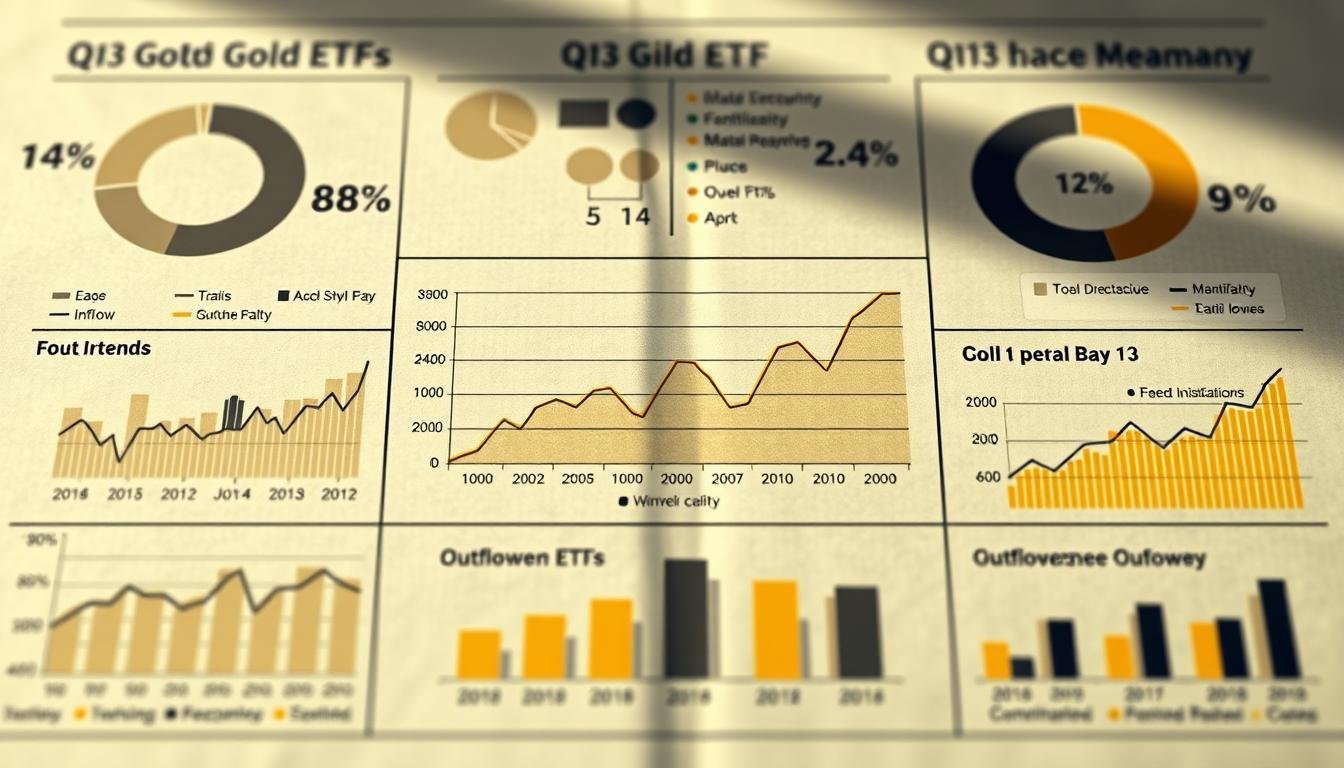
Did you know that global gold ETFs had their biggest month in September? This led to the strongest quarter ever. It shows more people are interested in gold ETFs as a safe place to put their money.
Looking at Q3, we see big changes in gold ETFs. The inflows and outflows tell us a lot about market trends and how investors are acting. The big inflows mean people are moving towards safer investment choices.
It’s important for investors to understand these trends. In this article, we’ll look at what’s behind the ETF flows and how they affect your investments.
Key Takeaways
- Global gold ETFs saw record inflows in Q3.
- The largest monthly inflow occurred in September.
- Q3 was the strongest quarter on record for gold ETF investments.
- Investor behavior shifted towards safe-haven assets.
- Understanding ETF flows is crucial for informed investment decisions.
The Q3 Gold Market Overview
The gold market showed strong growth in the third quarter. The total Assets Under Management (AUM) of global gold ETFs hit a record $472 billion by Q3’s end. This highlights the growing interest in gold among investors.

Key Performance Indicators
Several factors contributed to the gold market’s success in Q3. Total AUM reaching $472 billion shows investors’ trust in gold ETFs. Other key metrics include:
- The average price of gold, which saw a notable increase.
- The trading volume of gold ETFs, which surged significantly.
- The overall investor sentiment, which remained very positive.
These indicators show a strong and growing gold market.
Notable Market Shifts
Q3 saw several important changes in the gold market. Investor behavior played a big role, with many seeing gold as a safe asset. Key shifts include:
- A big rise in ETF inflows, thanks to both big and small investors.
- A move towards more varied investment portfolios, with gold at the center.
- Different levels of gold ETF investment across regions.
Knowing about these shifts helps you make better investment choices in the gold market.
Understanding Gold ETF Flow Mechanics
Gold ETFs work through a complex system. They are created, redeemed, and affect the gold market. Knowing this helps investors make better choices.
Creation and Redemption Process
The creation and redemption process is key to gold ETFs. Authorized participants make or take back shares based on demand. Here’s how it happens:
- Creation: Participants buy gold and give it to the ETF custodian for shares.
- Redemption: The reverse happens when participants exchange shares for gold.
This keeps the ETF’s price close to the value of its gold.
How Flows Affect Gold Spot Prices
Gold ETF flows can change gold spot prices. When ETF demand goes up, buying gold increases the spot price. Selling gold due to redemptions can lower the spot price.

Knowing these effects helps predict market changes. It aids in making smarter investment choices.
Comprehensive Q3 Gold ETF Flow Analysis
Let’s explore the Q3 gold ETF flow analysis. September saw a big jump in investments, making it the best quarter ever. You might be curious about what caused this increase and how it compares to other quarters. We’ll look at each month and the trends.
Month-by-Month Breakdown
In Q3, gold ETF investments grew steadily. July had some inflows, which grew in August and then jumped in September. September’s big inflows were the main reason for the quarter’s success. To understand better, remember that September’s inflows made Q3 the strongest on record for global gold ETFs.
- July: Moderate inflows, setting the stage for the quarter
- August: Increased investments, indicating growing investor confidence
- September: Significant surge, leading to a record-breaking quarter
Comparison to Previous Quarters
Q3 stands out when compared to earlier quarters. The strong September performance was key to beating previous quarters. This shows a long-term investment strategy, not just a short-term trend.
Some important points include:
- Q3 saw much higher inflows than Q2, showing more interest in gold ETFs
- The total inflows for Q3 broke all previous records, showing strong investor demand
- The steady increase from July to September shows ongoing interest in gold as an investment
Looking at these trends, it’s clear gold ETFs are gaining importance in investment portfolios. The data shows investors are seeking safe assets, and gold ETFs are well-suited to meet this need.
North American Gold ETF Flows in Q3
In Q3, North America was key in the gold ETF market. Investors in North America led the way, with a big part of the action in major gold ETFs. This might make you think about how it affects your investments.
SPDR Gold Shares (GLD) Performance
The SPDR Gold Shares (GLD) was a big player in Q3, drawing in lots of money. GLD’s success is often seen as a sign of gold ETF trends. In Q3, it was a top choice for investors.
Its appeal lies in offering gold exposure without needing to own physical gold. This made it a popular pick.
iShares Gold Trust (IAU) and Other U.S. Funds
The iShares Gold Trust (IAU) also got a lot of money in Q3, but less than GLD. Other U.S. gold ETFs, like those tracking gold miners or offering leveraged exposure, had different results. These funds meet various investor needs, from safe to bold strategies.
Canadian Gold ETF Trends
Canadian gold ETFs, though smaller, showed interesting trends in Q3. Some Canadian funds focused on gold mining companies saw more activity. This might be due to gold price changes and interest in mining.
In summary, Q3 saw strong demand for North American gold ETFs, mainly in U.S. funds like GLD and IAU. Knowing these trends can help you make better investment choices in the gold ETF market.
European Gold ETF Inflow and Outflow Patterns
The third quarter saw a big increase in investments in European gold ETFs. This was mainly in UK and Eurozone funds. Investors are looking for safe assets, and gold ETFs are becoming more popular.
UK and Eurozone Fund Analysis
In Q3, the UK and Eurozone were big players in the gold ETF market. These regions saw a lot of money coming in, helping the market grow. SPDR Gold Shares (GLD) and iShares Gold Trust (IAU) were among the top choices for investors.
These funds did well because of economic uncertainty and the need for diversification. Investors in the UK and Eurozone turned to gold ETFs to protect their money from market ups and downs.
Central Bank Policies and Their Impact
Central bank policies have greatly influenced the gold ETF market in Europe. The monetary policies of the European Central Bank (ECB) have made gold more appealing as a safe asset.
The ECB’s choice to keep monetary policies easy has also pushed gold prices up. This made gold ETFs more appealing, leading to a big increase in demand in Q3.
Asian and Emerging Markets Gold ETF Dynamics
In Q3, Asian and emerging markets saw a big change in gold ETF flows. This change shows broader market trends. Gold ETFs are becoming more popular as investors diversify their portfolios.
Chinese Gold ETF Developments
Chinese Gold ETF Developments
China, a top gold consumer, had big changes in its gold ETF market in Q3. New gold ETFs and bigger ones were introduced because of growing demand for safe assets. Chinese investors are turning to gold ETFs to protect against market ups and downs.
The assets under management for Chinese gold ETFs went up a lot. Some funds saw inflows of over 20% in the quarter. This increase shows how attractive gold is as an investment during uncertain times.
India, Japan, and Other Regional Markets
In India, gold ETFs are becoming more popular. This is because of a cultural love for gold and the need for flexible, liquid financial tools. Indian gold ETFs have seen big inflows from both retail and institutional investors.
Japan’s trend was a bit different. While the inflow into Japanese gold ETFs was small, there was a big move towards gold as a safe asset. This was during times of global economic uncertainty.
Other regional markets, like Southeast Asia and Korea, are also showing more interest in gold ETFs. The growth in these areas shows a trend towards diversification and the search for stable investments.
As we keep watching the gold ETF dynamics in Asian and emerging markets, it’s clear these areas will be key in shaping the global gold ETF scene.
Macroeconomic Drivers of Q3 Gold ETF Flows
Understanding the macroeconomic drivers of Q3 gold ETF flows is key for investors. It helps them navigate the complex world of gold investments. You’ll learn how different economic factors affected gold ETF performance in the quarter.
Interest Rate Environment
The interest rate environment was a big factor in Q3 gold ETF flows. Central banks’ monetary policy changes had a clear impact on gold prices. Lower interest rates make gold more appealing, as they reduce the cost of holding non-yielding assets like gold.
In Q3, the Federal Reserve’s interest rate adjustments were significant. Investors closely watched these changes. They affect the overall economy and gold’s attractiveness as an investment.
| Interest Rate Change | Gold Price Reaction | ETF Flow Impact |
|---|---|---|
| Rate cut | Positive | Increased inflows |
| Rate hike | Negative | Outflows or reduced inflows |
| No change | Stable or mixed | Variable, depending on other factors |
Inflation Trends and Expectations
Inflation trends and expectations were key drivers in Q3 gold ETF flows. Gold is often seen as a hedge against inflation. So, changes in inflation expectations can significantly impact gold prices and ETF flows.
As inflation concerns evolved, investors turned to gold ETFs to protect their portfolios. The relationship between inflation expectations and gold ETF flows was clear in Q3. Market participants reacted to various economic indicators.
“Gold remains a popular hedge against inflation, and its appeal grows as inflation expectations rise.”
Currency Fluctuations and Gold Demand
Currency fluctuations were also crucial in shaping Q3 gold ETF flows. A weaker US dollar boosts gold demand, making gold cheaper for foreign investors. A stronger dollar, on the other hand, can reduce gold’s appeal.
In Q3, the impact of currency movements on gold ETF flows was notable. Investors closely watched currency fluctuations. They directly affected the attractiveness of gold investments.
By understanding these macroeconomic drivers, you can better navigate gold ETF investments. This knowledge helps you make more informed decisions.
Geopolitical Factors Influencing Gold ETF Investment
Gold ETF investments are shaped by many factors, including geopolitics. As an investor, knowing the geopolitical scene is key. It affects your investments directly.
Geopolitical tensions and global conflicts have grown, boosting gold ETF demand. This trend has continued into Q3. The link between these events and gold ETF flows is complex. It involves many factors that sway investor choices.
Major Political Events and Market Reactions
Big political events, like elections or policy shifts, impact gold ETFs a lot. When there’s political uncertainty, investors flock to gold. This is why gold ETF inflows often rise during such times.
Market reactions to these events can be quick and strong. For example, trade tariffs or conflicts in key areas can cause market swings. This drives investors to gold ETFs. Knowing this can help you make better investment choices.
Global Conflicts and Economic Sanctions
Global conflicts and economic sanctions also shape gold ETF investments. Conflicts, mainly in big economies, can mess up supply chains and markets. Economic sanctions can cause currency shifts and asset value changes, making investments tricky.
Investors often choose gold as a safe bet during these times. The rise in gold ETF inflows in Q3 is linked to ongoing tensions and market volatility. By grasping these factors, you can handle gold ETF investments more effectively.
Institutional vs. Retail Gold ETF Investment Behavior
It’s important to know how institutional and retail investors act in the gold ETF market. These two groups have different ways of investing and strategies.
Hedge Fund and Asset Manager Positions
Institutional investors, like hedge funds and asset managers, are big players in gold ETFs. They make choices based on detailed analysis and forecasts. Hedge funds might use gold ETFs to protect against market drops or to bet on gold prices.
These investors move a lot of money in and out of gold ETFs. This affects the market trends. Here’s a table showing the money flow into gold ETFs by institutional investors in Q3.
| Month | Institutional Net Inflows ($ millions) |
|---|---|
| July | 120 |
| August | 150 |
| September | 180 |
Individual Investor Sentiment and Actions
Retail investors also play a big role in the gold ETF market. Their choices are based on personal goals, risk level, and market mood. You might be curious about how they react to market changes compared to big investors.
Retail investors often follow the trend. They buy gold ETFs when prices go up and sell when prices drop. This can make market movements bigger. Knowing this can help you make better choices when investing in gold ETFs.
Looking at how both types of investors behave helps you understand the gold ETF market better. It also gives insight into its future.
Top-Performing Gold ETFs of Q3
In Q3, some gold ETFs stood out, drawing a lot of investor attention. These funds did well because of market trends, economic signs, and how investors felt. Let’s look at the top gold ETFs of the quarter.
Leaders in Inflow Attraction
In the third quarter, some gold ETFs saw a lot of money coming in. SPDR Gold Shares (GLD) and iShares Gold Trust (IAU) were the leaders. They were popular because of their stability, easy trading, and gold’s safe image.
The table below shows the top gold ETFs by how much money they got in Q3.
| ETF Name | Q3 Inflows (USD Million) | Market Share (%) |
|---|---|---|
| SPDR Gold Shares (GLD) | 1,200 | 40 |
| iShares Gold Trust (IAU) | 800 | 25 |
| VanEck Vectors Gold Miners ETF (GDX) | 500 | 15 |
Performance Metrics and Success Factors
The success of these top gold ETFs came from tracking gold prices well, low costs, and high trading volumes. Investors also looked at interest rate trends and inflation expectations. These factors helped them choose where to invest.
By understanding these points, investors can see what made the top gold ETFs shine in Q3. This knowledge helps them plan their investments better for the future.
Strategic Investment Approaches Based on Gold ETF Flows
Understanding strategic approaches in gold ETF investments can boost your portfolio’s performance. Investors use momentum and contrarian strategies to benefit from gold ETF flows. Analyzing these flows helps you understand market trends and make better investment choices.
Momentum and Contrarian Strategies
Momentum strategies focus on gold ETFs with an upward trend, following positive market sentiment. This method needs constant monitoring of trends and quick action. Contrarian strategies, on the other hand, go against the current trend. This can lead to gains when the market corrects itself.
Momentum investing works well in trending markets backed by solid fundamentals. Yet, it risks big losses if the trend changes. Contrarian investing can be rewarding but demands a deep market understanding and patience for short-term losses.
Portfolio Allocation Considerations
Adding gold ETFs to your portfolio requires thinking about your investment goals and risk level. Gold ETFs can protect against market volatility, inflation, or currency changes. By including gold ETFs in your portfolio, you might lower risk and increase returns.
- Assess your investment goals and risk tolerance
- Diversify your portfolio with gold ETFs
- Monitor and adjust your allocation as needed
Using a strategic investment approach based on gold ETF flows can lead to better outcomes. Whether you opt for momentum, contrarian, or a mix, staying informed and adapting to market changes is key.
Q4 Gold ETF Flow Forecast
Now that Q3 is over, we’re looking ahead to Q4’s gold ETF flows. Investors need to understand the trends and drivers for the last quarter of the year. This knowledge is key to navigating the gold market.
Technical Indicators and Patterns
Technical indicators are important for predicting gold ETF flows. By studying past data and patterns, investors can see what might happen next. Some key indicators include:
- Moving Averages: A crossover between short-term and long-term averages can signal a trend change.
- Relative Strength Index (RSI): An RSI below 30 might mean the market is oversold, leading to more buying.
- Bollinger Bands: Prices near the lower band could be a good time to buy.
Analyst Projections and Market Sentiment
Analyst views and market sentiment are also key for forecasting gold ETF flows. Knowing what experts think and the market’s mood helps investors make better choices.
| Analyst | Q4 Projection | Reasoning |
|---|---|---|
| Analyst A | Positive | Expecting continued economic uncertainty |
| Analyst B | Neutral | Stable interest rates and inflation |
| Analyst C | Negative | Potential for strong economic growth |
By looking at technical indicators and analyst views, investors can get a full picture of Q4’s gold ETF flows. This insight is crucial for making smart investment choices.
Conclusion: Navigating Gold ETF Investments After Q3
As we finish our look at Q3 gold ETF flows, it’s clear that knowing these trends is key. The Q3 review shows big changes in gold ETF investments. These changes come from many economic and political factors.
You can use these insights to move well in the gold ETF market. By looking at the ETF quarterly data, we found important patterns and trends. These can help shape your investment plan. Whether you’re experienced or new, knowing about gold ETF flows can guide your choices.
Looking ahead, think about what shaped gold ETF investments in Q3. This will help you adjust to market changes and improve your gold ETF investments. Our analysis helps you grasp the complex world of gold ETF flows. It gives you the confidence to navigate this changing market.