The world’s love for gold keeps growing. This is because many things affect its price and how it’s traded. Knowing how to trade in the secondary market is very important.
This journey will take you through a world full of risks and chances. The secondary market for gold changes with the world’s economy, what investors think, and how markets move.
Knowing these things helps you make smart choices. As you learn about gold trading, you’ll see both the dangers and the chances it offers.
Key Takeaways
- Understand the factors influencing the secondary gold market.
- Learn about the risks associated with gold trading.
- Discover opportunities for growth in the gold market.
- Gain insights into making informed decisions in gold trading.
- Navigate the complex world of gold trading with confidence.
The Nature and Scope of Secondary Gold Markets
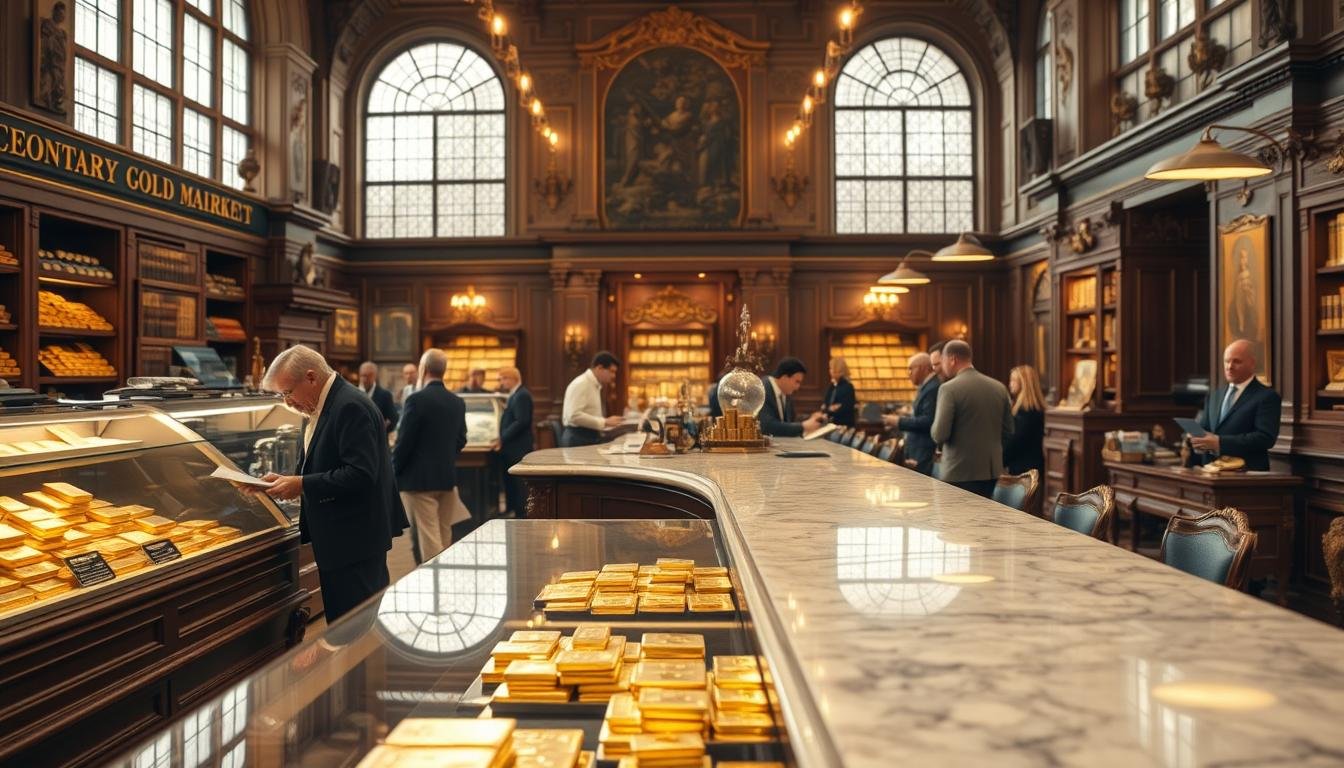
Exploring gold trading means understanding secondary gold markets. This market deals with gold that’s already mined and sold again. It’s different from the primary market, where gold is first sold by miners or banks.
Defining Secondary Markets in the Gold Industry
The secondary market trades existing gold among investors and dealers. It offers liquidity and price discovery for gold not sold for the first time. You can join this market through online platforms and physical dealers.
Differences Between Primary and Secondary Gold Trading
Primary gold trading is the first sale by miners or banks. Secondary trading resells gold among market players. The secondary market is more open to individual investors, offering a variety of gold products.
Historical Development of Gold’s Secondary Market
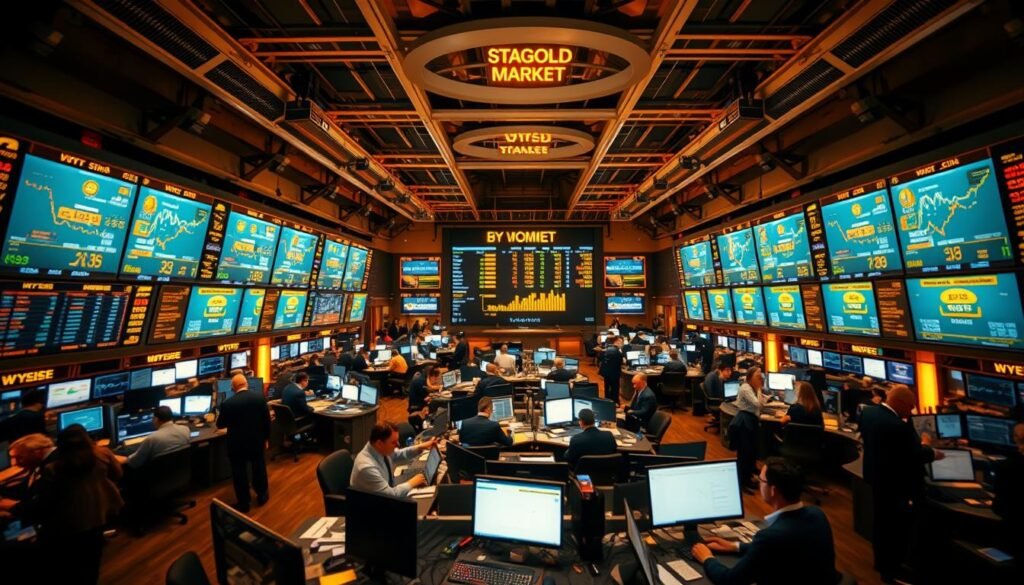
The gold secondary market has grown a lot over time. It has changed with old trading ways and new tech. Knowing this history helps us understand today’s market.
Traditional Trading Systems and Practices
Old days of gold trading were all about face-to-face deals. Dealers and brokers would meet in places like London and New York. These were local markets, with most deals done directly between people.
Evolution of Modern Market Structures
Now, the gold market is more modern. Electronic trading has made it faster and easier for more people to trade. This change has also made the market more open and fair.
Technological Transformation in Recent Decades
New tech has changed the gold market a lot. Online trading and digital tools have made deals quicker and safer. Even blockchain is being looked at to make gold transactions more secure.
| Era | Characteristics | Key Developments |
|---|---|---|
| Traditional | Physical exchanges, localized trading | Over-the-counter (OTC) transactions |
| Modern | Electronic trading platforms, increased accessibility | Greater transparency, standardization |
| Recent Decades | Online trading, digital technologies | Blockchain for authenticity and traceability |
The gold secondary market has seen big changes. These changes came from new tech and market shifts. Knowing this history helps us understand today’s market better.

Major Participants in the Secondary Gold Ecosystem
Knowing who’s in the secondary gold market is key. This market has many players who help it work smoothly. They create a web of deals and interactions.
Dealers, Brokers, and Market Makers
Dealers, brokers, and market makers are very important. They make sure there’s liquidity and help buyers and sellers meet. They do a lot, like:
- Give out market quotes and prices
- Help with transactions and settling them
- Keep the market stable with their trades
Institutional Investors and Banks
Institutional investors and banks are big players too. They do big deals that shape the market. They get involved in:
- Investing in gold to diversify
- Trading gold for their clients
- Keeping gold as part of their assets
Individual Collectors and Retail Investors
Individual collectors and retail investors are also key. They help drive demand and shape trends. They do things like:
- Buying gold coins or bars for investment
- Collecting rare gold items
- Trading gold online
Understanding these players helps you move through the secondary gold market better. You can make smarter choices.
Gold Products Commonly Traded in Secondary Markets
The secondary market offers a variety of gold products. Each has its own special features. They meet different investor needs, from those looking for solid investments to collectors.
Investment-Grade Bullion and Coins
Investors love bullion and coins for their purity and value. These items come from trusted mints. They are widely accepted in the market.
Sovereign Coins and Their Premium Structures
Sovereign coins, like the American Gold Eagle and Canadian Gold Maple Leaf, are made by government mints. They have a premium because of their collectibility and legal status.
Private Mint Products and Bars
Private mint products and bars are an alternative to sovereign coins. They offer competitive prices and various sizes. This makes them appealing to many investors.
Jewelry and Collectible Gold Items
Jewelry and collectible gold items are also in the secondary market. Their value comes from craftsmanship, rarity, or history. It’s key to check their authenticity and condition when buying or selling.
Industrial Gold and Recycled Materials
Industrial gold and recycled materials are important in the secondary gold market. Gold from jewelry, electronics, and more is refined and sold. This helps meet the demand for gold.
| Gold Product | Description | Market Value Factors |
|---|---|---|
| Investment-Grade Bullion | Pure gold bars and coins | Weight, Purity, Brand reputation |
| Sovereign Coins | Coins minted by government-backed mints | Gold content, Rarity, Collectibility |
| Jewelry and Collectibles | Gold items with aesthetic or historical value | Craftsmanship, Condition, Provenance |
Market Forces Influencing Secondary Gold Valuations
Exploring the secondary gold market reveals key forces shaping gold’s value. These factors are complex and crucial for your investment choices.
Supply-Demand Dynamics in Different Segments
Supply and demand are vital in the secondary gold market. Different sectors, like jewelry, technology, and investment, influence gold prices. For example, more demand for gold jewelry can raise prices.
| Segment | Demand Impact | Price Influence |
|---|---|---|
| Jewelry | High | Positive |
| Technology | Moderate | Stable |
| Investment | Variable | Fluctuating |
Macroeconomic Indicators and Their Impact
Macroeconomic indicators like inflation, interest rates, and currency changes affect gold prices. For instance, high inflation can make gold more valuable as a safe asset. Keeping up with these indicators is key for smart investing.
Global Political Events and Market Reactions
Global events, such as tensions and sanctions, can cause market swings. These can impact gold prices. Knowing about these events helps you navigate the secondary gold market well.
Understanding these forces helps you make better investment choices in the secondary gold market.
Critical Risks in Secondary Gold Trading
It’s key to know the risks of secondary gold trading before investing. This market has several risks that can affect your money.
Price Volatility and Market Fluctuations
Price changes are a big risk in secondary gold trading. Gold prices can jump up and down fast because of many factors. Keeping up with market trends is important.
For example, when the economy is shaky, gold prices often go up. But when things get better, prices can fall. Knowing these changes can help you invest better.
Liquidity Challenges During Market Stress
Liquidity is also a big deal in secondary gold trading. When the market is stressed, it can be hard to sell or buy gold quickly or at a good price. Think about the liquidity of the gold you trade and be ready for any issues.
A table showing how liquidity affects gold trading is below:
| Liquidity Level | Impact on Trading | Potential Risks |
|---|---|---|
| High | Easier to buy/sell | Lower transaction costs |
| Low | Difficult to buy/sell | Higher transaction costs, potential for significant losses |
| Medium | Moderate ease of trading | Moderate transaction costs |
Counterparty and Settlement Risks
Counterparty and settlement risks are also important in secondary gold trading. Make sure you’re working with reliable partners and that deals are settled smoothly. Counterparty risk is when the other side of a deal might not pay, and settlement risk is when deals might not go through on time.
To avoid these risks, choose trusted dealers and brokers. Also, understand how deals are settled.
Security Threats and Fraud in the Gold Secondary Market
It’s important to know about security threats and fraud in the gold secondary market. This knowledge helps protect your investments and makes better decisions. You’ll face different risks that can affect your gold’s value and safety.
Common Fraudulent Schemes and Practices
Fraud in the gold secondary market comes in many forms. Be aware of:
- Misrepresentation of gold quality and weight, where sellers might falsely represent the purity or weight of gold items.
- Counterfeit products, which are fake gold items designed to deceive buyers.
Misrepresentation of Quality and Weight
Sellers might lie about gold quality or weight to make more money. Always check the authenticity and details of gold products before buying.
Counterfeit Products and Detection Methods
Counterfeit gold is a big risk. To spot them, use:
- Checking for hallmarks or stamps that indicate purity.
- Using acid tests or other verification techniques.
Authentication Challenges for Buyers
It’s hard to tell if gold is real, which is tough for buyers. Be careful and might need professional help to buy genuine gold.
Secure Storage and Transportation Issues
After buying gold, keeping it safe is key. Use trusted storage or safes. Be careful when moving gold to avoid theft or loss.
U.S. Regulatory Framework for Secondary Gold
The secondary gold market in the U.S. has a complex set of rules. These rules come from both the federal and state governments. They aim to protect buyers, keep the market fair, and stop illegal activities.
Federal Regulations and Oversight Bodies
The Commodity Futures Trading Commission (CFTC) and the Securities and Exchange Commission (SEC) watch over the gold market. They focus on futures contracts and investment products.
State-Level Requirements for Dealers and Traders
Dealers and traders also face rules from their states. These include getting licenses, reporting, and laws to protect consumers. Each state has its own set of rules.
Tax Implications for American Investors
Investors in the secondary gold market need to think about taxes. The Internal Revenue Service (IRS) sees gold as a collectible. This means investors have to pay capital gains tax. It’s important for investors to understand these tax rules.
| Regulatory Aspect | Description | Relevant Authority |
|---|---|---|
| Federal Oversight | Regulation of futures contracts and investment products | CFTC, SEC |
| State-Level Requirements | Licensing, reporting, consumer protection | State Governments |
| Tax Implications | Capital gains tax on gold transactions | IRS |
Investment Opportunities in the Secondary Gold Market
The secondary gold market offers many ways to grow your wealth. It’s a place where you can diversify your investments and protect against economic ups and downs.
Portfolio Diversification Strategies
Gold investments in the secondary market help diversify your portfolio. Adding gold can spread out your risk and reduce dependence on other assets. This is very helpful when markets are volatile.
Inflation Protection Mechanisms
Gold is a strong defense against inflation. When inflation goes up, gold’s value often increases. This makes gold a smart choice for keeping your money’s value steady. Investing in gold through the secondary market is a smart way to protect your wealth.
Wealth Preservation During Economic Uncertainty
Gold is a reliable investment during uncertain times. The secondary gold market makes it easy to invest in gold. By understanding the market, you can make smart choices to secure your financial future.
| Investment Strategy | Benefits | Risks |
|---|---|---|
| Portfolio Diversification | Reduces reliance on other assets, spreads risk | Market fluctuations can affect gold prices |
| Inflation Protection | Hedge against inflation, preserves purchasing power | Inflation rates can be unpredictable |
| Wealth Preservation | Stable investment during economic uncertainty | Market dynamics can be complex |
By using these investment opportunities in the secondary gold market, you can improve your financial plan and reach your investment goals.
Strategic Approaches to Secondary Gold Trading
The secondary gold market has many strategies for investors. These include different ways to trade. Knowing these approaches can help you make better choices.
Buy-and-Hold Investment Methodologies
A buy-and-hold strategy means buying gold and keeping it for a long time. It’s good for protecting against inflation or economic downturns. Holding onto gold can also help it grow in value over time.
Active Trading and Timing Techniques
Active trading means buying and selling gold often to make money from short-term changes. It needs a good understanding of the market and timing. You can use tools like technical and fundamental analysis to guide your trades.
Arbitrage Opportunities Between Markets
Arbitrage is about making money from price differences in different markets. In secondary gold trading, look for price gaps across exchanges or regions. By buying low and selling high, you can profit from these differences. For more on starting these strategies, check out https://golds.consulting/services/.
Digital Transformation in Gold’s Secondary Market
The secondary gold market is getting a digital upgrade. Thanks to new tech, buying and selling gold is now easier than ever. Digital platforms are making it all possible.
Online Marketplaces and Trading Platforms
Online marketplaces and trading platforms have changed the game. They let you easily find and buy gold. You can compare prices and make trades with ease. This means you can make better choices.
Blockchain Applications and Tokenized Gold
Blockchain tech is bringing big changes to gold trading. It makes transactions safe and fast. This reduces fraud and builds trust. Tokenized gold lets you trade digital claims on real gold easily.
Mobile Solutions for Modern Investors
Mobile apps are now key for investors. They let you keep an eye on the market and your investments anywhere. This flexibility is a big deal for how we deal with gold.
As the gold market keeps evolving, staying up-to-date is crucial. Knowing about online platforms, blockchain, and mobile apps helps you navigate this new world confidently.
Assessing Gold Quality and Ensuring Authenticity
Understanding gold quality is key in the secondary gold market. It helps you make smart choices and avoid problems. Knowing about gold quality and authenticity is crucial for successful deals.
Understanding Purity Standards and Markings
Gold purity is measured in different ways. The karat system and fineness are two main methods. Hallmarking conventions also help prove gold is real.
Karat System vs. Fineness Measurements
In the U.S., the karat system is common. But, internationally, fineness is more widely used. Knowing both is important for checking gold quality.
International Hallmarking Conventions
Many countries use hallmarking to check gold’s authenticity. These marks show the gold’s purity.
Testing Technologies and DIY Methods
There are many ways to test gold, like acid tests and X-ray fluorescence. DIY methods can be helpful, but they’re not always right.
Professional Appraisal and Certification Services
For valuable or rare gold, get a professional appraisal. Experts can give detailed checks on gold quality and authenticity. This boosts your confidence in buying.
Entry Strategies for New Secondary Gold Market Participants
Thinking about joining the secondary gold market? It’s key to know the different ways to get in. The market can seem tough, but with the right steps, you can do well.
Educational Resources and Market Research
First, learn about the secondary gold market. Use online tools, books, and reports to understand it well. Doing deep research helps you make smart choices.
Starting Small: Building a Foundation
Start with small investments to get your feet wet. This way, you can learn and feel sure without big risks.
Developing Relationships with Trusted Dealers
It’s important to connect with reliable dealers. They offer insights, check gold’s realness, and help with deals. Choose dealers known for honesty and clear dealings.
| Entry Strategy | Description | Benefits |
|---|---|---|
| Educational Resources | Learn about the secondary gold market | Informed decision-making |
| Starting Small | Begin with manageable investments | Gain experience, build confidence |
| Trusted Dealers | Build relationships with reputable dealers | Valuable insights, secure transactions |
Case Studies: Navigating the Secondary Gold Market
Case studies offer a peek into the secondary gold market. They show both the good and the bad. By looking at real examples, you can learn from successes and mistakes.
Success Stories and Profitable Approaches
Many investors have made money in the secondary gold market. Some bought gold coins when prices were low and sold them when demand was high. Others made money by investing in gold jewelry that was later melted and sold as bullion.
These stories show how crucial market research and timing are.
Cautionary Tales and Risk Management Lessons
Not every story in the secondary gold market is a success. Some investors lost a lot because of fake gold or scams. These stories teach us the importance of checking authenticity and doing our homework.
By learning from these risks, you can protect your investments.
Expert Perspectives and Strategic Insights
Experts say diversifying and keeping up with market trends are key. They suggest working with trusted dealers and following global economic news. By following these tips, you can make smarter choices and feel more confident in the secondary gold market.
Emerging Trends Shaping Gold’s Future Secondary Market
The gold secondary market is seeing big changes. New trends are making a big impact. They are changing how gold is traded, seen, and valued.
Developing Economies and Changing Demand Patterns
Developing economies are changing how people want gold. As these countries grow, they want more gold. This is for both investment and jewelry.
- More wealth in these countries means more gold demand.
- Gold is very important in their culture, driving jewelry sales.
- Gold is seen as a safe choice when the economy is shaky.
Technological Innovations in Trading and Authentication
New tech is changing the gold market. It’s making trading faster and safer. For example:
- Blockchain helps prove gold is real and where it came from.
- Online platforms make it easier for people to invest in gold.
- There are now digital ways to store gold safely, not just in vaults.
Environmental and Ethical Considerations
Now, people care more about how gold is mined. They want it to be done in a way that’s good for the planet and fair to workers. Important points include:
- Trying to make gold mining less harmful to the environment.
- Working to make sure gold is mined fairly.
- Wanting to be clear about where gold comes from.
These trends are not just changing the gold market now. They will also shape its future. Keeping up with these trends will help you understand the gold market better.
Conclusion: Balancing Risk and Reward in Secondary Gold Markets
Exploring the secondary gold market is all about finding the right balance. You’ve seen how important it is to understand the risks and rewards. This knowledge helps you make smart choices.
You’ve discovered the risks and chances in gold trading. You’ve also learned how to reduce risks and grab opportunities. This way, you can confidently move through the market.
The secondary gold market is full of chances, from valuable bullion to rare items. To take advantage, you need to know what affects gold prices. This includes supply and demand and big economic changes.
Remember, finding the right balance between risk and reward is crucial. Stay updated and adjust to market shifts. This way, you can handle risks and seize the chances the market offers.