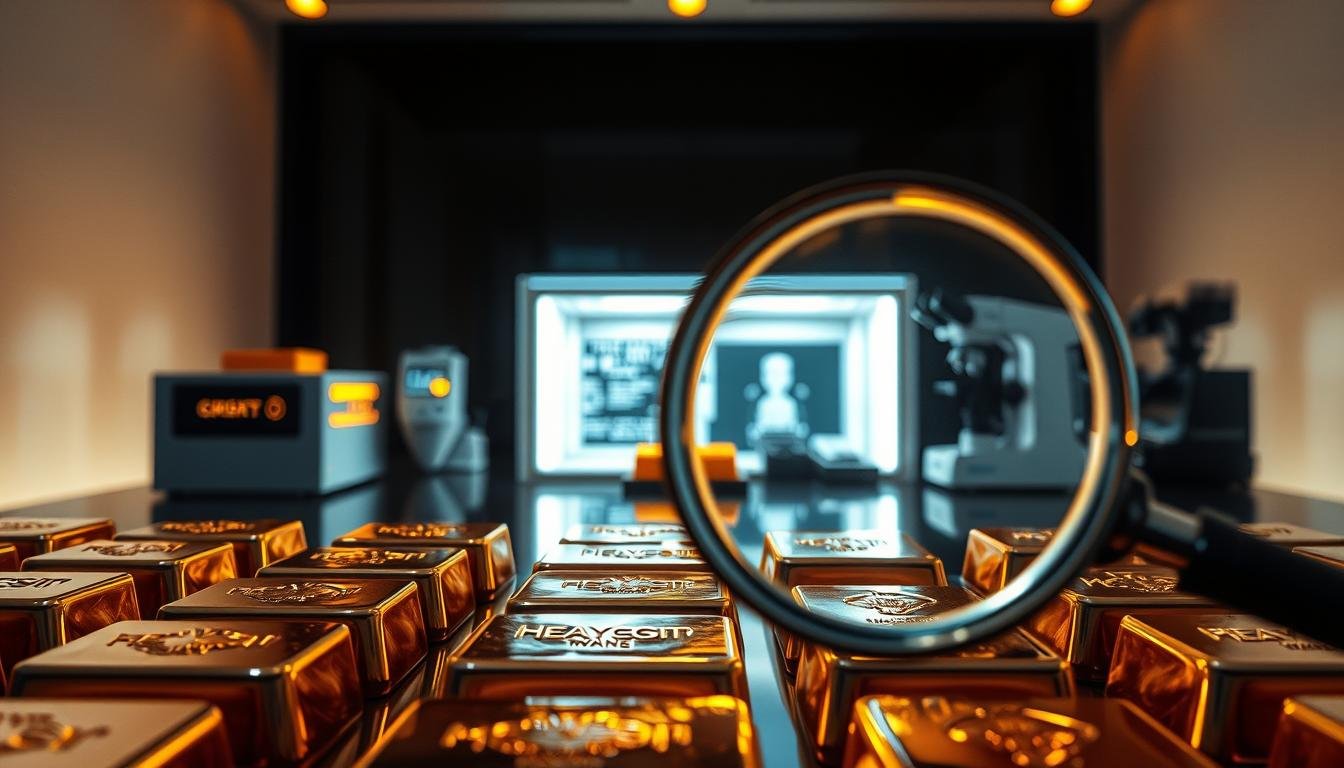
The precious metals market is on the verge of a big change. This change comes from a growing need for secure authentication methods. As the market expands, so does the need to check if precious metals like gold are real. This is to stop fake goods and keep investors confident.
New technologies like AI, blockchain, and nanotechnology are being used to improve how we check if metals are real. These new tools are making the industry safer and more trustworthy. If you’re an investor or just interested, it’s important to know about these updates. This way, you can make better choices.
Key Takeaways
- Advancements in AI, blockchain, and nanotechnology are enhancing precious metals authentication.
- The need for secure authentication methods is growing with the precious metals market.
- Counterfeiting prevention is crucial for maintaining investor confidence.
- Staying informed about authentication technologies is key for investors.
- The future of precious metals authentication lies in the integration of advanced technologies.
Current Challenges in Precious Metals Authentication
The precious metals industry is facing big challenges in checking if metals are real. This is because of advanced tricks used by counterfeiters. As an investor or buyer, knowing about these issues is key to making smart choices.
Counterfeiters are getting better at their game. This makes it hard for old ways to tell if something is real. As a result, more fake items are out there, leading to big losses for people and companies.
Common Counterfeiting Techniques
Scammers use many tricks to fool people. Some common ones are:
- Plating base metals with a thin layer of precious metal
- Creating fake hallmarks or stamps
- Altering or falsifying documentation
These tricks are very good at making things look real. That’s why we need better ways to check if something is genuine.
Limitations of Traditional Testing Methods
Old ways like acid tests or simple looks aren’t enough anymore. These methods can be tricked by advanced fakes. This means they often give wrong answers.
The Evolution of Gold Authentication Methods
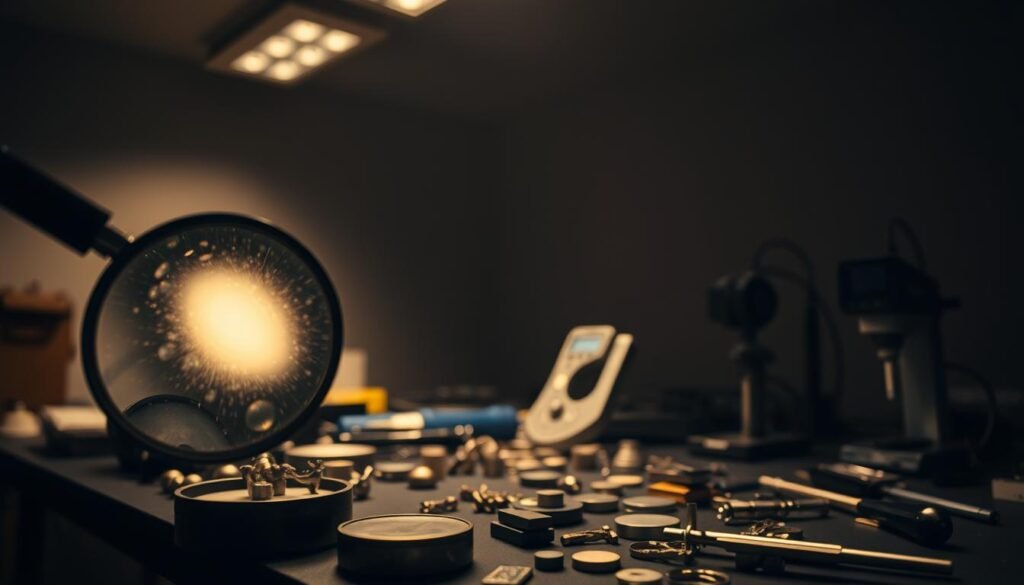
Gold authentication has changed a lot over time. From simple methods to advanced ones, it’s now crucial for our gold investments. Knowing these methods helps ensure our gold is real and valuable.
Historical Approaches to Verifying Gold Authenticity
In the past, people used basic methods like acid testing to check gold. This involved using acids to see how gold reacted. It was a start to more advanced tests.
Other old methods included touchstone testing and visual inspection. Touchstone testing used a touchstone to see the gold’s color. Visual inspection relied on goldsmiths to spot real gold.
Modern Standard Testing Procedures
Now, gold testing is more precise and reliable. Some key modern methods are:
Acid Testing Limitations
Acid testing is still used but has its limits. It can damage gold and sometimes miss certain gold alloys.
Density Testing Advancements
Density testing has gotten better with new tech. It now accurately measures gold’s density, a key to proving its authenticity.
Electrical Conductivity Tests
Electrical conductivity tests check how well gold conducts electricity. This helps tell gold apart from other metals.
Magnetic Testing Applications
Magnetic testing checks if a piece is gold or not by seeing if it’s attracted to magnets. It helps spot fake items.

| Testing Method | Description | Advantages |
|---|---|---|
| Acid Testing | Subjects gold to various acids | Simple, quick |
| Density Testing | Measures gold density | High accuracy |
| Electrical Conductivity | Measures electrical conductivity | Distinguishes gold from other metals |
| Magnetic Testing | Checks attraction to magnets | Identifies counterfeit items |
These new methods have greatly improved gold testing. They help keep investors safe from fake gold.
Advanced Gold Authentication Technologies of Tomorrow
The future of gold authentication is changing fast. New technologies like AI, nanotechnology, and materials science are leading the way. These advancements promise to make gold verification more accurate and efficient.
These new tools are making gold authentication better and easier to use. It’s important to see how they will change the industry and help consumers.
Next-Generation Purity Testing
New methods for testing gold purity are emerging. Inductive coupled plasma mass spectrometry (ICP-MS) is being improved. It can spot tiny elements in gold, giving a detailed look at its makeup.
Here’s a quick look at some new purity testing methods:
| Method | Accuracy | Speed |
|---|---|---|
| ICP-MS | High | Moderate |
| Nanotechnology-based testing | Very High | Fast |
| Traditional Assaying | Moderate | Slow |
Non-Destructive Authentication Methods
New ways to check gold without harming it are becoming popular. X-ray fluorescence (XRF) and ultrasonic testing are being used more. XRF, for example, checks gold’s elements without changing it.
These methods keep gold items safe and let us quickly check if they’re real. As technology gets better, we’ll see even more advanced ways to verify gold.
Emerging Technologies in Precious Metals Verification
Looking ahead, new technologies are changing how we check precious metals. You’re about to see the latest breakthroughs that are making a big difference.
Spectroscopic Analysis Advancements
Spectroscopic analysis is key in checking precious metals. New improvements have made it faster and more accurate. Tools like laser-induced breakdown spectroscopy (LIBS) and atomic absorption spectroscopy (AAS) give us better insights into metals.
These updates help you confirm the real deal more easily.
X-ray Fluorescence (XRF) Technology
X-ray Fluorescence (XRF) is a big deal in checking precious metals. XRF analyzers are getting better, offering more precise results and checking more elements. It’s great because it doesn’t harm the items, letting you check them safely.
Ultrasonic Testing Innovations
Ultrasonic testing is becoming more popular in the precious metals world. It uses sound waves to find problems inside precious items. New tech is making it easier and more useful, helping to check precious metals better.
These new tools are changing the game for precious metals checks. By using them, you can make sure your checks are more reliable and quick. This builds trust and confidence in investing in precious metals.
Blockchain Technology for Precious Metals Tracking
Blockchain technology is changing how we check and track precious metals. It brings security and transparency that was hard to get before. This is key in an industry where knowing where metals come from is crucial.
Creating Immutable Records of Authenticity
Blockchain lets us make permanent records of precious metals’ authenticity. It tracks a metal’s history, from where it started to who owns it now. This makes sure the info is safe and open to everyone. It cuts down on fake goods and builds trust among buyers and sellers.
Key benefits of blockchain in precious metals include:
- Enhanced security through encryption
- Transparent transaction history
- Immutable records of ownership
Integration with Physical Authentication Methods
Adding blockchain to physical checks makes things even better. It links the digital record on the blockchain with the metal’s physical details. This creates a strong way to verify things.
Smart Contracts for Precious Metals
Smart contracts are like self-running contracts that follow rules written in code. They can make trades happen, check rules, and do things when certain conditions are met. This makes trading smoother.
Decentralized Verification Systems
Blockchain makes it possible to check precious metals without needing one main person. This makes the system safer and less likely to fail. It’s more reliable.
Using blockchain, the precious metals industry can improve how it checks and tracks things. This makes the market safer and more open for everyone involved.
Artificial Intelligence in Detecting Counterfeit Gold
Artificial intelligence is changing the game in fighting counterfeit gold. Counterfeiters are getting smarter, making it hard to tell real gold from fake. AI is now helping to solve this problem.
AI makes checking gold authenticity faster and more accurate. It uses smart algorithms to look through lots of data quickly. This is key in spotting fake gold, where tiny differences can mean a lot.
Machine Learning Algorithms for Pattern Recognition
At the core of AI’s power is machine learning. These algorithms learn from lots of real and fake gold samples. They can spot patterns that humans might miss.
AI looks at things like density and spectral signatures to find fakes. It’s very good at this, making it a valuable tool in the fight against counterfeit gold.
| Characteristics | Genuine Gold | Counterfeit Gold |
|---|---|---|
| Density | 19.3 g/cm³ | Varies, often lower |
| Spectral Signatures | Unique signature | Often different or absent |
| Physical Properties | Consistent properties | May show inconsistencies |
AI-Powered Visual Inspection Systems
AI-powered visual systems are another big step forward. They use cameras and smart software to check gold for tampering or fakes. By comparing what they see to a huge database, AI can spot fakes fast.
As AI gets better, so will its ability to find fake gold. This means you can trust your gold investments more.
Nanotechnology Applications in Authentication
Nanotechnology is a key player in the future of precious metals authentication. Traditional methods have their limits. Nanotechnology offers new ways to boost security and verification.
Nanoscale Markers and Taggants
Nanoscale markers and taggants are being created to mark precious metals uniquely. These tiny markers can be embedded in the metal, making it hard to fake. This tech could change how we check if metals are real, adding more security and trust.
Quantum Dot Technology for Unique Signatures
Quantum dot technology is also making waves in authentication. Quantum dots are tiny particles that can be engineered to emit specific wavelengths of light. This creates a unique signature for identifying and verifying precious metals. It’s precise and can add to other security methods.
Thanks to nanotechnology, the precious metals industry can keep up with counterfeiters. This means consumers can have more confidence in their investments.
Portable Authentication Devices for Consumers and Investors
The rise of portable authentication devices is changing how we check precious metals. These tools let you control your investments, making sure they’re real and valuable.
Handheld XRF Analyzers
Handheld XRF (X-ray Fluorescence) analyzers are getting more popular with precious metals investors. They use X-ray tech to check the metal’s makeup, giving quick and accurate results. Key benefits include:
- Non-destructive testing
- Rapid analysis (typically under 30 seconds)
- Ability to test a wide range of elements
These devices are great for checking bullion and other precious metals.
Smartphone-Based Authentication Tools
Smartphone-based tools are also making waves in precious metals verification. They use smartphones to offer quick and easy ways to check authenticity.
Mobile Apps for Gold Verification
Many mobile apps can verify gold and other precious metals. These apps use visual checks and other data for assessments. Some apps even let you check a database of known fakes.
Camera-Based Analysis Technology
Camera-based tech is being added to some smartphone apps. It uses the phone’s camera to look at the metal’s surface. It can spot signs of real or fake metals.
Using these devices can greatly lower the risk of fake precious metals. This makes your investments safer.
Biometric Integration in Precious Metals Security
Biometric integration is changing how we keep precious metals safe. It adds a new level of protection against fake items. By using unique biological markers, the industry can make authentication better.
DNA Marking Technology
DNA marking puts synthetic DNA into precious metals. This creates a unique and hard-to-fake signature. It lets us check if something is real through lab tests, making it tough for fakes to pass.
Fingerprinting Precious Metal Items
Fingerprinting precious metals makes a special ID for each item, like human fingerprints. It uses advanced spectroscopic methods to capture the metal’s unique traits.
| Biometric Method | Description | Security Benefit |
|---|---|---|
| DNA Marking | Embedding synthetic DNA into precious metals | Unique, virtually unforgeable signature |
| Fingerprinting | Creating a unique identifier for each precious metal item | Prevents replication, enhances authentication |
These biometric methods are a big step forward in keeping precious metals safe. They offer better protection and ways to verify items. As the field grows, we’ll see more of these technologies used.
The Role of International Standards in Authentication
The future of precious metals authentication is linked to strong international standards. As the global market for precious metals grows, the need for reliable authentication methods increases. International standards ensure the quality and authenticity of precious metals, building trust among investors and consumers.
Current Regulatory Frameworks
Today, several regulatory frameworks manage precious metals authentication. For example, the London Bullion Market Association (LBMA) and the World Gold Council set standards for gold authentication.
| Organization | Role in Authentication |
|---|---|
| LBMA | Sets standards for gold bars and authentication processes |
| World Gold Council | Promotes good practices and standards in gold authentication |
These groups work together to keep the precious metals market honest.
Future Standardization Efforts
In the future, efforts will aim to make authentication more consistent and reliable. A leading expert said,
“The development of international standards for precious metals authentication is crucial for building trust in the global market.”
This shows the need for ongoing collaboration among regulatory bodies, industry players, and tech innovators. Together, they can make the precious metals market safer and more open.
Authentication Solutions for Different Forms of Gold
Different gold forms, like bullion and jewelry, need special ways to check if they’re real. Knowing these methods is key when you’re into gold investment. It helps you make smart choices.
“The authenticity of gold is crucial,” says a top expert in precious metals. “With more fake gold around, strong checks are vital.” This is true for all gold types, each with its own issues.
Bullion Authentication Technologies
Bullion, a favorite for gold investors, needs top-notch checks. X-ray fluorescence (XRF) and ultrasonic testing are key. They spot fake bullion well, giving investors peace of mind.
Coin Authentication Advancements
Gold coins face special challenges too. Laser marking and micro-engraving help prove coins are real. These methods also track a coin’s history and where it came from.
Also, new systems can check a coin’s makeup, weight, and more. This confirms if it’s genuine.
Jewelry Authentication Methods
Gold jewelry needs strong checks too. Acid testing and magnetic testing are used. Hallmarking and stamping show the gold’s purity.
In short, each gold type needs its own way to prove it’s real. Learning about these methods helps keep your gold investments safe and sound.
Economic Impact of Advanced Authentication Methods
The economic impact of advanced authentication methods is key for investors in precious metals. As the market grows, it’s vital to understand these technologies’ financial effects. This knowledge helps investors make smart choices.
Cost-Benefit Analysis for Investors
Investors must think about the costs and benefits of advanced authentication. These technologies offer more assurance about precious metals’ authenticity. This can lower the risk of fake investments. Yet, there are costs for setting up and keeping these systems running.
Some benefits for investors include:
- More confidence in their investments’ authenticity
- Less risk of losing money to counterfeits
- Possible higher market value due to increased trust
But, there are also challenges. These include the initial cost of the technology and ongoing maintenance needs.
Market Implications of Reduced Counterfeiting
Less counterfeiting in precious metals can change the market a lot. With better authentication, trust and stability in the market will grow.
Some market changes could be:
- More investor confidence, leading to more market activity
- Better market integrity as fake items become less common
- Potential for more liquidity, thanks to trusted authentication
As the market adjusts, it’s crucial for investors and others to keep up with these changes. They should understand how advanced authentication technologies shape the market.
Privacy and Security Concerns in Digital Authentication
Digital authentication is becoming more common, raising privacy and security concerns. As we use more technology and future metals for authentication, protecting our data and privacy is key.
Digital authentication methods improve security but also bring new risks. It’s important to know these risks to enjoy the benefits without the downsides.
Data Protection in Authentication Systems
Data protection is vital in digital authentication systems. Keeping sensitive information safe from unauthorized access is crucial. This means using strong security measures like encryption and secure storage.
Here’s a table showing important steps to secure authentication data:
| Security Measure | Description | Benefit |
|---|---|---|
| Encryption | Converting data into a code to prevent unauthorized access | Protects data both in transit and at rest |
| Access Controls | Limiting who can access the data | Reduces the risk of insider threats |
| Regular Audits | Periodic checks on data handling practices | Ensures compliance with security policies |
Balancing Transparency and Privacy
Finding the right balance between transparency and privacy in digital authentication is tough. Transparency builds trust, but privacy must also be protected.
To find this balance, systems should clearly explain how data is used and protected. They should also keep sensitive information private. As users or investors, we have the right to know how our data is handled and expect strong protection.
Understanding these points helps us navigate the digital authentication world. It allows us to make smart choices about our investments and personal data.
Conclusion: Securing the Future of Precious Metals Investment
The future of investing in precious metals depends on strong authentication methods. New technologies like blockchain, artificial intelligence, and nanotechnology are changing how we check if gold and other metals are real.
By keeping up with these new technologies, you can protect your investments. This also makes the industry more secure and open. The future of gold authentication looks promising, with new tech set to improve how we verify things.
As an investor, knowing about the latest in precious metals authentication is key. This knowledge helps you make smart choices and stay ahead in the industry. The way forward is clear: using advanced authentication methods is essential for a secure future in precious metals investment.