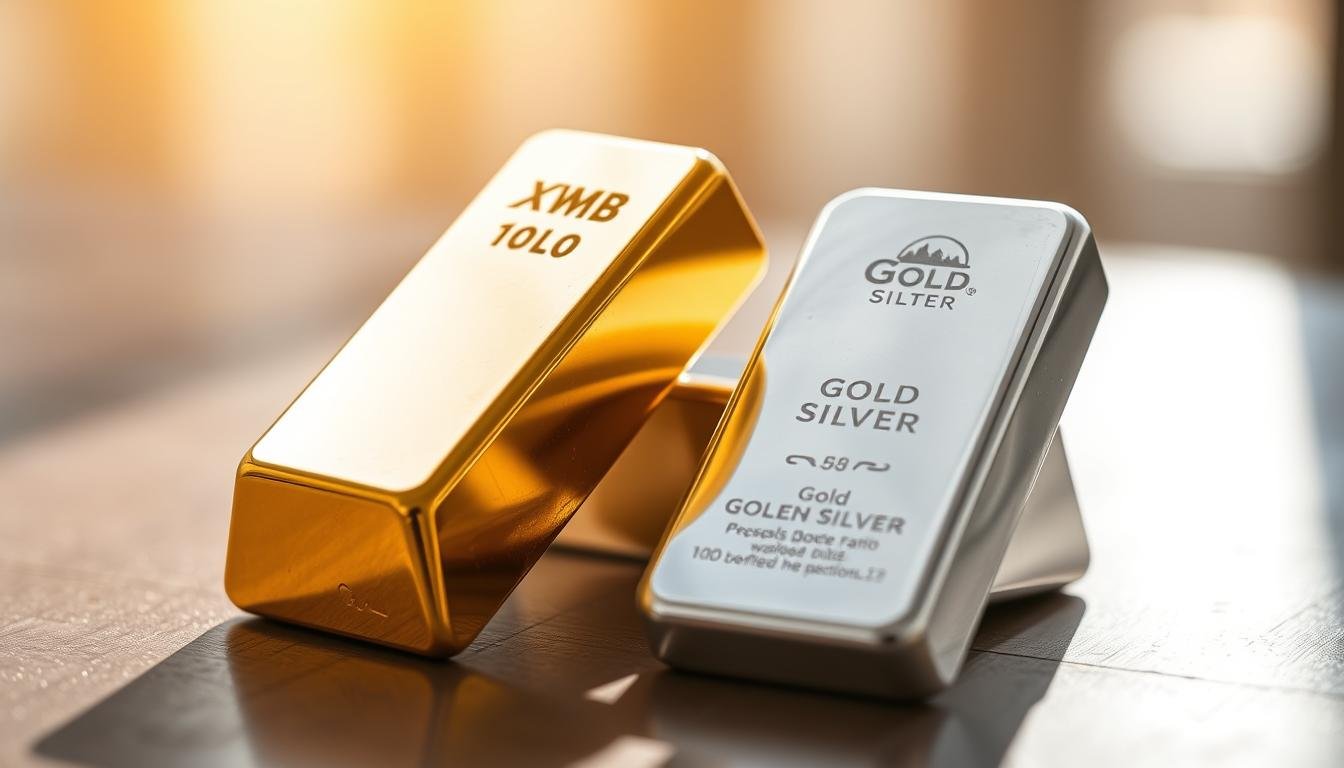
Have you ever wondered about the gold-silver ratio? It’s a key metric for those who invest in precious metals. In simple terms, it shows how many ounces of silver are worth as much as one ounce of gold.
Over time, this ratio has changed a lot. It gives us clues about market trends and where to invest. Knowing about the gold-silver ratio helps you make better choices when investing in precious metals.
Key Takeaways
- The gold-silver ratio indicates the relative value of gold and silver.
- Historical fluctuations in the ratio can signal market trends.
- Understanding the ratio can inform your investment decisions.
- The ratio is a useful tool for investors in precious metals.
- It helps in identifying potential investment opportunities.
What is the Gold-Silver Ratio?
The gold-silver ratio shows the value of gold compared to silver. It tells us how many ounces of silver it takes to buy one ounce of gold. This ratio is a simple yet powerful tool in the precious metals market.
Definition and Basic Concept
The gold-silver ratio is the number of ounces of silver needed to buy one ounce of gold. It has been used for centuries to compare the value of gold and silver. It’s a valuable metric for investors to understand market trends and make informed decisions.
How to Calculate the Ratio
Calculating the gold-silver ratio is easy. You just need to know the current prices of gold and silver.
Simple Calculation Method
To find the ratio, divide the price of one ounce of gold by the price of one ounce of silver. For example, if gold is $1,800 and silver is $20, the ratio is 90.
Using Current Market Prices
With today’s prices, you can quickly find the gold-silver ratio. For instance, if gold is $1,900 and silver is $23, the ratio is about 82.6. This means it takes 82.6 ounces of silver to buy one ounce of gold.
The Historical Significance of Gold and Silver
Gold and silver have been around since the beginning of civilization. They’ve played key roles in shaping societies and economies. You might wonder why these metals are so important.
Ancient Uses and Valuation
Gold and silver were highly valued in ancient times. They were rare, durable, and beautiful. People used them for jewelry, coins, and as symbols of wealth and power.
In many cultures, these metals were seen as sacred. This made them even more valuable.
Evolution as Monetary Metals
As societies grew, so did the role of gold and silver. They became key in monetary systems, affecting trade and stability. Coins made from these metals helped connect the world through trade.
The Gold Standard Era
The Gold Standard era linked currencies to gold’s value. This brought stability and limited inflation. It made international trade more predictable.
Silver’s Monetary History
Silver was also vital in monetary history, used in coins and certificates. It was a more common choice for daily transactions than gold. Knowing about silver’s role helps us understand past economic conditions.
Historical Patterns of the Gold-Silver Ratio
The gold-silver ratio has changed a lot over time. This change shows how gold and silver prices have moved. It helps investors and analysts understand the market better.
Pre-20th Century Ratios
In ancient times, gold and silver were valued differently in various cultures. For example, in ancient Rome, gold was worth 12 times more than silver. This ratio changed over the years, affected by mining and the economy. Looking back, we see the ratio wasn’t as shaky as it is now.
| Time Period | Gold-Silver Ratio |
|---|---|
| Ancient Rome | 12:1 |
| Middle Ages | 10:1 to 12:1 |
| 19th Century | 15:1 to 16:1 |
Modern Era Fluctuations
In the 20th century, the gold-silver ratio saw big changes, mainly when the economy was shaky. In the 1970s, gold prices went up, making the ratio higher. But in the late 1990s and early 2000s, silver prices rose, making the ratio drop. These changes show how the ratio can shift quickly.
Notable Historical Extremes
The gold-silver ratio has hit extreme points during economic crises. For instance, in 2008, it soared as people looked for safe investments. On the other hand, when the economy was growing, the ratio fell. Knowing these extremes helps investors make better choices.
Looking at the gold-silver ratio’s history, we see many factors at play. These include the economy, mining, and what investors think. By studying these patterns, investors can better understand the precious metals market.
Factors Influencing the Gold-Silver Ratio
Knowing what affects the gold-silver ratio is key for smart investing. In the precious metals market, several important factors shape this ratio.
Economic Indicators
Economic signs are big players in the gold-silver ratio. Key ones are inflation, interest rates, and currency strength.
Inflation and Interest Rates
Inflation pushes investors towards precious metals, raising their prices. When inflation goes up, gold and silver values climb. Interest rates also matter, as they change the cost of holding gold and silver, which don’t earn interest.
Currency Strength
The power of major currencies, like the US dollar, greatly affects the gold-silver ratio. A strong dollar makes gold and silver pricier for foreign buyers. This can lower demand and change their prices.
Market Sentiment
How investors feel about risk also shapes the gold-silver ratio. When the economy is shaky, investors seek safe assets like gold. This can swing the ratio.
Important things that sway market sentiment include:
- Economic news and forecasts
- Geopolitical events
- Market trends
Supply and Demand Dynamics
The balance between gold and silver supply and demand is vital. Demand comes from jewelry, tech, and investment.
By grasping these factors and their interactions, you can better invest in gold and silver.
Interpreting Gold-Silver Ratio Movements
As an investor, knowing how to read the gold-silver ratio can change your game. This ratio shows how much silver it takes to buy one ounce of gold. It’s a key indicator of market trends and investment chances.
What a High Ratio Indicates
A high gold-silver ratio means gold is more expensive than silver. This could be because of market mood, economic signs, or supply and demand.
Historical High Points
In times of economic doubt or when gold is more popular, the ratio goes up. For example, in the early 2000s, it hit about 80. This shows gold was much pricier than silver.
Market Implications
If the ratio is high, silver might be cheaper than gold. This could be a good time to buy silver. People think the ratio will go back to its usual level.
What a Low Ratio Indicates
On the other hand, a low ratio means silver is more expensive than gold. This happens when silver is in high demand or when people prefer silver over gold.
Historical Low Points
The ratio has also seen lows, like in the late 1970s when it fell below 15. This was because of the Hunt brothers trying to control the silver market, making silver prices rise.
Market Implications
A low ratio could mean gold is cheaper than silver. This might be a sign to buy gold. People think the ratio will balance out soon.
Grasping these concepts can lead to better investment choices in the precious metals market. By watching the gold-silver ratio and understanding its shifts, you can spot chances and fine-tune your strategy.
The Gold-Silver Ratio as a Trading Tool
The gold-silver ratio is more than a number; it’s a way to find profitable trades. As a trader, it helps you decide when to invest in gold and silver.

Mean Reversion Strategy
The mean reversion strategy says the gold-silver ratio will return to its average over time. By spotting when it’s off track, you can find good trading chances.
Identifying Extremes
To use the mean reversion strategy well, you must spot when the ratio is way off. Looking at historical data is key to knowing what’s an extreme.
Execution Tactics
After spotting an extreme ratio, you can start trades expecting it to return to normal. This might mean buying gold and selling silver, or the other way around, based on the direction of the deviation.
Trend Following Approach
Another way is the trend following strategy. It’s about going with the momentum of the gold-silver ratio. By following the trend, you can catch the market’s flow.
Momentum Indicators
To follow a trend, you need momentum indicators like moving averages or RSI. They help you see the trend’s strength and direction.
Risk Management
Good risk management is key when following a trend. This means setting stop-loss orders and managing how much you invest. It helps protect you if the trend changes.
By mixing these strategies and keeping up with market changes, you can use the gold-silver ratio to improve your trading.
Ratio Trading Strategies for Precious Metals Investors
Ratio trading strategies are a smart way to invest in precious metals. They use the gold-silver ratio to improve your portfolio. As an investor, you want to make more money and take less risk.
Metal Switching Technique
The metal switching technique is about switching between gold and silver based on the gold-silver ratio. It’s based on the idea that the ratio will return to its historical mean over time.
When to Switch from Silver to Gold
Switch from silver to gold when the gold-silver ratio is high. A high ratio means silver is cheaper than gold. Switching to gold can help you benefit from the ratio returning to its mean.
When to Switch from Gold to Silver
Switch from gold to silver when the gold-silver ratio is low. A low ratio means gold is cheaper than silver. This is a good time to switch to silver.
Portfolio Rebalancing Based on Ratio
Another strategy is to rebalance your portfolio based on the gold-silver ratio. This means adjusting your gold and silver holdings to keep a good balance.
Allocation Percentages
The right allocation percentages depend on your goals and how much risk you’re willing to take. Generally, invest more in the metal that’s undervalued based on the ratio.
Timing Considerations
Timing is key for rebalancing your portfolio. Consider market trends and economic indicators to decide when to rebalance.
| Gold-Silver Ratio | Recommended Allocation |
|---|---|
| High | Increase allocation to gold |
| Low | Increase allocation to silver |
As Warren Buffett said, “Price is what you pay. Value is what you get.” Ratio trading can help increase your precious metals portfolio’s value.
“The biggest risk is not the volatility of the market, but whether you will be able to sleep at night.” –
Gold Market Fundamentals and Their Effect on Prices
To understand the gold market, knowing the basics is key. You must grasp the factors that shape gold prices. This knowledge helps in making smart investment choices.
Central Bank Policies
Central banks are big players in the gold market. Their actions can greatly affect gold prices. Buying gold can boost demand and prices. Selling gold, on the other hand, can lead to a surplus and lower prices.
Gold Mining Production
Gold mining’s output is vital for gold prices. More mining can increase supply and possibly lower prices. But, if mining drops due to issues, prices might rise.
Investment Demand for Gold
Investor interest in gold is a major price driver. Gold is sought during economic uncertainty or market ups and downs. This demand can be for ETFs, physical bullion, or jewelry.
ETFs and Physical Bullion
ETFs and physical bullion are favored by investors. ETFs let investors buy gold without holding it physically. Physical bullion offers a real asset. Both are big in investment demand.
Jewelry and Technology Demand
Jewelry and technology also boost gold demand. Jewelry sales are influenced by cultural and economic factors in places like India and China. Technology demand is smaller but important for certain uses.
Silver Market Dynamics and Their Impact
The silver market is shaped by many factors. These include industrial demand, mining output, and investment demand. Knowing these dynamics is key for investors and analysts.
Industrial Demand for Silver
Industrial demand is a big player in the silver market. Silver is used in many industrial ways, like in electronics and solar panels.
Technology Applications
Silver is vital for making electronics. It’s used in smartphones, computers, and TVs because of its high electrical conductivity.
Green Energy Uses
The need for green energy is boosting silver demand. Solar panels, which need a lot of silver, are a big part of this.
Silver Mining Output
Silver mining output is also key. The amount mined each year affects silver’s availability and price.
- Mining levels can change due to many factors, like the geology and costs of extraction.
- New mines and reopened ones can add more silver to the market.
Investment Demand for Silver
Investment demand for silver is also important. People buy silver as a way to protect against inflation and market ups and downs.
“Silver is seen as a store of value and a hedge against economic uncertainty, making it an attractive investment option during times of financial stress.”
Understanding the factors that shape the silver market helps investors make better choices. This includes knowing about industrial demand, mining output, and investment demand.
The Gold-Silver Ratio During Economic Crises
Economic crises have changed the gold-silver ratio in different ways. Knowing how this ratio moves during such times helps investors.
Behavior During Recessions
Recessions make the gold-silver ratio change. This is because of how investors act and market changes. People often choose safe assets, making gold more valuable than silver.
Performance During Market Crashes
Market crashes can really change the gold-silver ratio. The ratio might go up as investors look for safe places to put their money. This can make gold more valuable than silver.
2008 Financial Crisis Case Study
In 2008, the gold-silver ratio saw a lot of ups and downs. At first, gold prices went up, making the ratio spike. But then, silver prices came back, correcting the ratio.
COVID-19 Pandemic Impact
The COVID-19 pandemic made the gold-silver ratio jump. Investors turned to gold, making the ratio hit record highs. This showed how extreme the market was.
Key Takeaways:
- The gold-silver ratio is sensitive to economic crises.
- Recessions and market crashes can cause significant fluctuations.
- Understanding these dynamics can help investors make informed decisions.
Using the Ratio for Investment Timing
The gold-silver ratio is a great tool for investors. It helps find the best times to buy or sell gold and silver. By understanding this ratio, you can make smarter investment choices.
Entry Point Identification
Finding the right time to invest is key to making money. The gold-silver ratio shows when it’s a good time to invest in gold or silver.
Technical Signals
Looking at the gold-silver ratio’s past trends is important. When the ratio is very high or low, it might mean a big change is coming. Key technical signals include:
- Ratio extremes
- Trend line breaks
- Moving average crossovers
Fundamental Confirmations
While technical signals are useful, they need to be backed up by fundamental analysis. Things like economic reports and market sentiment can help confirm your investment choices based on the gold-silver ratio. Consider the following fundamental confirmations:
- Economic reports
- Market sentiment indicators
- Supply and demand data
Exit Strategy Development
Having a good exit strategy is as important as finding the right entry point. The gold-silver ratio can help you know when to sell to make the most profit or avoid big losses.
Profit Targets
Setting profit targets based on the gold-silver ratio means finding the best times to sell. Looking at historical data can help you find these times. Consider setting profit targets at:
- Historic ratio averages
- Significant ratio deviations
Stop-Loss Placement
A stop-loss order can protect your investments by selling automatically when the ratio hits a certain level. This can help prevent big losses if the market goes against you. Place stop-loss orders at:
- Ratio levels indicating a trend reversal
- Significant support or resistance levels
Limitations of Ratio Analysis
It’s important to know the limits of ratio analysis for smart investment choices. The gold-silver ratio is useful, but it has its downsides.
When the Ratio Can Be Misleading
The ratio might not always show the truth, mainly during market volatility. Or when supply and demand shifts a lot. Always think about these when looking at the ratio.
Other Factors to Consider
Other things can make the ratio less reliable. For example, market manipulation and changes in rules.
- Market Manipulation: Big players can sway gold and silver prices, changing the ratio.
- Regulatory Changes: New rules can shift the ratio by altering how investors see these metals.
Market Manipulation
Big traders or investors can push gold or silver prices, messing with the ratio.
Regulatory Changes
New rules, like tax changes or trading rules, can make these metals more or less appealing. This affects the gold-silver ratio.

Combining the Gold-Silver Ratio with Other Indicators
Using the gold-silver ratio with technical and fundamental analysis helps you understand market trends better. This way, you can make smarter investment choices.
Technical Analysis Integration
Technical analysis adds to your knowledge of the gold-silver ratio. It shows you market trends and patterns. You can use technical indicators to guide your investment decisions.
Moving Averages
Moving averages make price data smoother, helping you spot trends. By comparing the gold-silver ratio to moving averages, you can see market sentiment.
Relative Strength Index
The Relative Strength Index (RSI) shows the size of recent price changes. Using RSI with the gold-silver ratio helps spot overbought or oversold conditions.
Fundamental Analysis Correlation
Fundamental analysis looks at economic data and market basics to predict prices. Correlating it with the gold-silver ratio gives you a full view of the market.
Economic Data Points
Economic indicators like GDP growth, inflation, and employment affect the gold-silver ratio. Analyzing these data points helps you understand the ratio’s factors.
Sector Performance
The performance of sectors like mining or industrial production impacts the gold-silver ratio. Watching sector performance helps you understand the ratio’s movements.
The Future of the Gold-Silver Ratio in the US Market
The future of the gold-silver ratio in the US is uncertain. It’s influenced by many factors, including new technologies. By looking at emerging trends and potential disruptions, we can understand how these might change the ratio.
Emerging Trends
New trends are shaping the gold-silver ratio. One trend is more people investing in precious metals because of economic uncertainty. Also, better recycling technologies are making more gold and silver available.
Potential Disruptions
Several disruptions could change the gold-silver ratio. These include:
- Digital Assets Impact: The rise of digital assets may change how investors view traditional precious metals.
- Changing Industrial Demand: Shifts in industrial demand, like more use of silver in renewable energy, could affect the ratio.
Digital Assets Impact
Digital assets are becoming more popular. This might draw some investment away from gold and silver, affecting the ratio.
Changing Industrial Demand
Silver is being used more in solar energy. This growing demand could influence the gold-silver ratio.
Real-World Examples of Successful Ratio Trading
Ratio trading has helped many investors make money. It uses the gold-silver ratio to find good trades. Looking at real examples can teach you how to use this strategy well.
Case Studies
Many case studies show ratio trading’s success. They highlight how both big investors and small traders have profited. This strategy works for everyone.
Expert Strategies
Experts have come up with many ways to trade ratios. They mix technical analysis with market knowledge. This helps investors make better choices.
Professional Trader Approaches
Professional traders use complex models to spot ratio trades. Their methods can guide other investors. They help you see how to find good trades.
Fund Manager Techniques
Fund managers use ratio trading in their plans. They switch between gold and silver to improve their portfolios. This helps them manage risks and boost returns.
Conclusion
You now know about the gold-silver ratio and its importance in investing in precious metals. This ratio helps understand how gold and silver are valued compared to each other. It gives you insights to make better investment choices.
The gold-silver ratio can help in different trading strategies, like mean reversion and trend following. It also helps in timing your investments and spreading out your portfolio. But, remember to look at other market factors and indicators too.
In short, the gold-silver ratio is key for investors in the precious metals market. Using it in your strategy can improve your returns and reduce risk.