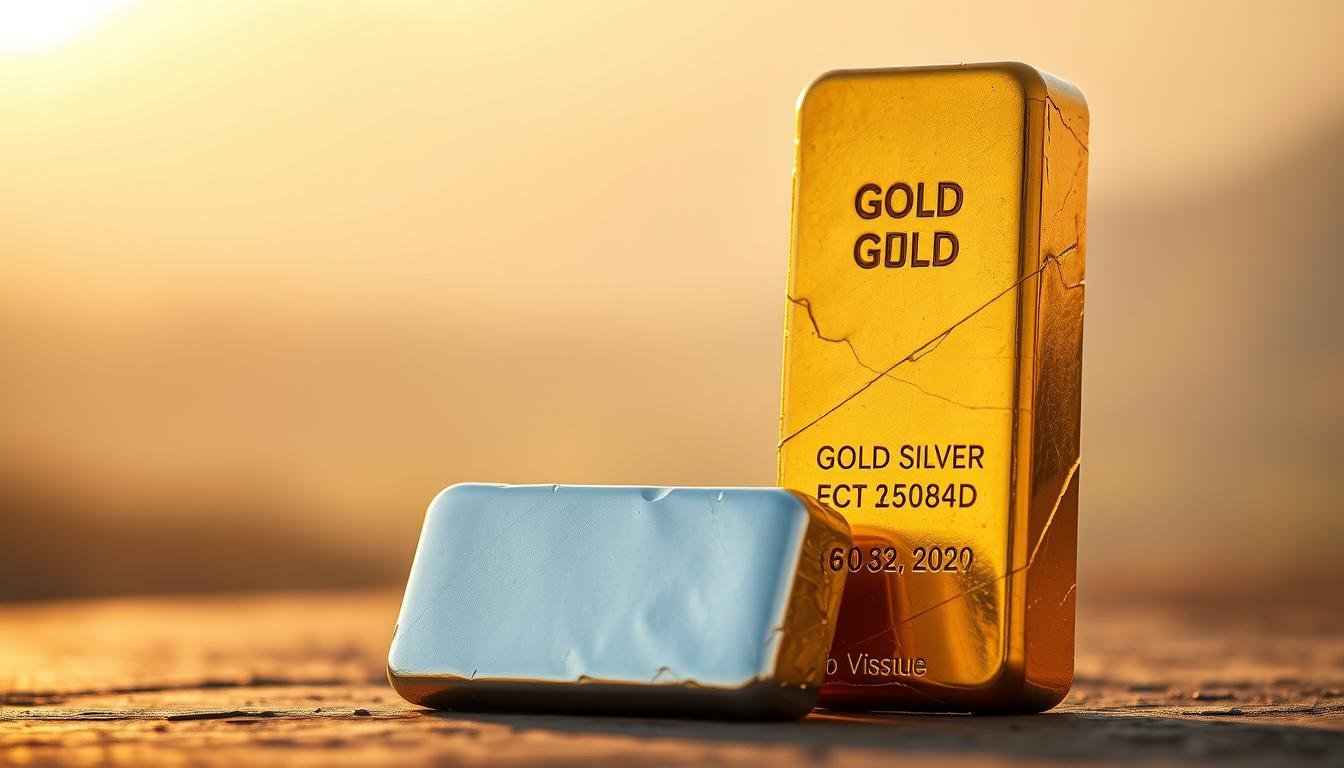
Have you ever looked at the prices of gold and silver? The gold-silver ratio is key in the precious metals market. It shows how many ounces of silver it takes to buy one ounce of gold.
The gold-silver ratio is a key metric. It gives insights into market trends. It helps investors make smart choices. Before, governments set the ratio. Now, the market decides, making it crucial for investors and traders.
Knowing the gold-silver ratio helps you understand the precious metals market. We’ll dive deep into the ratio. We’ll cover its definition, historical importance, and its role in trading strategies.
Key Takeaways
- The gold-silver ratio is a crucial indicator in the precious metals market.
- It represents the number of ounces of silver needed to buy one ounce of gold.
- The ratio has historical significance and is now influenced by market fluctuations.
- Understanding the ratio can help investors make informed decisions.
- The gold-silver ratio is a vital tool for traders and investors in the precious metals market.
What Is the Gold-Silver Ratio?
The gold-silver ratio is a key financial indicator. It shows the value of gold compared to silver. This ratio helps you make better choices when investing in precious metals.
Definition and Basic Calculation
To find the gold-silver ratio, divide the price of one ounce of gold by the price of one ounce of silver. For instance, if gold costs $2,000 and silver costs $30, the ratio is 66.67:1. This means you need about 66.67 ounces of silver to buy one ounce of gold.

Historical Context of the Ratio
The gold-silver ratio has a long history, dating back to ancient times. Governments have set the ratio to keep money stable. Knowing its history helps you understand its importance today.
Looking at how the ratio has changed over time can teach you a lot. It shows how economic changes, mining, and investor attitudes have affected gold and silver’s values.
The Historical Significance of Gold and Silver
Exploring precious metals reveals the importance of gold and silver’s history. For ages, these metals have been key in global finance.
Gold’s Historical Role in Finance
Gold has been crucial in money systems for centuries. Its value and lasting nature are the reasons behind this.
Gold Standards Throughout History
The gold standard linked currencies to gold’s value in the 19th and 20th centuries. It brought stability and eased international trade by stabilizing exchange rates.
Gold as a Store of Value
Gold is seen as a safe investment during economic downturns. It protects against inflation and currency loss.
Silver’s Historical Role in Finance
Silver, like gold, was used as currency and a safe investment. Yet, its financial role has changed over time.
Silver as Currency
Silver was a common currency in many cultures, alongside gold. The gold-silver value ratio influenced money policies and trade.
The Demonetization of Silver
The late 19th and early 20th centuries saw silver’s currency role diminish. Its use in industry grew as it lost its monetary backing.

| Metal | Historical Use | Current Significance |
|---|---|---|
| Gold | Standard for currencies, store of value | Hedge against inflation, store of value |
| Silver | Currency, store of value | Industrial applications, investment |
Knowing gold and silver’s past helps us understand their current market roles. It sheds light on the gold-silver ratio’s importance in investing.
How the Gold-Silver Ratio Has Evolved Over Time
Exploring the gold-silver ratio shows its changes over time. These changes come from economic conditions, new technologies, and market shifts. Knowing these changes helps in making smart investment choices.
Ancient and Medieval Periods
In ancient and medieval times, the gold-silver ratio was mostly steady. For example, ancient Rome kept it around 12:1. This stability came from the limited supply of metals and controlled economies.
Modern Era Fluctuations
The modern era saw big changes in the gold-silver ratio. The end of the gold standard in the 20th century caused more ups and downs. Things like inflation, currency value changes, and demand shifts played a big role in these changes.
“The gold-silver ratio has become a key tool for investors,” financial experts say. It helps them understand market trends and make smart decisions.
21st Century Trends
In the 21st century, the gold-silver ratio has followed certain patterns. These patterns are shaped by market forces and economic signs. By looking at these trends, you can predict the ratio’s future and adjust your investments.
Understanding the gold-silver ratio’s history helps in navigating precious metals investing. It’s a valuable tool for investors, offering insights into market trends and potential trading chances.
The Fundamental Value of Gold in Today’s Economy
Gold’s value comes from many factors, like how much is available and how much people want it. Knowing these things helps investors make smart choices in the precious metals market.
Supply and Demand Dynamics
The price of gold changes based on its supply and demand. Supply constraints, like less gold mining, can raise prices. At the same time, increased demand from investors and jewelers can also increase prices.
Key Factors Affecting Gold Prices
Several important factors influence gold prices. These include central bank actions and economic signs like inflation and currency value changes.
Central Bank Policies
Central banks are key players in the gold market. Their decisions on interest rates and quantitative easing can greatly affect gold prices. For example, lower interest rates make gold more appealing than bonds and other fixed-income investments.
Inflation and Currency Devaluation
Gold is seen as a hedge against inflation and currency value drops. When inflation goes up, the value of paper money can fall, making gold more appealing. Also, when currencies lose value, investors often choose gold as a safe place to put their money.
Understanding the Silver Market Fundamentals
To get into the world of precious metals, knowing the basics of the silver market is key. Unlike gold, silver’s price is also influenced by its industrial uses.
Industrial vs. Investment Demand
Silver’s price is shaped by both its industrial uses and investment interest. It’s important to note that silver is in demand for many industrial needs. This includes electronics, solar panels, and medical uses.
Key Factors Affecting Silver Prices
Several things can change silver prices. These include:
- Industrial Applications: Silver is used in making electronics and solar panels.
- Mining Production Trends: Changes in mining can affect silver’s supply and price.
Industrial Applications
Silver is great for many industrial uses because of its unique properties. Its ability to conduct electricity is key for the electronics industry.
Mining Production Trends
How much silver is mined affects its availability and price. Keeping an eye on mining trends can help predict price changes.
Interpreting the Gold-Silver Ratio: What the Numbers Mean
As an investor, understanding the gold-silver ratio is key. It shows how gold and silver compare in value. Knowing this helps you make smart choices.
Understanding Ratio Extremes
A high gold-silver ratio means gold is more valuable than silver. On the other hand, a low ratio shows silver is more valuable. These extremes can point to good investment times or when you might need to adjust your portfolio.
What Constitutes a “High” Ratio
A “high” ratio is over 80. This happens when gold is more sought after, often during times of economic worry or market stress.
What Constitutes a “Low” Ratio
A “low” ratio is under 60. This means silver is more valuable. It could be because of strong industrial demand or more people investing in silver.
Historical Averages and Extremes
The gold-silver ratio has changed over time. It usually stays between 60 and 80. Knowing these ranges helps you understand the current ratio better.
| Ratio Level | Interpretation |
|---|---|
| Above 80 | Gold is relatively more valuable |
| Below 60 | Silver is relatively more valuable |
| Between 60-80 | Balanced relative value |
By grasping these points, you can make better choices for your gold and silver investments.
The Gold-Silver Ratio as a Market Indicator
The gold-silver ratio is a key market indicator for investors. It helps you understand market trends and make better choices. By studying this ratio, you can spot potential changes in the market and adjust your plans.
Predicting Market Movements
The gold-silver ratio can forecast price changes in gold and silver. A high ratio might mean silver is cheaper than gold, which could be a good time to buy silver. On the other hand, a low ratio could signal that gold is underpriced.
Correlation with Economic Cycles
This ratio also links to economic trends. In tough times, the ratio often goes up as people turn to gold as a safe investment. Knowing this can guide your precious metal investments.
Relationship with Other Financial Indicators
The gold-silver ratio also ties to other financial signs. For example, it can mirror changes in currency values and bond yields. By looking at these connections, you can get a fuller picture of the market. This helps in fine-tuning your ratio trading strategy.
Using the gold-silver ratio in your investment analysis offers a special insight into market trends. It’s a powerful tool, combined with other indicators and ratio metrics, to better predict market shifts and make smart investment choices.
Trading Strategies Based on the Gold-Silver Ratio
Developing trading strategies based on the gold-silver ratio can boost your returns. This ratio shows the relative value of gold and silver. It helps you make smart investment choices.
Ratio Reversion Strategy
A ratio reversion strategy looks for entry and exit points based on past ratio levels. If the ratio strays far from its usual mean, it might signal a change.
Entry and Exit Points
To use this strategy, find the best times to buy and sell. Look at past data to spot patterns in the gold-silver ratio.
- Watch how the ratio moves from its usual mean.
- Buy when the ratio is at its extremes.
- Sell when the ratio returns to its mean.
Position Sizing
Managing risk is key. Adjust how much you invest based on how sure you are the ratio will return to its mean.
- Decide how much to invest based on your risk level.
- Change your investment size based on the ratio’s move.
Pair Trading Approach
Pair trading is another good strategy. It involves buying gold and selling silver, or vice versa, based on the ratio. This way, you profit from the price differences between the two metals.
| Metal | Buy/Sell Signal | Ratio Level |
|---|---|---|
| Gold | Buy | Low Ratio |
| Silver | Sell | High Ratio |
Long-Term Investment Considerations
When using the gold-silver ratio for long-term investing, think about market basics and economic trends.
Key Considerations:
- Keep an eye on economic signs that sway gold and silver prices.
- Update your strategy as market mood changes.
Gold-Silver Ratio Analysis Techniques
To make smart choices about gold and silver, you need to know how to analyze the gold-silver ratio. This involves using both technical and fundamental analysis. Each method gives different insights into market trends and future changes.
Technical Analysis Methods
Technical analysis looks at past price data and chart patterns to guess future prices. It helps spot trends and patterns that might not be clear at first.
Chart Patterns and Indicators
Chart patterns, like head and shoulders or triangles, can show when the ratio might change. Tools like the Relative Strength Index (RSI) or Bollinger Bands give clues about market mood and when prices might be too high or too low.
Moving Averages and Oscillators
Moving averages smooth out price data, making trends easier to see. Oscillators, like the Stochastic Oscillator, show when the ratio is too high or too low, hinting at a possible change.
Fundamental Analysis Considerations
Fundamental analysis looks at economic and market factors that affect gold and silver prices. It includes supply and demand, economic signs, and global events that can change the ratio.
By mixing technical and fundamental analysis, you get a deeper understanding of the gold-silver ratio. This helps you make better investment choices.
Case Studies: Successful Gold-Silver Ratio Trading
Learning from historical case studies can boost your trading success. By studying past market trends and decisions, you can learn how to use the gold-silver ratio in your strategy.
Historical Trading Opportunities
The gold-silver ratio has opened many trading doors over the years. Two key moments were the 2011 peak and the 2020 market shake-up.
The 2011 Precious Metals Peak
In 2011, the precious metals market hit a high point. The gold-silver ratio was key for traders. They made smart moves as the ratio changed, using gold and silver’s relative values.
The 2020 Market Disruption
The COVID-19 pandemic shook the market in 2020. The gold-silver ratio changed as investors looked for safe places. Traders who got the ratio’s dynamics made the most of the market’s ups and downs.
Recent Success Stories
Traders have found success with the gold-silver ratio analysis in recent years. By understanding the ratio, investors have made better choices, leading to improved results.
When thinking about using the ratio trading strategy, remember the lessons from past successes and challenges. Learning from history can help you better handle the precious metals market’s complexities.
Common Misconceptions About the Gold-Silver Ratio
The gold-silver ratio is a useful tool, but it’s often misunderstood. It’s important to know its limits and how it can be misread.
Predictive Limitations
Many think the gold-silver ratio can predict the market with certainty. But, it’s not that simple. It should be seen as one of many tools for analysis.
Context Dependency
The ratio’s meaning changes based on the situation. Economic conditions, market mood, and global events all play a role. For example:
- In economic downturns, the ratio acts differently than in good times.
- Changes in market sentiment can cause shifts that aren’t based on the ratio’s true value.
- Global events, like political tensions, can affect gold and silver prices in different ways.
Correlation vs. Causation Issues
Some believe a high or low ratio directly leads to certain market outcomes. But, correlation doesn’t mean causation. It’s key to understand the difference for smart decisions.
Knowing these misconceptions helps you use the gold-silver ratio better in your investment plans. It’s a tool, not a magic predictor.
The Gold-Silver Ratio During Economic Crises
When economic crises hit, the gold-silver ratio sends important signals to investors. It shows how to move through shaky markets. Knowing how this ratio acts in tough times helps investors plan better.
Behavior During Recessions
In recessions, the gold-silver ratio sees big changes. People often choose gold as a safe place to put their money. This makes gold’s price go up compared to silver, raising the ratio.
Key factors influencing the ratio during recessions include:
- Investor sentiment and risk aversion
- Economic indicators such as GDP growth and unemployment rates
- Monetary policy decisions by central banks
Performance During Financial Market Stress
When markets get stressed, the gold-silver ratio can stray from its usual path. Investors might choose gold more, pushing its price up against silver’s.
“In times of financial stress, gold tends to outperform silver, leading to an increase in the gold-silver ratio.” –
Case Study: 2008 Financial Crisis
The 2008 crisis is a clear example of the gold-silver ratio’s behavior in tough times. At first, the ratio went up as people looked for safe investments.
| Year | Gold Price (USD/oz) | Silver Price (USD/oz) | Gold-Silver Ratio |
|---|---|---|---|
| 2007 | 841.75 | 13.37 | 62.96 |
| 2008 | 869.75 | 14.99 | 58.02 |
| 2009 | 1093.75 | 18.32 | 59.69 |
Looking at the gold-silver ratio in economic crises helps investors understand markets better. It guides them in making smart choices.
Incorporating the Gold-Silver Ratio into Your Investment Strategy
Using the gold-silver ratio can help you optimize your investment portfolio for better returns. It gives you insights into gold and silver’s relative value. This helps you make smart investment choices.
Portfolio Allocation Considerations
When using the gold-silver ratio, think about portfolio allocation. This means deciding how much of your portfolio to put into precious metals.
Percentage-Based Approaches
One way is to set a percentage of your portfolio for gold and silver based on the gold-silver ratio. For example, if the ratio is high, you might choose more silver. This could help you when the ratio changes back.
Rebalancing Techniques
It’s important to rebalance your portfolio regularly. As the gold-silver ratio changes, you might need to adjust your investments. This keeps your portfolio in line with your goals.
Risk Management Techniques
Good risk management is key when investing in precious metals. Spread your investments across different types to reduce risk.
Timing Your Precious Metals Investments
Timing is crucial when investing in gold and silver. Watching the gold-silver ratio can help you know the best times to buy or sell. This can boost your ratio trading strategy.
Understanding and using the gold-silver analysis can improve your investment strategy. It can lead to better returns. Whether you’re new or experienced, using this ratio can offer valuable insights into the silver ratio gold market.
Tools and Resources for Tracking the Gold-Silver Ratio
Tracking the gold-silver ratio is easier with the right tools. You need real-time data and deep analysis. Online platforms and calculators give you current ratio metrics, keeping you updated on market changes.
Online Platforms and Calculators
Many online platforms track the gold-silver ratio in real-time. You can find them on financial websites, precious metals exchanges, and investment analysis sites. Online calculators give instant ratio calculations based on current prices. Financial websites also offer charts and tools for understanding trends.
Professional Analysis Services
For deeper insights, consider professional analysis services. They provide detailed reports on precious metals markets. Experts analyze factors affecting the ratio, offering guidance for your investments.
Recommended Reading and Research
Enhance your knowledge with recommended reading and research. Books, academic journals, and reports offer valuable insights. Staying informed helps you make better investment choices.
Using these tools and resources keeps you ahead in the precious metals market. You can make informed decisions based on the gold-silver ratio.
Future Outlook: Where Is the Gold-Silver Ratio Heading?
To predict the gold-silver ratio’s future, we need to look at current trends and expert opinions. It’s important to understand the factors that affect the ratio when investing in precious metals.
Current Trends Analysis
The gold-silver ratio is shaped by economic signs, like inflation and currency changes. Watching these trends helps us guess where the ratio might go next.
- Economic signs like GDP and inflation rates
- Changes in currency value, like the US dollar
- How much silver is needed for new technologies
Expert Predictions
Experts have different views on the gold-silver ratio’s future. Some think silver prices will rise because of more industrial use. Others believe gold will stay the top safe-haven asset.
- Forecasts based on past trends and analysis
- Views from market experts and economists
- How global events might affect precious metals
Factors That Could Disrupt the Ratio
Several things could change the gold-silver ratio. These include new tech and changes in rules.
Technological Developments
New tech, like in green energy and gadgets, could really change silver demand. More silver needed for these areas might lower the ratio.
Regulatory Changes
New rules, like those on mining and the environment, can shift gold and silver supply and demand. Keeping up with these changes helps investors make better choices.
Conclusion: Mastering the Gold-Silver Ratio
You now know a lot about the gold-silver ratio. This includes what it is, its history, and how it’s used in trading. Learning about the gold-silver ratio helps you make better investment choices and understand the precious metals market.
The gold silver ratio is a key tool for investors looking to improve their portfolio. By grasping the ratio, you can spot chances to buy or sell gold and silver. This could help you earn more.
Keep watching the gold-silver ratio and use what you’ve learned. This will help you make smarter investment decisions. The gold silver ratio analysis will be a big part of your strategy. It will help you reach your financial goals by making informed choices.