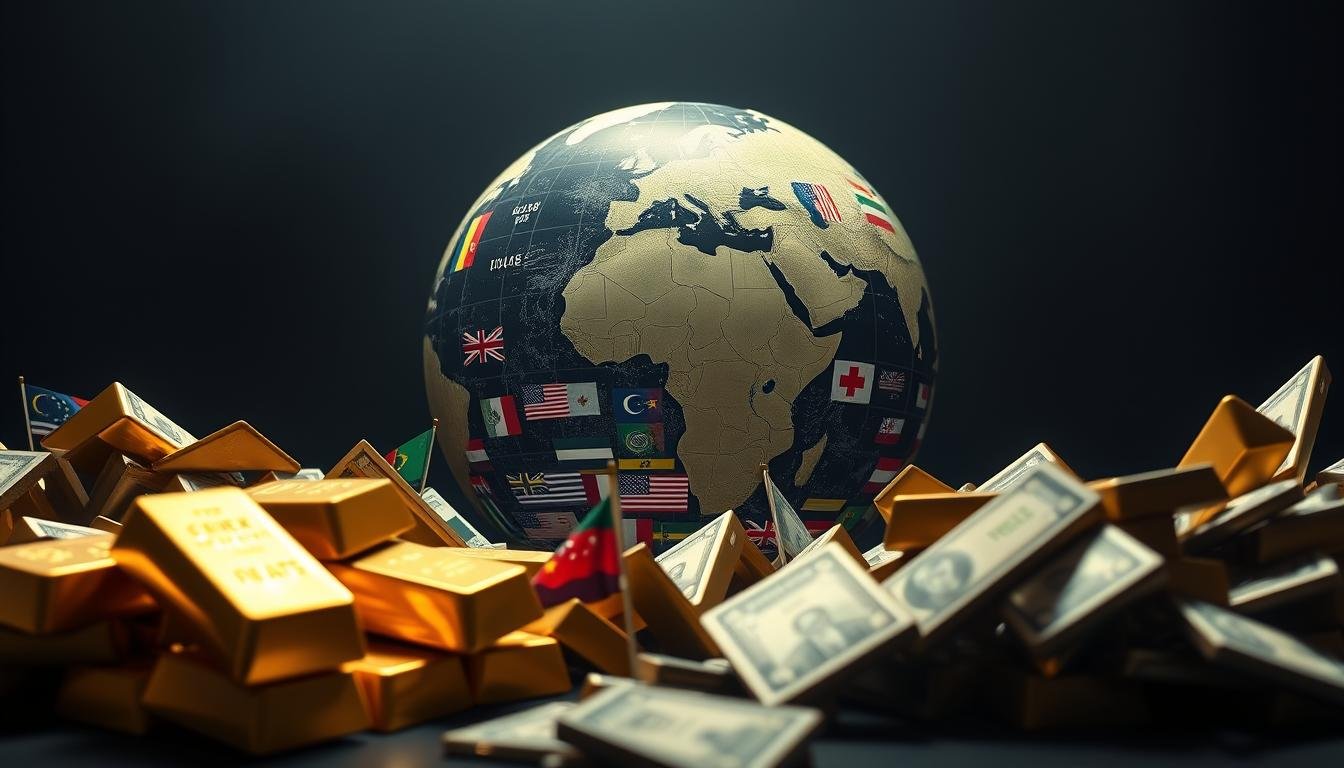
The world’s financial scene is changing. De-dollarization is becoming more popular, mainly in Asia and the Global South. Central banks and investors are spreading out their money, using less US dollars.
This currency shift is really affecting gold prices. As countries drop the dollar, they’re choosing gold as a safe place to put their money. This is pushing gold prices up to new highs. Knowing about de-dollarization and gold can help you make smart investment choices.
Key Takeaways
- De-dollarization is a growing trend in the global financial landscape.
- Central banks are accumulating gold as a response to de-dollarization.
- The dollar decline is driving a currency shift.
- Gold prices are rising due to increased demand.
- Understanding de-dollarization can help you make informed investment decisions.
The Shifting Global Currency Landscape
The world is changing how it uses money, moving away from the dollar’s dominance. For almost 80 years, the U.S. dollar was the top reserve currency. But, new global power shifts are changing this.

Definition and Scope of De-Dollarization
De-dollarization means using fewer U.S. dollars in global deals, reserves, and trade. It’s about moving to other currencies for international payments and keeping reserves. As geopolitical tensions rise, countries want to spread out their money risks, changing the global money scene.
A recent report says, “The dollar’s share of global reserves has been falling, showing a shift in the global currency scene.” This change is due to new economic groups and worries about economic freedom.
Historical Context of Dollar Dominance
The dollar became the top currency during World War II with the Bretton Woods Agreement. This deal set up a global money system with the dollar tied to gold and other currencies tied to the dollar. After the war, the dollar’s role grew, becoming key in international trade and finance.
An economist once said,
“The dollar’s dominance is not just a matter of economic might, but also of geopolitical influence.”
This quote shows how money trends and global politics are linked.
The Current State of Global De-Dollarization
Countries worldwide are moving away from the US dollar. They are choosing to hold different currencies in their reserves. This change is due to several reasons, like political tensions and the need for economic freedom.
Key Countries Leading the Currency Shift
China and Russia are leading the way in this shift. They want to use their own currencies more in global deals. This move helps them rely less on the US dollar.
- China is making the yuan more widely used through trade deals and currency swaps.
- Russia is pushing for the ruble in energy sales and other global transactions.
Statistical Evidence of Dollar Reserve Decline
The dollar’s role in global reserves is shrinking. The International Monetary Fund (IMF) shows this in its data. The dollar’s share in reserves has been going down over time.

| Year | Dollar Share in Global Reserves (%) |
|---|---|
| 2015 | 65.4 |
| 2020 | 59.5 |
| 2022 | 58.4 |
This trend shows a big move towards reserve diversification. Currencies like the euro, yen, and yuan are becoming more important.
Primary Drivers Behind De-Dollarization
It’s important to know what drives de-dollarization to predict currency changes. The global financial scene is complex. We must understand what’s changing the dollar’s role.
Geopolitical Tensions and Sanctions
Geopolitical tensions and sanctions push countries to use fewer dollars. This is because sanctions can block access to the global financial system. So, countries like Russia and China are using their own currencies more.
Economic Sovereignty Concerns
Nations want more control over their money. They aim to be less affected by U.S. money decisions. By using their own currencies, they seek financial freedom. This is big for emerging economies wanting to be more independent.
Rise of Alternative Economic Blocs
New economic groups are also important. They use local currencies in trade, lessening the dollar’s power. For example, BRICS nations are working on new payment systems for trade among themselves.
These factors work together to speed up de-dollarization. Knowing about them helps us make better financial choices in a changing world.
Gold’s Historical Role During Currency Transitions
When global currencies change, knowing gold’s role is key for investors. You might ask how gold has done in the past during these changes. Let’s dive into this.
Gold Performance During Previous Reserve Currency Shifts
Gold has been a safe-haven asset during currency changes. For example, when the British pound lost its global reserve currency status to the US dollar in the mid-20th century, gold prices stayed steady or even rose.
| Currency Transition Period | Gold Price Change | Economic Impact |
|---|---|---|
| 1944-1971 (Bretton Woods System) | Stable, with occasional adjustments | Post-WWII economic restructuring |
| 1971-1973 (End of Bretton Woods) | Significant increase | Currency floatation and inflation concerns |
Lessons from the End of the Bretton Woods System
The end of the Bretton Woods System in 1971 was a big change in global currencies. When the US stopped converting dollars to gold, gold prices went up. This shows gold’s value when trust in the dollar fell.
History teaches us a few things: gold does well during currency shifts, it’s a safe place to put money, and its value can soar when times are tough. Knowing these lessons can help you make better investment choices.
How Gold Functions in the Global Monetary System
Gold has been key in the global monetary system for a long time. It serves many important roles. You might ask why gold is still important today. The answer is its unique qualities and how it helps keep the financial system stable.
Gold as a Traditional Store of Value
Gold is seen as a store of value. It keeps its value over time. This makes it a good investment when the economy is uncertain. Gold helps protect your wealth when other investments fail.
Central Bank Gold Reserves and Their Significance
Central banks worldwide have a lot of gold in their reserves. These central bank gold reserves are key for supporting currencies and keeping the economy stable. Gold helps central banks not rely too much on one currency, making their reserves more diverse.
Gold’s Role in Currency Backing and Confidence
Gold also helps in currency backing and building trust in the financial system. A currency backed by gold is seen as more stable and reliable. This trust boosts confidence among investors and consumers, helping the economy stay stable.
Understanding gold’s role in the global monetary system helps us see its value. It’s crucial for financial stability and confidence.
Recent Central Bank Gold Purchasing Trends
Central banks are buying more gold, showing a change in how they manage money. This move is a response to the world’s economic ups and downs. They see gold as a safe place to keep their money, part of a bigger move away from the US dollar.
Analysis of Central Bank Gold Acquisition Data
Recent numbers from top financial groups show a big jump in gold buying by central banks. In the last year, they’ve added over 400 tonnes to their gold reserves. This buying is happening all over the world, from new to old economies.
The numbers show a steady rise in gold reserves, with some months seeing the most gold bought ever. This demand is likely to keep going, as countries look to spread out their money and not rely on one currency too much.
Strategic Motivations Behind Gold Accumulation
So, why are central banks buying gold? They want to mix up their money holdings. This way, they can avoid big losses when currencies change value. Gold is seen as a safe value, protecting against inflation and currency drops.
Gold buying is also about politics. With more economic sanctions and trade fights, gold offers a financial safety net. Central banks are trying to not rely so much on the US dollar, and gold is a big part of that plan.
How De-Dollarization Directly Impacts Gold Prices
De-dollarization is changing the financial world, affecting gold prices. As countries use different currencies, gold’s value changes. Knowing this helps investors make better choices.
Short-Term Price Effects During Currency Diversification
At first, de-dollarization can make gold prices go up and down a lot. When banks and investors switch currencies, gold demand goes up. This can quickly raise gold prices.
Key short-term factors influencing gold prices include:
- Central bank gold purchases
- Currency fluctuations
- Investor sentiment
| Factor | Impact on Gold Price |
|---|---|
| Central Bank Purchases | Increase |
| Currency Fluctuations | Variable |
| Investor Sentiment | Increase |
Long-Term Valuation Changes in Gold Markets
Long-term, de-dollarization might change how we value gold. As the dollar’s power goes down, gold’s importance could grow. This could make gold’s value go up over time.
“Gold is likely to benefit from the ongoing de-dollarization trend, as it becomes an increasingly important component of central banks’ reserve assets.”
When planning your investments, think about how de-dollarization could affect gold prices. Staying updated helps you make smarter choices about gold.
Alternative Reserve Assets Competing with Gold
The world of finance is changing fast. New reserve assets are popping up, challenging gold’s top spot. Central banks and investors are now looking at different ways to diversify their reserves.
Digital Currencies and CBDCs
Digital currencies and Central Bank Digital Currencies (CBDCs) are making waves. CBDCs are a modern, efficient choice for reserves. They could cut down on costs and bring more people into the financial world. China and Sweden are leading the way in CBDCs.
Other Precious Metals and Commodities
Gold isn’t the only game in town. Metals like silver, platinum, and palladium are also in the mix. These metals have uses beyond just being valuable. They’re used in many industries, which can affect their worth. Oil and natural gas are also being looked at as reserve assets. They’re key to the global economy.
Special Drawing Rights (SDRs) and Basket Currencies
The International Monetary Fund’s (IMF) Special Drawing Rights (SDRs) are a mix of major currencies. SDRs are seen as a way to diversify reserves. Basket currencies, like SDRs, help spread out the risk of relying on one currency.
| Reserve Asset | Characteristics | Potential Benefits |
|---|---|---|
| Digital Currencies/CBDCs | Digital, efficient, potentially more stable | Reduced transaction costs, increased financial inclusion |
| Other Precious Metals | Industrial applications, store of value | Diversification, potential for industrial demand growth |
| SDRs/Basket Currencies | Diversified currency basket, IMF-backed | Reduced reliance on single currency, diversification |
Case Studies: De-Dollarization Events and Gold Performance
Major economies like Russia and China are leading the move away from the dollar. This change affects gold prices and reserves. Their strategies offer insights into gold’s performance during these shifts.
Russia’s De-Dollarization Strategy and Gold Reserves
Russia is cutting its ties to the US dollar due to geopolitical tensions and a push for economic freedom. This move has greatly increased Russia’s gold reserves. Russia is diversifying its assets to reduce risks from dollar investments.
| Year | Russia’s Gold Reserves (Tons) | Percentage of Total Reserves |
|---|---|---|
| 2015 | 1,200 | 15% |
| 2020 | 2,300 | 22% |
| 2022 | 2,800 | 25% |
China’s Currency Internationalization and Gold Acquisition
China is also moving away from the dollar by promoting the yuan and buying more gold. This effort aims to lessen its dollar reliance. It boosts China’s economic freedom and its standing in global finance.
Looking at these examples, it’s clear that de-dollarization and gold performance are connected. As countries diversify and cut dollar ties, gold demand stays high. This affects its price and role in the world’s money system.
Gold Investment Strategies During Currency Shifts
Gold is becoming key for investors to protect their wealth as the world’s money system changes. The move away from the US dollar is making investors diversify. Gold is a big part of this strategy.
Physical Gold: Coins, Bars, and Storage Considerations
Buying physical gold is a simple way to add it to your portfolio. You can pick from gold coins like the American Eagle or Canadian Maple Leaf, and gold bars from trusted refiners. It’s important to think about where to store it, like home safes, bank boxes, or gold storage facilities.
Key considerations for physical gold investment include:
- Purity and authenticity verification
- Storage and security costs
- Liquidity and resale value
Paper Gold: ETFs, Futures, and Mining Stocks
If you don’t want to hold physical gold, paper gold is an option. This includes gold ETFs, futures contracts, and mining stocks. Gold ETFs let you invest in gold without storage. Futures contracts let you bet on gold’s future price. Mining stocks give you gold exposure through the stock market.
Popular paper gold investment options include:
- SPDR Gold Shares ETF
- Gold futures contracts on COMEX
- Shares of major gold mining companies
Portfolio Allocation Recommendations
It’s important to balance your portfolio with gold. A good rule is to put 5% to 15% of your portfolio in gold, based on your risk level and goals. Also, rebalance your portfolio regularly to keep your gold allocation right.
| Investment Goal | Recommended Gold Allocation |
|---|---|
| Conservative | 5%-10% |
| Moderate | 10%-12% |
| Aggressive | 12%-15% |
Potential Future Scenarios for Gold and the Dollar
The future of gold and the dollar is set to change a lot. The world’s economy is evolving, and knowing these changes is key for investors. It helps them deal with the ups and downs of currency markets.
Gradual De-Dollarization Scenario
In a gradual de-dollarization, the dollar’s power slowly fades. Other currencies start to get more attention. This could make gold prices go up as people look for safe places to put their money.
Gold prices might rise steadily. This is because people will trust gold more as the dollar’s value drops.
Rapid Dollar Crisis Scenario
A sudden dollar crisis could make people quickly lose faith in the dollar. This might cause gold prices to jump up fast. Investors might turn to gold as a safe choice, pushing prices even higher.
Be ready for wild market swings and possible gold price jumps.
Stabilization and Adaptation Scenario
In a scenario where the economy adjusts smoothly, gold’s role remains important. But its price might not change much. This is because the market will find a balance with the new currency situation.
Risks and Challenges in the Gold Market
Gold is often seen as a safe investment, but it comes with its own set of risks. The gold market faces several challenges that can affect your investment choices.
Market Manipulation Concerns
The gold market is not immune to manipulation. Large financial institutions and traders can sway gold prices, impacting your investments. For example, the London Bullion Market Association has been questioned about its role in setting gold prices. Knowing about these issues can help you make better choices.
Liquidity Issues During Currency Crises
When currency crises hit, the gold market’s liquidity can become a big problem. The rush to buy or sell gold can cause price swings and a lack of liquidity. It’s wise to diversify your portfolio and keep up with market news to prepare for these times.
Regulatory and Tax Considerations for American Investors
As an American investor, you must understand the tax and regulatory rules for gold investments. For instance, gold ETFs are taxed differently than physical gold. Knowing these rules can help you plan your investments better and reduce taxes.
| Investment Type | Tax Treatment | Liquidity |
|---|---|---|
| Physical Gold | Collectibles tax rate | Low |
| Gold ETFs | Capital Gains tax | High |
| Gold Mining Stocks | Capital Gains tax | High |
Understanding the risks and challenges in the gold market is key. By knowing the potential problems and making informed decisions, you can improve your investment strategy.
Preparing Your Portfolio for Currency Diversification
The dollar’s role is changing, and so is how we manage our money. It’s key to think about strategies that protect and grow your investments in this new world.
Beyond Gold: Other Hard Assets for Protection
Spreading your investments across different types can reduce risks. Gold is just the start. Consider these other hard assets:
- Real estate investments, which can provide a tangible store of value.
- Commodities such as oil, silver, and other precious metals.
- Collectibles like art, rare coins, or other unique items.
These assets can help spread risk and potentially benefit from the diversification of your investments.
Timing Considerations for Gold Investments
Timing is everything when investing in gold. It’s hard to predict market changes, but knowing the trends can guide your decisions. Keep an eye on:
- Central bank gold reserves and their purchasing trends.
- Geopolitical tensions that could impact gold prices.
- The overall economic outlook and its effects on gold valuation.
Dollar-Denominated Assets vs. Alternative Currencies
In a world where currencies are diversifying, it’s crucial to balance your investments. This might mean:
| Asset Type | Dollar-Denominated | Alternative Currencies |
|---|---|---|
| Bonds | U.S. Treasury bonds | Foreign government bonds (e.g., Euro, Yen) |
| Stocks | U.S.-listed companies | International stocks in various currencies |
| Cash | U.S. dollar deposits | Foreign currency accounts or deposits |
By diversifying across different currencies and asset types, you can better position your portfolio to weather the changes brought about by de-dollarization.
Conclusion: Gold’s Enduring Value in an Evolving Monetary Landscape
With the world’s money system changing, you might be thinking about how to keep your money safe. Gold has always been a key player in these changes. It’s a solid place to put your money and a shield against uncertain times.
The move away from the US dollar is a big deal, driven by world politics and the desire for economic freedom. Gold is still a smart choice for adding variety to your investments. Central banks around the globe are buying more gold, showing its lasting value.
Adding gold to your investment plan can be smart. You can choose from physical gold or financial products linked to gold. As the money world keeps changing, gold’s role as a safe investment is expected to stay strong. It can help make your investment portfolio more stable.